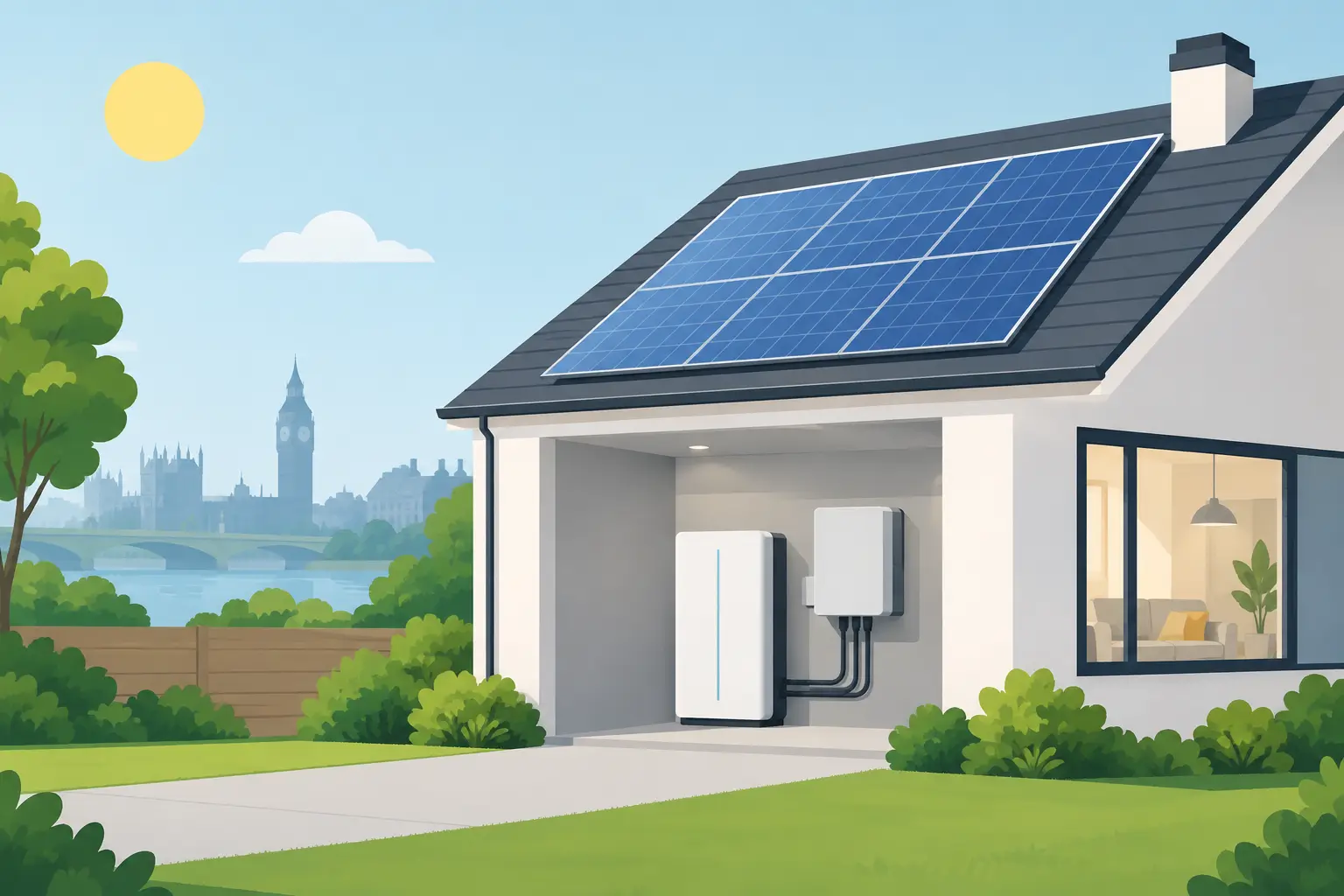
A home battery should make your electricity costs easier to manage, not give you another system to worry about. This guide to battery safety standards explains what safe domestic battery storage looks like in practice, from the equipment itself to the way it is installed, monitored and used with a time-of-use tariff.
For many UK households, the purpose is straightforward: charge a battery from the grid when electricity is cheaper overnight, then use that stored energy when daytime rates are higher. There is no need for solar panels to make this approach work. But savings only matter when the system is designed and installed with safety at the centre.
Why battery safety is more than a product label
A domestic battery is a high-capacity electrical system. It contains battery cells, safety controls, a battery management system, cables, isolation equipment and an inverter that manages the flow of electricity between the battery, your home and the grid. Each part has a role in preventing faults from becoming hazards.
The battery management system continually checks cell temperature, voltage and current. If readings move outside safe limits, it can reduce output or shut the system down. This protection is essential, but it does not replace good product design, suitable positioning or qualified installation.
A safe system is therefore not simply a battery with the right certificate. It is a complete installation that suits the property, has appropriate electrical protection and is configured for the household’s real energy use.
The guide to battery safety standards: what applies in the UK
Homeowners do not need to become standards experts, but they should know what a competent installer is working to. Several standards, regulations and procedures can apply to a grid-connected battery installation.
Electrical installation requirements
The fixed electrical work should be designed and installed in line with BS 7671, commonly known as the IET Wiring Regulations. This covers issues such as circuit protection, earthing, isolation, cable sizing and safe connection to the consumer unit.
In England and Wales, certain domestic electrical work is also governed by Building Regulations Part P. Requirements and notification arrangements can differ elsewhere in the UK, so your installer should explain what applies at your address and provide the relevant paperwork when the work is complete.
A battery installation is not a job for a general handyman. The installer must understand both domestic electrical systems and energy storage equipment, including how the battery behaves during a power cut or an electrical fault.
Battery, inverter and product safety
The battery cells and energy storage equipment should be manufactured and tested to relevant recognised safety requirements. Depending on the system and components, these may include standards covering industrial lithium battery safety, such as BS EN IEC 62619, and power electronic converter safety, such as BS EN IEC 62477-1.
Transport testing also matters before the equipment reaches your home. Lithium batteries are commonly assessed against UN 38.3 requirements for transport, which address stresses such as vibration, temperature changes and impact.
For the householder, the useful question is not which code appears on every data sheet. Ask whether the proposed equipment is intended for stationary domestic energy storage, has the appropriate product conformity documentation for Great Britain and is supplied through an established manufacturer and installer route.
Grid connection and network approval
Because a home battery can export or import electricity, it must be connected in a way that protects both your property and the wider electricity network. Your installer will follow the relevant Engineering Recommendations, typically G98 or G99, and notify or seek approval from the local Distribution Network Operator where required.
This process helps make sure the system disconnects correctly if the grid supply fails and does not create voltage or frequency problems on the local network. It is an important part of a properly documented installation, not an optional administrative extra.
Fire risk and sensible placement
Lithium battery systems are designed with multiple layers of protection, yet location still matters. Current UK guidance, including PAS 63100, helps inform good practice around fire safety for battery energy storage systems.
The right location depends on the property and the equipment. A competent survey considers clearance around the unit, ventilation where specified by the manufacturer, protection from accidental damage, access for maintenance and escape routes. A battery should not be placed where it obstructs a route out of the home or where it is exposed to unsuitable heat, moisture or impact.
Garages and utility areas can be suitable in some homes, but there is no universal best location. The manufacturer instructions and the results of the site survey should decide it. Be wary of anyone who offers a fixed answer without seeing the property.
What a safe installation process should include
The safest outcomes start before installation day. A professional survey should establish your main fuse rating, consumer unit condition, existing electrical loads, available space and likely daily electricity pattern. If you have an electric vehicle, its charging arrangements need to be included too.
On installation day, the work should include correctly rated protective devices, clear isolation points and secure cable routes. The system should then be commissioned rather than simply switched on. Commissioning verifies that the battery charges, discharges and responds correctly to grid conditions and configured limits.
Before the installer leaves, you should receive a clear handover. That normally includes operating instructions, shutdown information, warranty details, electrical certification and guidance on who to contact if the system shows a fault. Keep this information somewhere accessible rather than filing it away and forgetting it.
Safe tariff optimisation when you also charge an EV
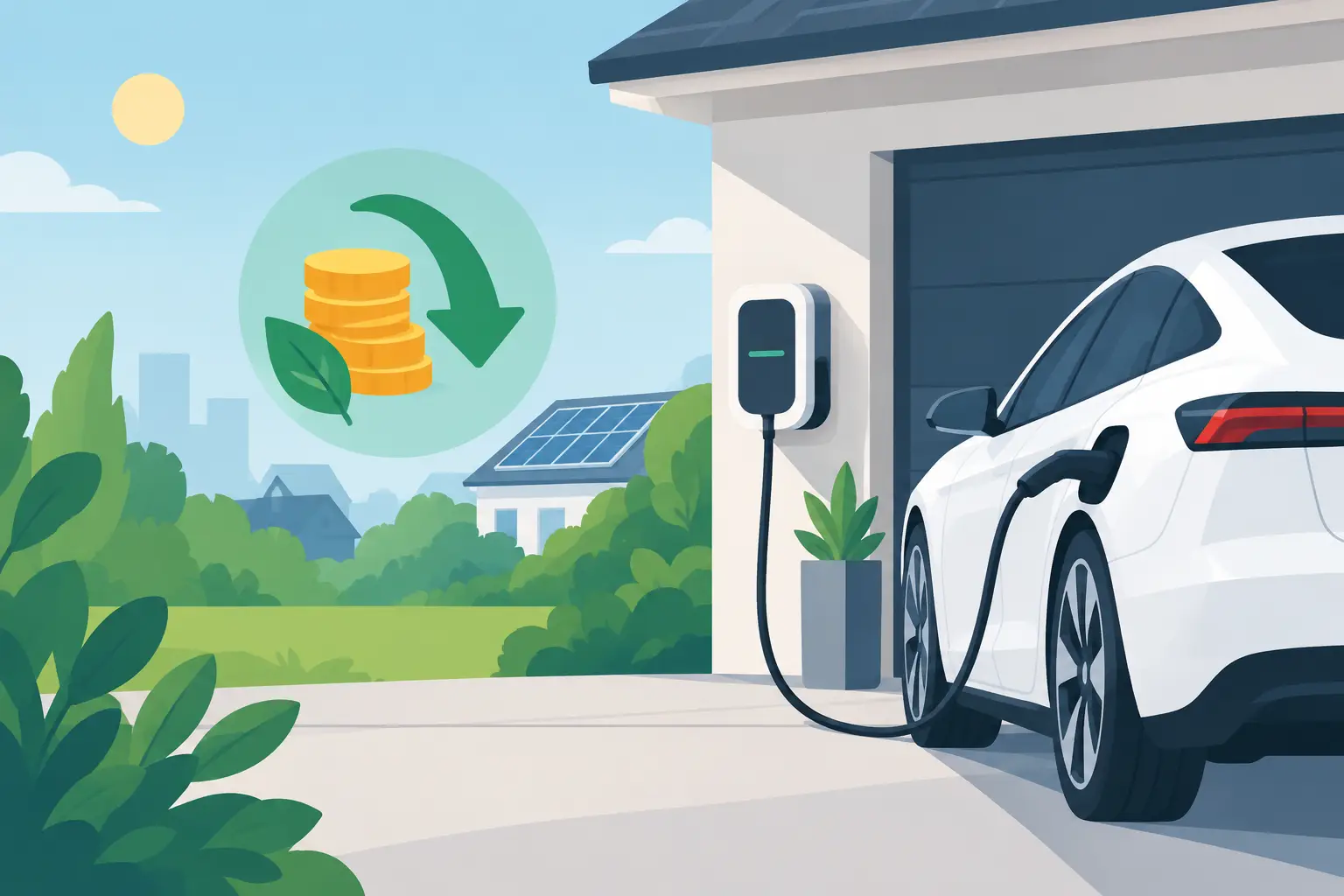
An EV tariff can reduce the cost of motoring, while a home battery can help reduce the cost of household electricity outside the cheap charging window. The key is to plan both loads together instead of assuming the battery should run everything.
The diagram below uses illustrative rates only. Actual prices, time windows and standing charges vary by tariff, region and supplier.
“`text Illustrative overnight EV tariff comparison
Off-peak period Daytime period Best use Standard tariff 28p per kWh 28p per kWh No timed advantage EV tariff 8p per kWh 30p per kWh Charge EV overnight
Example: 40 kWh added to an EV Standard tariff: 40 x 28p = £11.20 EV tariff: 40 x 8p = £3.20 Illustrative difference: £8.00 per charge “`
Where a battery is fitted, its schedule should usually prioritise charging from the grid during the same lower-cost period, within the supply capacity available. It can then support household demand when rates rise. This may avoid buying as much peak-rate electricity for cooking, laundry, lighting and everyday use.
“`text One possible overnight-to-daytime plan
00:30-04:30 Lower-cost EV tariff window EV charger: charge vehicle Home battery: charge within agreed power limits
07:00-23:00 Higher-cost period EV charger: normally paused Home battery: supplies selected household demand Grid: covers any demand above battery output or capacity “`
The important trade-off is power demand. An EV charger and battery charger running at full power at the same time may exceed the practical limits of the property or increase costs if the tariff window is missed. Smart scheduling, load limits and, where appropriate, a compatible smart charger help prevent this.
It is also usually inefficient to charge an EV from the home battery unless the system has specifically been designed for that purpose. Sending electricity through additional charging and discharging stages creates losses and can use battery capacity that may be more valuable during expensive household hours. In most cases, the simpler approach is to charge both from the lower-cost grid window, then reserve stored energy for the home.
Questions worth asking before you proceed
Ask who will carry out the electrical work and whether they are qualified to install domestic energy storage systems. Ask how the proposed location was chosen, what protective equipment will be fitted and what happens during a grid outage. You should also ask how the battery settings will work with your tariff and EV charging routine.
A good proposal will be specific about these points. It should not promise a fixed saving without reviewing your consumption, tariff, battery size and household demand. Savings depend on the gap between off-peak and peak rates, how much electricity you can shift and whether the battery has enough usable capacity for your pattern of use.
Volt Wiser Energy works with UK-engineered ESME Energy technology and qualified installation to help homeowners use lower-cost grid electricity with confidence. The aim is practical: a properly specified system, clear controls and a safer route to lower household bills.
Choose a battery system the same way you would choose any major home electrical upgrade: look beyond the headline capacity, insist on competent installation and make sure the everyday plan is easy to follow. When safety and tariff settings are handled properly, the technology can quietly do its job while you retain more control over your energy costs.