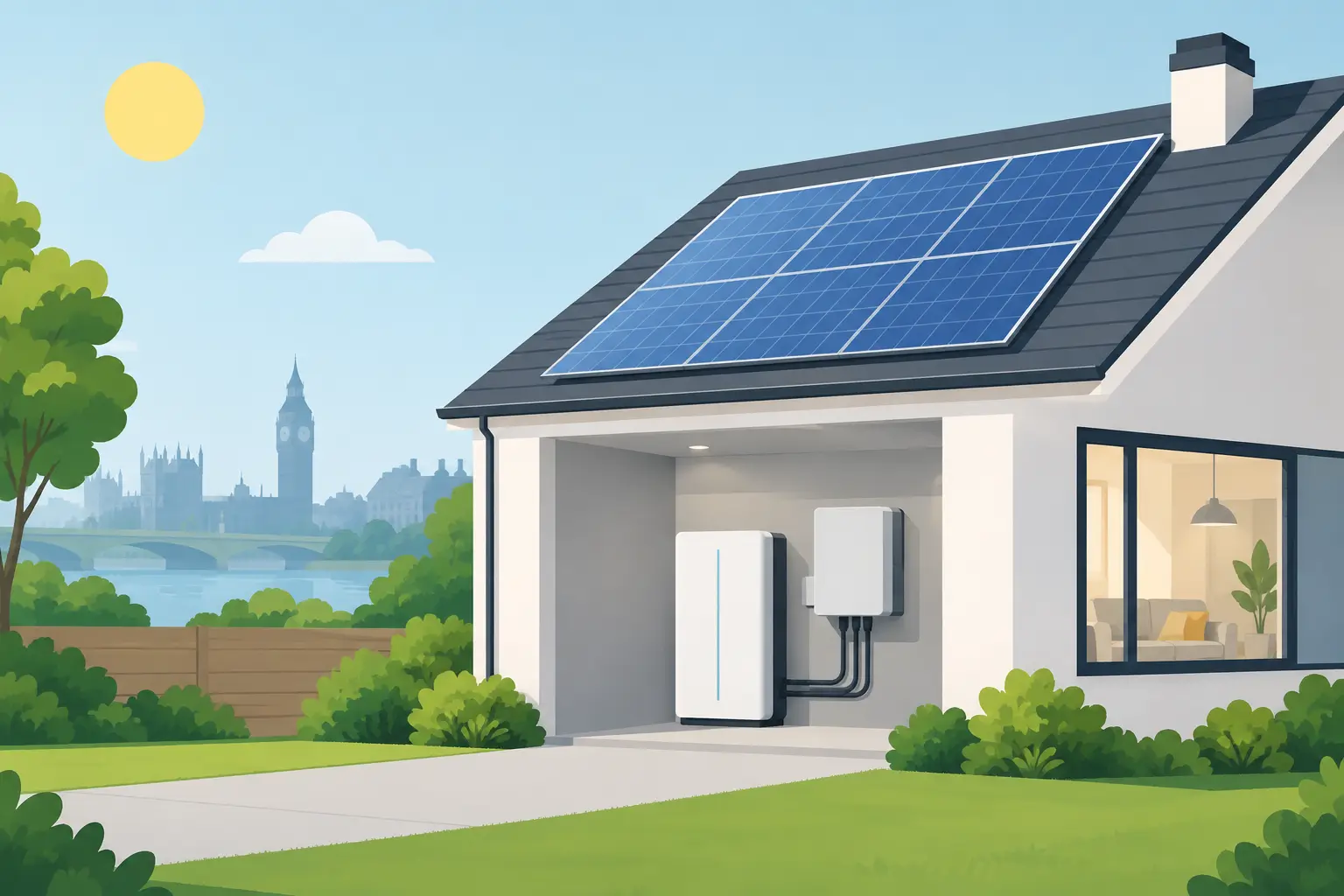
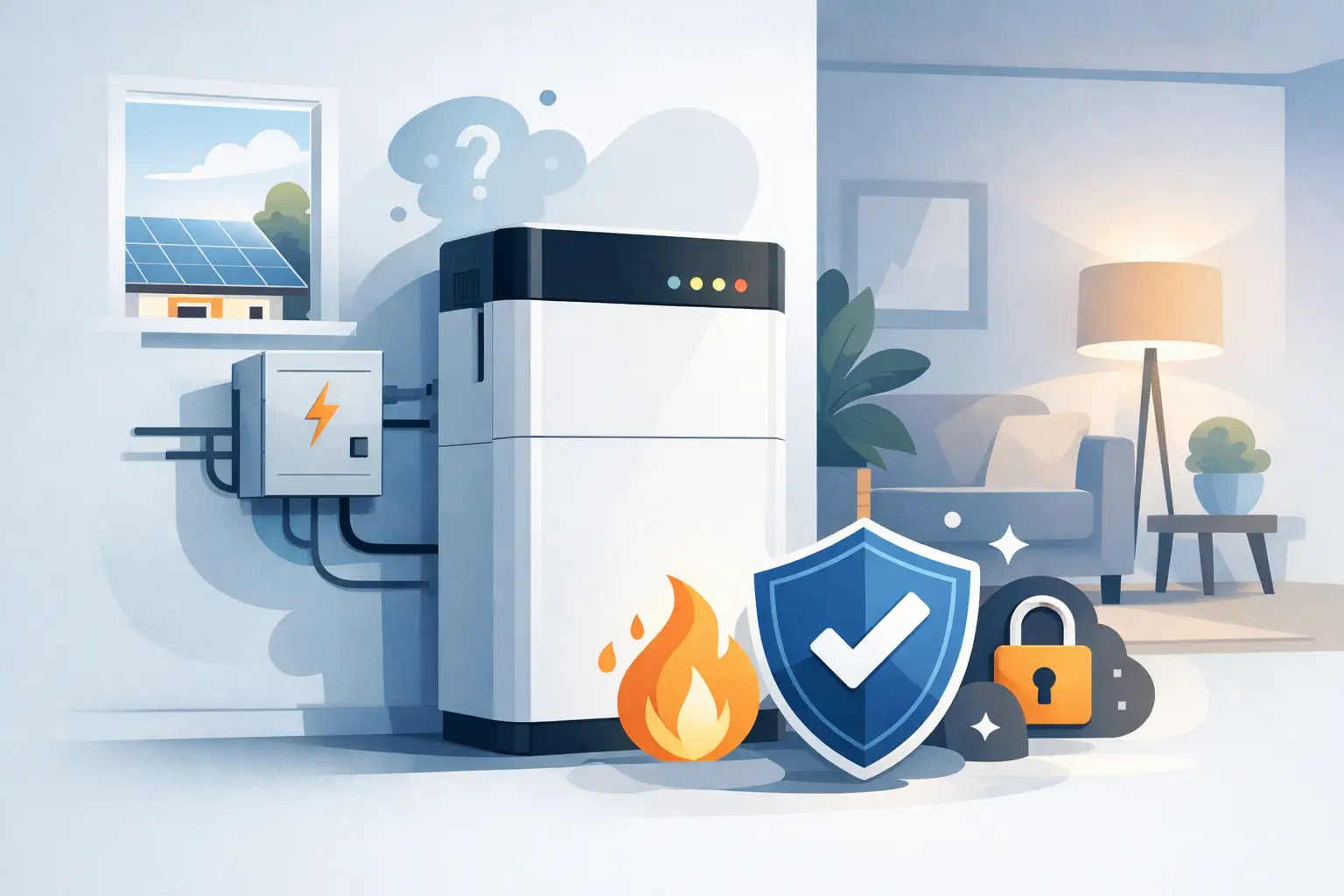
If you are considering battery storage to cut your electricity bills, one question usually comes up before anything else: are home batteries safe indoors? That is a sensible place to start. A battery system sits inside your property, often in a utility room, garage or other indoor space, so safety is not a detail to gloss over. The reassuring answer is that modern home battery systems can be safe indoors when the right equipment is used, the system is installed properly, and the location is suitable.
That matters because many UK households are now looking at battery storage not as a solar add-on, but as a practical way to buy cheaper electricity overnight and use it later when grid prices are higher. If the goal is lower bills without unnecessary complexity, you need clear facts rather than hype.
Are home batteries safe indoors in normal UK homes?
In most cases, yes. A properly specified and professionally installed home battery is designed for indoor domestic use. These systems are not improvised boxes of stored power. They are engineered products with built-in safety features, monitoring systems and operating limits designed to keep temperatures, charging behaviour and electrical performance within a safe range.
The key phrase is properly installed. Safety depends on more than the battery cells themselves. It also depends on the battery management system, the inverter, cabling, protective devices, ventilation requirements and the overall installation standard. A good system is designed as a whole, not just sold as a battery in isolation.
For homeowners, that means the real question is often not whether batteries are inherently unsafe indoors, but whether the product and installer meet the standard you should expect.
What makes an indoor battery system safe?
A modern home battery has several layers of protection. The battery management system constantly monitors voltage, current and temperature. If the system detects a fault or a condition outside its safe operating range, it can reduce output, shut down charging or isolate the battery. That is a major difference between purpose-built domestic storage and the sort of battery people may picture from older technologies.
The chemistry matters as well. Different battery types behave differently under stress, and reputable home energy systems are selected with residential safety in mind. The casing, control electronics and installation layout all play a part in containing risk and maintaining stable performance over time.
There is also a straightforward point that often gets overlooked: a fixed home battery system should not be treated like a portable consumer gadget. It is installed in a set location, connected by qualified professionals and configured for predictable operating patterns. That controlled environment improves safety.
Where should an indoor battery be installed?
The best location depends on the property, but not every indoor space is equally suitable. Installers will usually look for an area with enough space around the unit, stable temperatures and low exposure to moisture or accidental impact. Garages and utility rooms are common because they are practical and easier to access for maintenance, but some homes have other suitable internal locations.
Lofts, cramped cupboards and damp outbuildings may be less suitable depending on the product and the conditions. A battery should not be squeezed into a space just because it is out of sight. Indoor installation works best when there is enough room for safe clearances, good access and proper cable routing.
This is one reason a site survey matters. The safest location is not chosen from a brochure. It is chosen based on the actual property.
The role of professional installation
If you want the short version, professional installation is what turns a battery from a promising idea into a safe household system. A qualified installer will assess the consumer unit, check load requirements, position the equipment correctly and make sure all protective measures are in place.
That includes isolation devices, correct circuit protection and compliance with UK electrical standards. It also includes following the manufacturer’s requirements for placement, spacing and operating conditions. Even a high-quality battery can become a poor choice if it is installed badly.
This is where a specialist approach matters. Volt Wiser Energy focuses on grid-charged domestic battery storage with qualified installation and UK-engineered technology, which is exactly the kind of combination homeowners should be looking for if safety and long-term reliability are priorities.
Fire risk: what homeowners should know
When people ask whether home batteries are safe indoors, they are usually asking about fire risk. That concern is understandable, but it helps to keep it in proportion. Any electrical system in the home carries some level of risk if it is faulty, damaged or installed incorrectly. Home batteries are no exception, but reputable systems are designed to reduce that risk significantly.
Protection starts with product design and continues with installation quality. A battery should operate within controlled charging and discharge limits. It should be protected against overheating, overcharging and short circuits. It should also be installed in a place where ambient conditions stay within the recommended range.
What raises risk is usually one of three things: poor-quality equipment, poor installation, or misuse after installation. For example, storing items around the unit that block ventilation, tampering with the system, or ignoring fault alerts can all create avoidable problems.
In other words, indoor battery safety is not about blind trust. It is about choosing the right system and treating it like any other serious piece of household electrical equipment.
How battery safety links to bill savings
For many households, battery storage is attractive because it can shift electricity use away from expensive peak periods. You charge the battery when your tariff is cheaper, then use that stored electricity later. The financial case can be strong, especially for homes with higher evening usage or an electric vehicle.
Safety and savings go together here. A correctly installed battery system does not just protect the home. It also tends to perform better because it is running under the right conditions. That means more predictable charging, steadier output and fewer avoidable issues.
If you are comparing tariffs for home charging an EV, the battery can help smooth the household’s wider electricity demand rather than leaving all the savings to one cheap overnight window.
Simple EV tariff comparison example
Below is a basic illustration of how households often think about charging costs and battery use. Actual figures vary by supplier, region and usage pattern, but the principle is straightforward.
| Option | Overnight EV charging rate | Day rate for household use | How a battery helps | |—|—:|—:|—| | Standard single-rate tariff | 27p/kWh | 27p/kWh | Little opportunity to shift costs | | EV tariff without battery | 9p/kWh overnight | 30p/kWh day | Cheap car charging, but daytime household use stays expensive | | EV tariff with home battery | 9p/kWh overnight | 30p/kWh day | Battery stores cheaper overnight power for daytime household use |
That is why battery storage appeals to households that want more from tariff optimisation. The EV already benefits from cheaper charging. The battery helps the rest of the home benefit too.
Are home batteries safe indoors if you do not have solar?
Yes. Indoor safety is not dependent on having solar panels. A battery charged from the grid can still be perfectly suitable for indoor installation, provided the equipment is designed for that use and fitted correctly.
This is an important point because some homeowners assume batteries only make sense, or are only commonly used, with solar generation. In reality, many homes are now looking at battery storage specifically to take advantage of time-based pricing from the grid. The safety principles remain the same either way.
What changes is the charging pattern. With a grid-charged setup, the battery is often programmed to charge during cheaper off-peak periods and discharge later when household electricity is more expensive. That can be a very practical arrangement for mainstream homes, especially where keeping bills under control matters more than generating power on-site.
Questions worth asking before you buy
A good supplier should be comfortable answering direct questions about indoor use. Ask where the battery would be placed, why that location is suitable, what safety protections are built in and what happens if the system detects a fault. Ask about installer qualifications, maintenance expectations and the manufacturer’s operating guidance.
You should also ask how the system performs in real UK homes with your kind of tariff and usage. Safety is the first question, but it is not the only one. A battery should be safe, reliable and financially worthwhile.
If the answers are vague, overly technical or full of sales talk, that is useful information in itself. Clear advice is usually a sign of a business that understands both the technology and the customer.
The practical answer
So, are home batteries safe indoors? In a suitable location, with quality equipment and professional installation, yes, they can be. The sensible approach is not to treat safety as an assumption, but to make it part of the buying decision from the start.
A well-chosen battery system should feel like a controlled, dependable part of the home – not an experiment. If it also helps you make better use of off-peak electricity and reduce the cost of running your home and charging an EV, that is where the technology starts to make everyday sense.