An EV can reduce your motoring costs, but only if you pay attention to when it charges. This EV charging guide is for UK homeowners who want to make home charging predictable, practical and cheaper without turning energy management into a second job.
The key is not simply finding the lowest unit rate. It is matching your car, household usage and electricity tariff so that cheaper overnight power does the heavy lifting. For many homes, a grid-charged battery can add another layer of control by storing low-cost electricity for use when daytime rates rise.
Start with your EV charging routine
Before comparing tariffs, look at how your car actually fits into your week. A driver covering 150 miles weekly has very different charging needs from someone commuting 60 miles a day. Your battery size matters, but your weekly electricity use matters more when estimating running costs.
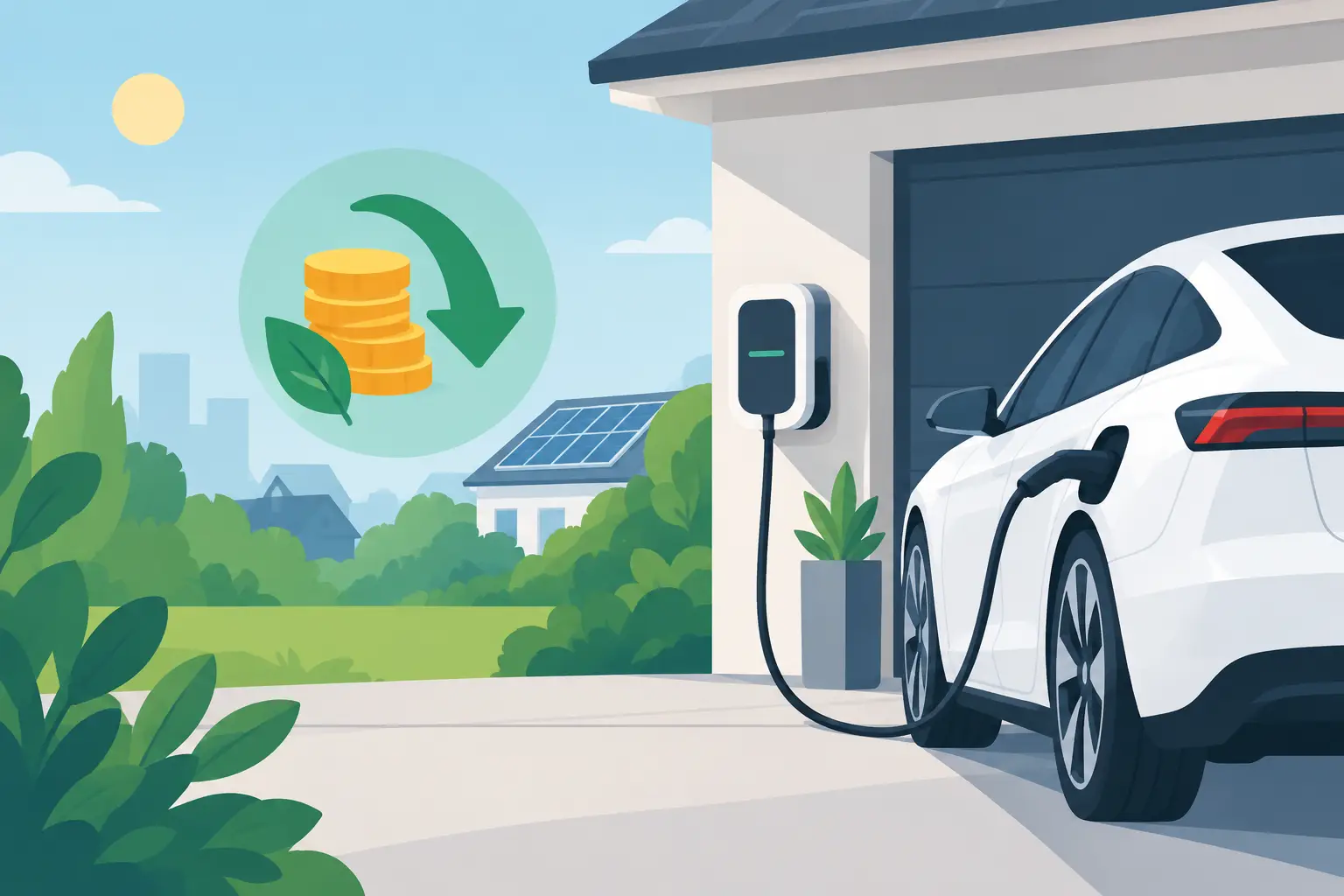
Most home charging happens overnight because the car is parked for several hours. That is useful: a standard 7kW home charger can add roughly 25 to 30 miles of range per hour, depending on the vehicle and charging conditions. Even a shorter off-peak window may therefore be enough for many drivers.
You do not usually need to charge an EV from empty to full every night. Setting a sensible charge limit, often around 80% for day-to-day use where your vehicle manufacturer recommends it, can reduce unnecessary charging and leave capacity for cheaper overnight sessions.
EV charging guide: choose a tariff that suits the household
Time-of-use EV tariffs offer lower electricity prices during set overnight hours, with higher prices at other times. They can work very well, but the cheapest-looking rate is not always the lowest-cost choice overall. A household that uses substantial electricity during the day should consider the higher daytime rate as carefully as the overnight EV rate.
Octopus Go and E.ON Next Drive-style tariffs are examples of EV-focused options homeowners may compare, although availability, rates and charging windows change. Always check the current tariff terms, standing charge, smart meter requirements and any rules on switching before making a decision.
The simple comparison below uses illustrative unit prices only. It shows why the whole household picture matters.
“`text Illustrative EV tariff comparison
Overnight rate Daytime rate Best fit Tariff A: EV-focused 8p/kWh 32p/kWh EV charged mostly overnight Tariff B: balanced 15p/kWh 25p/kWh Higher daytime household use
Example: 200kWh EV charging overnight each month Tariff A charging cost: 200 x 8p = £16 Tariff B charging cost: 200 x 15p = £30
But 400kWh of daytime household use could cost: Tariff A: 400 x 32p = £128 Tariff B: 400 x 25p = £100 “`
In this example, Tariff A saves £14 on car charging but costs £28 more for daytime household use. That does not make it a poor tariff. It shows why comparing only the EV rate can be misleading.
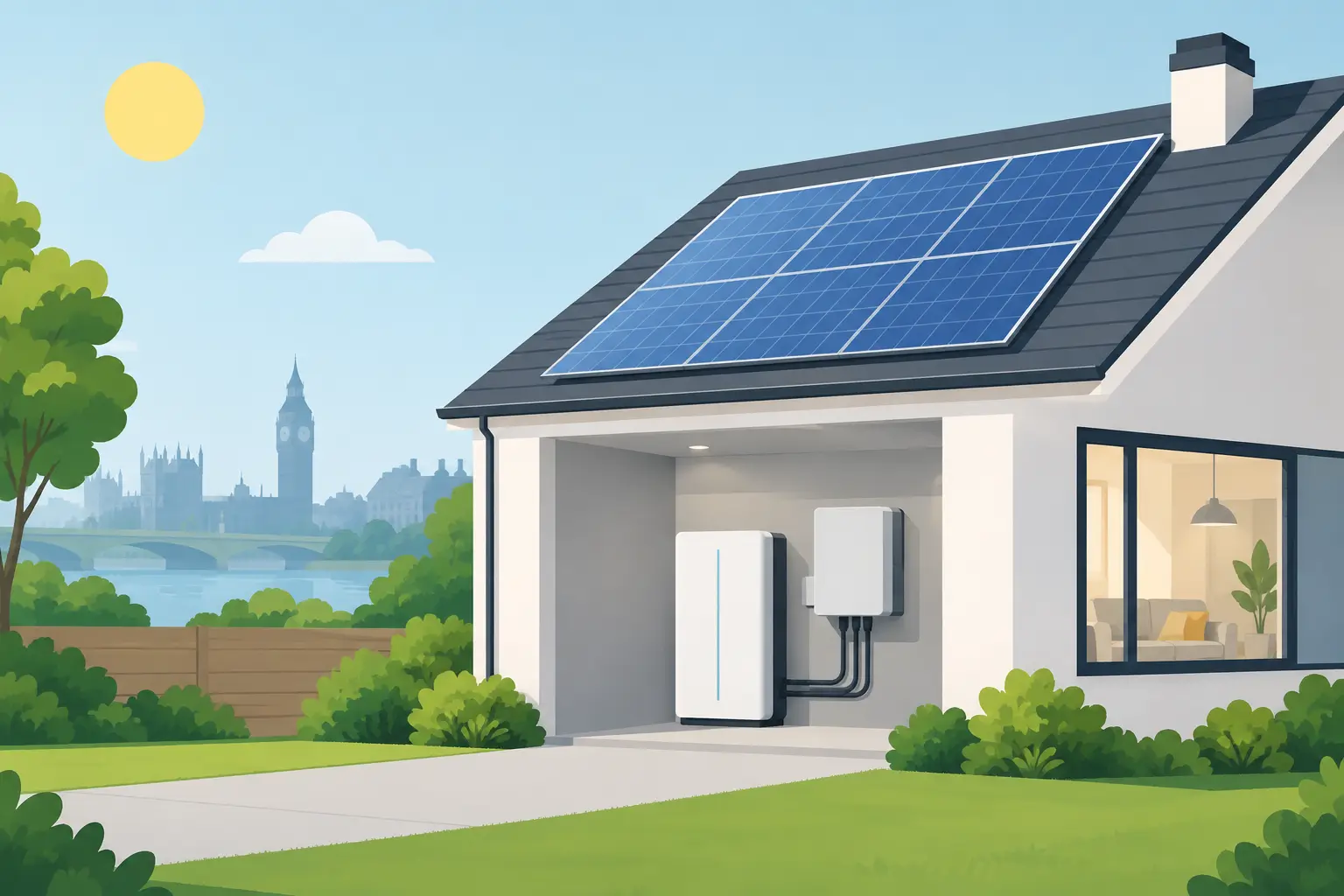
A home battery can change that calculation. It can charge from the grid during the lower-priced window, then supply stored electricity to the home later when the tariff rate is higher. The result is that your car and your household can benefit from the same cheaper period.
“`text How an EV tariff and home battery can reduce household bills
Overnight off-peak window Grid electricity at lower price | +——————–> EV charger -> electric car | +——————–> Home battery charges | Daytime higher-price period v Grid use reduced <————— Battery supplies home “`
This approach is especially relevant for households with an EV that already need a smart meter and are considering a time-of-use tariff. Rather than treating cheaper overnight electricity as something reserved for the car, you can use it more strategically across the home.
Work out the real cost per mile
To estimate EV charging costs, divide the car’s efficiency into the electricity price. If your vehicle achieves 3.5 miles per kWh and you charge at 8p per kWh, the electricity cost is roughly 2.3p per mile. At 30p per kWh, it becomes about 8.6p per mile.
Real-world efficiency changes with speed, weather, tyre pressure, heating and driving style. Winter journeys and motorway miles generally use more electricity than mild-weather town driving. It is better to calculate a range of likely costs than rely on the vehicle’s best published figure.
Also allow for charging losses. Not every kWh drawn from the grid reaches the battery. A modest allowance for losses gives a more realistic budget, particularly when comparing a home charge with public rapid charging.
Set charging times rather than relying on memory
Most EVs and home chargers allow scheduled charging. Set the vehicle or charger to begin during your tariff’s off-peak period and finish before it ends. Check which device has priority, as conflicting schedules can mean the car does not charge when expected.
A practical routine is to plug in when you arrive home, then let the schedule control the start time. This avoids late-night trips outside and ensures the car is ready in the morning. If you need a top-up before an unexpected journey, you can override the schedule, knowing that it may cost more.
It is worth reviewing your first few bills after switching tariff. Compare the kWh charged, the time of charging and your total household consumption. A tariff should make your costs easier to manage, not create surprises.
Consider the charger, supply and installation
A dedicated home charger is usually the most convenient option for regular EV use. A qualified installer can assess your consumer unit, earthing arrangements, cable route and available electrical capacity. They can also advise whether load balancing is needed so that the charger responds safely when household demand is high.
Charging from a standard three-pin socket may be suitable for occasional use where the vehicle manufacturer permits it, but it is slower and should not be treated as a permanent answer without professional advice. Avoid extension leads and make sure the installation meets current safety requirements.
If you are adding a domestic battery, the same principle applies: professional design and installation matter. A properly specified system should work with your tariff and household demand, with clear settings and understandable performance expectations. Volt Wiser Energy works with UK-engineered ESME Energy technology and qualified installers to make this a practical upgrade for grid-connected homes.
When a home battery makes sense for EV owners
A battery is not automatically the right answer for every household. If your EV accounts for nearly all electricity use and it always charges in a cheap overnight window, the direct tariff saving may already be strong. A battery becomes more compelling when you also use significant electricity during expensive daytime periods, such as for cooking, working from home or running family appliances.
The aim is not to eliminate grid electricity. It is to buy more of it when it is cheaper and rely less on it when it is expensive. Because the battery charges from the grid, no solar panels are required. That can make installation more straightforward for homeowners who want a cost-saving energy upgrade without altering their roof.
Ask for savings estimates based on your actual annual usage, tariff rates and expected charging pattern. Transparent figures should account for battery capacity, round-trip efficiency and the fact that tariff prices can change. Promises that ignore these details are rarely useful.
A few checks before you switch
Make sure you have, or can have, a compatible smart meter. Confirm your off-peak hours, whether they apply automatically to the whole home, and whether your EV charger can schedule charging accurately. Check the standing charge too, as it forms part of the bill regardless of how much electricity you use.
Finally, keep an eye on habits. Running the dishwasher, washing machine or tumble dryer overnight may increase the value of an off-peak tariff, provided you use appliances safely and follow their instructions. Small changes are most useful when they fit normal household life.
The best EV charging setup is the one that charges your car when you need it, keeps household bills understandable and gives you confidence that cheaper electricity is being put to good use.