A UK guide domestic energy storage system is not about generating electricity. It is about buying electricity more intelligently. A home battery charges from the UK grid when your tariff is cheaper, usually overnight, then supplies your home when electricity costs more during the day. For households facing rising bills, that simple shift can turn a time-of-use tariff into a practical saving opportunity – without panels on the roof.
How domestic energy storage works
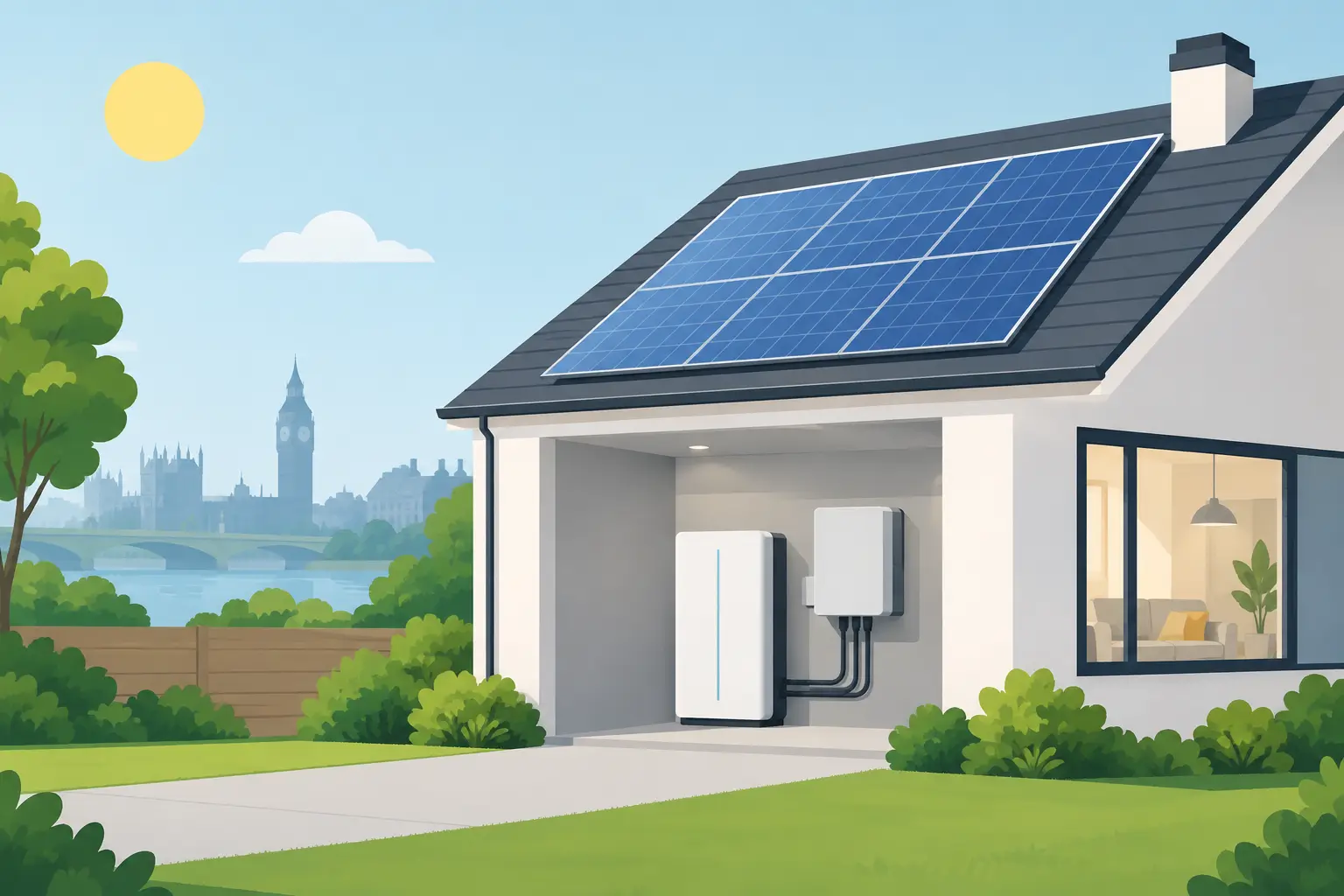
A domestic battery is installed alongside your consumer unit and connected to your electricity supply. During a lower-priced charging window, the system takes electricity from the grid and stores it. When prices rise, the battery can discharge to cover suitable household demand, such as lighting, appliances, cooking and entertainment.
The aim is to reduce the amount of electricity you buy at the higher day rate. It does not make electricity free, and savings depend on the difference between your cheaper and more expensive tariff periods. It can, however, give you more control over when you pay for the energy your household needs.
“` Typical grid-charged battery cycle
Overnight, lower-priced period Daytime, higher-priced period Grid ─────> Home battery charges Home battery ─────> Household use (stored electricity) (less grid use) “`
The battery is managed through its controls and settings, with charging schedules aligned to your tariff. A correctly designed system should prioritise straightforward operation rather than requiring you to watch electricity prices every hour.
Why tariff choice matters more than panels
The value of domestic energy storage comes from the gap between tariff rates. If your overnight electricity is substantially cheaper than your daytime electricity, storing power overnight can be worthwhile. If the difference is small, the financial case will be weaker.
This is why the first question is not simply, “What size battery should I buy?” It is, “What tariff am I on, and when does my household use electricity?” A household that uses most of its power in the evening may have more to gain than one that is empty all day and has very low usage after work.
Tariffs aimed at electric vehicle owners can be particularly useful because they often include a defined lower-cost overnight period. Examples include EV-focused tariffs from providers such as Octopus Go and E.ON Next Drive, although products, eligibility rules and prices change regularly. Always check the live tariff details before deciding, including the hours when the lower rate applies and whether all household electricity receives that rate.
EV charging and battery storage: a useful pairing
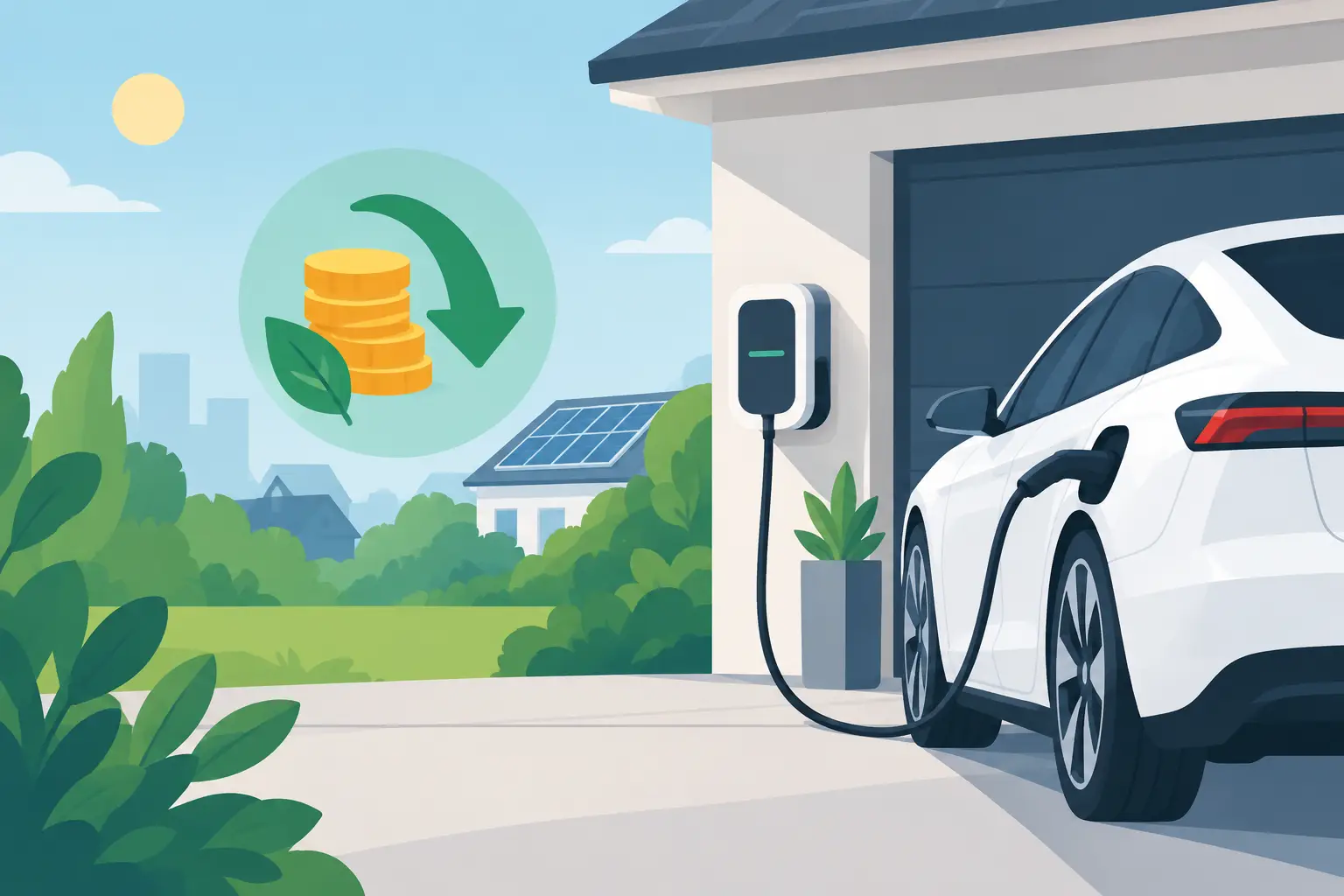
An electric car can increase household electricity use significantly, but it can also make a lower-priced overnight tariff more attractive. The sensible approach is usually to schedule EV charging during the cheap window and schedule the home battery to charge during the same period, provided your electrical supply and installation are designed for the combined demand.
Here is an illustrative comparison. The figures are examples only, not tariff quotes.
“` EV tariff comparison for a household with home battery storage
Standard single-rate tariff 23p per kWh all day
EV charging: 40 kWh x 23p = £9.20 Household daytime: Battery cannot buy electricity more cheaply overnight Result: Less opportunity to shift costs
EV-focused tariff 8p per kWh overnight | 30p per kWh at other times
EV charging overnight: 40 kWh x 8p = £3.20 Battery charges overnight at 8p per kWh Battery supports household use during higher-rate periods Result: EV and household demand can both benefit from timing “`
The comparison shows the principle rather than a guaranteed outcome. The right answer depends on battery capacity, charging efficiency, household consumption, EV mileage and the tariff’s higher daytime rate. A tariff with an excellent night rate but an expensive day rate is not automatically the best fit if you cannot shift enough usage away from daytime electricity.
There is also a practical electrical consideration. Charging an EV and a battery together may create a high overnight load. A qualified installer should assess your consumer unit, main fuse arrangement, EV charger, cable routing and system settings. Load management may be used so the home remains within safe operating limits.
“` Overnight EV and household-battery schedule
00:30 04:30 08:00 |—————————–|—————————–| EV charger: [ charge vehicle on lower-priced electricity ] Battery: [ charge to scheduled level ] Home use: [ normal overnight demand ]
08:00 onwards Battery: [ supplies selected household demand ] EV charger: [ normally paused until next low-price window ] “`
Choosing the right battery size
A larger battery is not automatically better. It costs more, takes up more space and may not be fully used every day. A battery should be sized around the amount of low-cost electricity you can realistically store and use during more expensive periods.
Start with your smart meter data or supplier app. Look at your total daily use, especially evening and early-morning consumption. Then consider how much electricity you use while the tariff is at its higher rate. If a large portion of your use already happens overnight, a battery may have less daytime demand to serve.
Your installer should also allow for round-trip efficiency. Some energy is lost as electricity is stored and released, so a battery does not return every unit it takes from the grid. Good advice accounts for this openly rather than presenting a simple tariff-rate difference as pure savings.
What installation involves
For most standard grid-connected homes, installation is far less disruptive than many people expect. The battery is commonly placed in a suitable utility area, garage or other approved location, subject to space, ventilation and access requirements. It is connected by qualified professionals, commissioned correctly and configured around your chosen tariff.
Safety and quality should be central to the decision. Ask who will install the system, what warranty applies, how the battery is monitored and what support is available if your tariff changes. UK-engineered equipment, clear documentation and an experienced installation team all matter more than headline capacity alone.
Volt Wiser Energy works with ESME Energy technology and focuses on helping homeowners understand the likely fit before installation. That matters because domestic energy storage is most effective when the system, tariff and household routine are considered together.
Questions to ask before you proceed
It helps to arrive at a conversation with real household information. Have your recent electricity bills available, along with details of your current tariff and EV charger if you have one. Ask how the proposed battery is sized, how it will charge and discharge, and whether the savings estimate includes efficiency losses and standing charges.
You should also ask what happens if your tariff changes. A good system can usually be reprogrammed to suit different charging periods, but the economics should be reviewed whenever you move supplier or switch tariff. Flexibility is useful, yet it is not a substitute for choosing a tariff that suits your lifestyle.
Finally, be realistic about backup power. Not every domestic battery automatically keeps your home running during a power cut. That function depends on the specific system design and additional equipment, so it should never be assumed.
A well-chosen battery is not a gamble on complicated technology. It is a practical way to buy more of your household electricity when it costs less, use it when it costs more, and make an EV tariff work harder for the whole home.