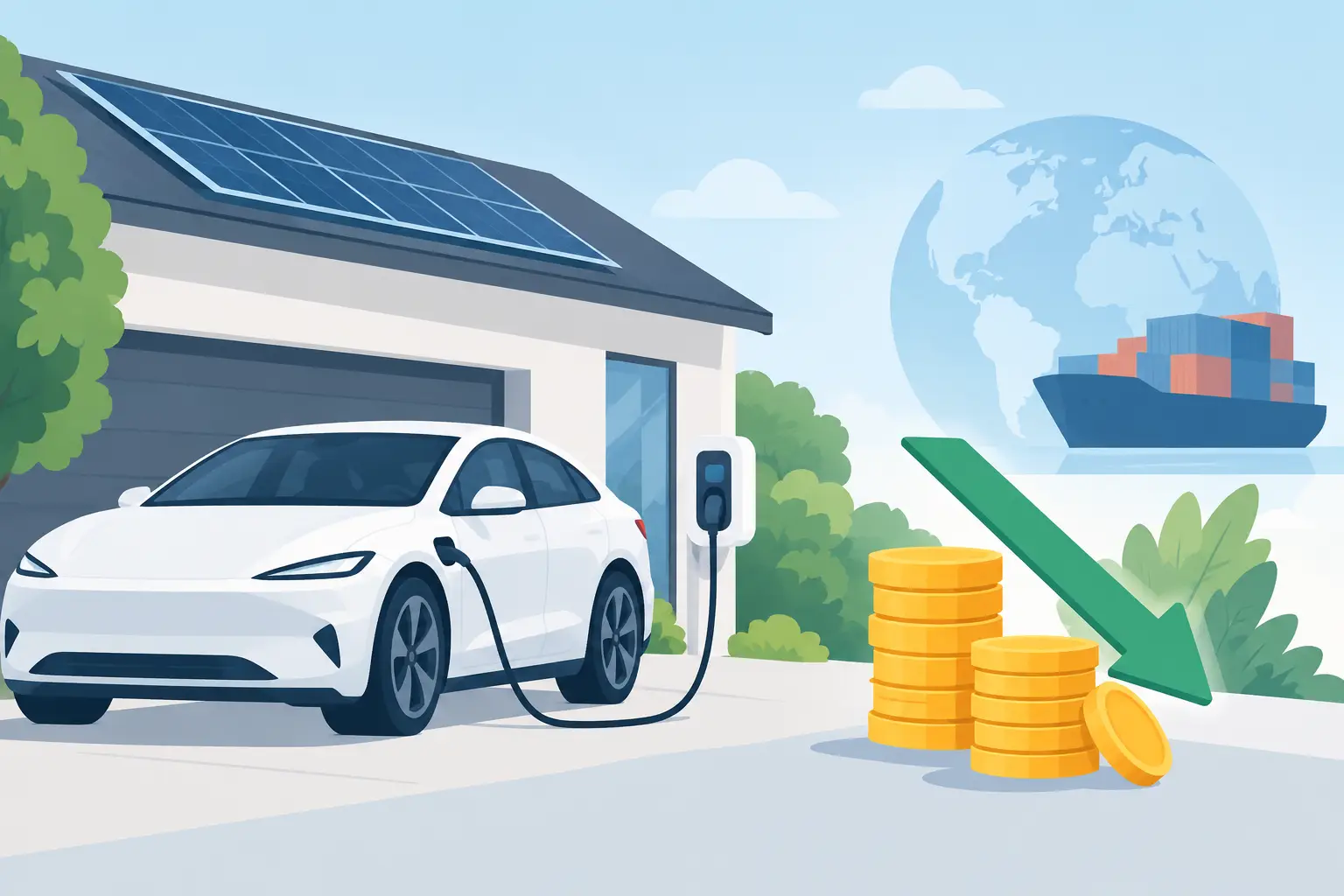
An electric car can add a significant amount to a household’s electricity use, but the right EV tariffs can turn that extra demand into a chance to cut costs. Rather than paying the same rate whenever you plug in, a time-of-use tariff offers cheaper electricity during set overnight hours. Charge while rates are low and the cost of running your car can be far more manageable.
The detail matters. The best tariff is not always the one with the lowest headline overnight price. It needs to work for your driving routine, your household’s daytime electricity use and, where suitable, your home battery storage.
How EV tariffs work
EV tariffs are electricity plans designed around the fact that many drivers charge at home overnight. Suppliers offer lower unit rates during a defined off-peak window, often for a few hours in the early morning, when demand on the grid is lower. In exchange, electricity outside that window may cost more than on a standard tariff.
For a household that can schedule charging, the saving can be substantial. A 40 kWh charge at 7p per kWh costs £2.80. At 24p per kWh, the same charge costs £9.60. Most drivers will not need a full charge every night, but the example shows why the timing of charging matters.
“`text Illustrative EV charging comparison
Standard flat-rate tariff Grid electricity at 24p/kWh ───────────────► [ Electric car ] 40 kWh charge = £9.60
EV tariff overnight window Grid electricity at 7p/kWh ───────────────► [ Electric car ] 40 kWh charge = £2.80
Potential difference for this 40 kWh charge £6.80 “`
These figures are illustrative, not a promise of a particular tariff price. Electricity rates, charging windows and standing charges vary by supplier, region and tariff. Your car’s charging losses also mean the energy drawn from the grid can be slightly higher than the energy stored in its battery.
The first check: when does your car actually charge?
An overnight tariff only delivers its best value when charging happens inside the cheaper period. A smart charger, a car app or a simple timer can be used to set this. If you arrive home, plug in and charging begins immediately during the evening peak, the benefit of the tariff can quickly disappear.
Start with your weekly mileage. Many households need only a few hours of charging overnight, not an all-night session. That gives you more flexibility to choose a tariff with a shorter low-rate window, provided your charger and vehicle can deliver the energy you need before morning.
It is also worth considering what happens on nights when you do not charge the car. If the tariff has higher daytime rates, the household still needs to make sense financially. This is where a grid-charged home battery can change the calculation.
Using a home battery alongside an EV tariff
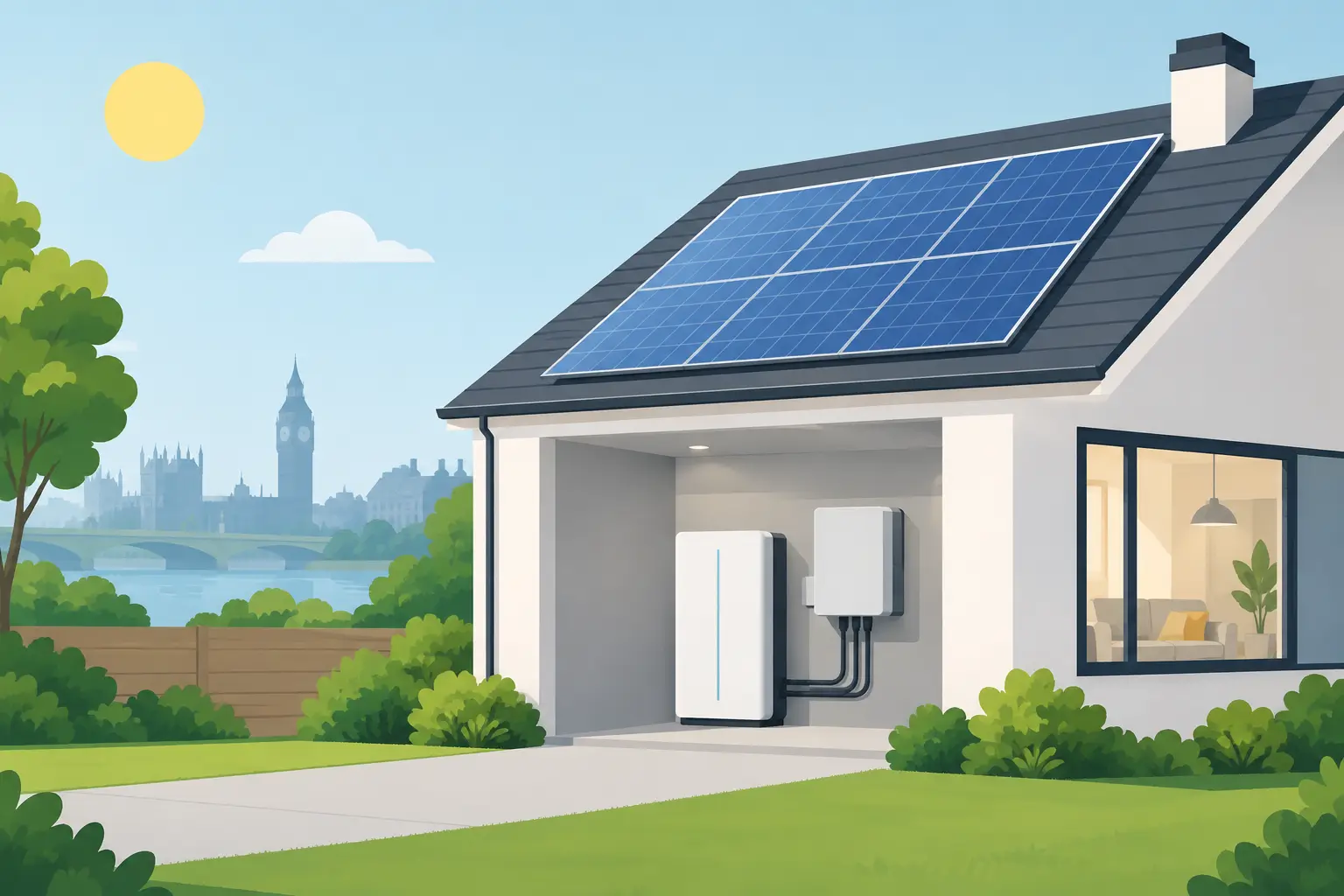
A home battery stores lower-cost grid electricity during the overnight tariff period, then supplies power to the home when daytime electricity is more expensive. It does not require solar panels. The electric car can charge at the same low overnight rate, while the battery stores energy for household use later in the day.
This separates two large areas of electricity demand: the car is charged when it is needed, and the house has stored energy available for the morning and evening. The aim is not to make every unit free. It is to reduce the number of higher-priced units your household has to buy from the grid.
“`text EV tariff comparison for a household
Without home battery Overnight: low-rate grid ───► [ Electric car ] Daytime: higher-rate grid ──► Lights, cooking, appliances
With grid-charged home battery Overnight: low-rate grid ───► [ Electric car ] └────────► [ Home battery ] Daytime: home battery ─────► Lights, cooking, appliances
Aim: buy more household electricity at the lower overnight rate and reduce reliance on higher daytime grid prices. “`
The size of the battery, the tariff window and the household’s daily use all affect the result. A family using a lot of electricity in the evening may see a different pattern of savings from a couple who are out during the day. A proper assessment should look at real consumption, not just an advertised unit rate.
What to compare before choosing an EV tariff
Focus on the full tariff, not one attractive number. The overnight unit rate is important, but so are the daytime unit rate, the length and timing of the cheap window, and the standing charge. Some plans require a compatible smart meter, while others may have specific rules around an EV charger or the vehicle itself.
Check whether the low-rate period suits your lifestyle. A cheap slot from midnight until 5am may be ideal for one driver and impractical for another who needs to leave at 4am. If your car has a smaller battery, a shorter charging window may be enough. If you regularly return home with a very low charge or drive long distances, you may need a longer window or faster charging equipment.
Be careful with estimates based solely on annual mileage. Your household’s non-car electricity use matters just as much. A tariff with a very low overnight rate can still cost more overall if high daytime prices apply to most of your cooking, laundry, heating controls and general electricity use.
Smart charging should be simple, not another household chore
The most useful setup is one that works in the background. Plug the car in when you get home, set a target charge level or departure time, and allow the charger or vehicle to use the off-peak period. That reduces the risk of forgetting to start a charge and paying more than necessary.
Avoid setting every device to charge at once without checking your property’s electrical setup. A qualified installer can advise on suitable charger capacity, battery configuration and safe integration with your existing consumer unit. This is particularly valuable in homes where an electric shower, induction hob or other high-demand appliances are used at similar times.
A professionally installed system should be designed around the way your household actually uses energy, with clear controls and realistic expectations. Volt Wiser Energy works with UK-engineered technology from ESME Energy to help homeowners use low-cost grid electricity more effectively, with qualified installation and straightforward guidance.
When an EV tariff may not be the cheapest option
EV tariffs are often worthwhile, but they are not automatically right for every household. If you cannot reliably charge overnight, have very low vehicle mileage, or use very little electricity away from the discounted hours, the difference may be smaller than expected. A flat-rate tariff can sometimes offer better simplicity and more predictable costs.
Likewise, a home battery should be considered against your actual consumption pattern and tariff spread. The larger the gap between overnight and daytime rates, and the more electricity you use at higher-priced times, the stronger the potential case for storing cheaper power. Battery capacity, charging limits and round-trip efficiency all need to be factored into a sensible estimate.
The practical goal is not to chase the lowest advertised rate. It is to build a charging routine and home energy plan that lowers your total bill without making everyday life more complicated. Start with when you drive, when you use electricity at home and what you pay across the whole day – then let the tariff work around your household, not the other way round.