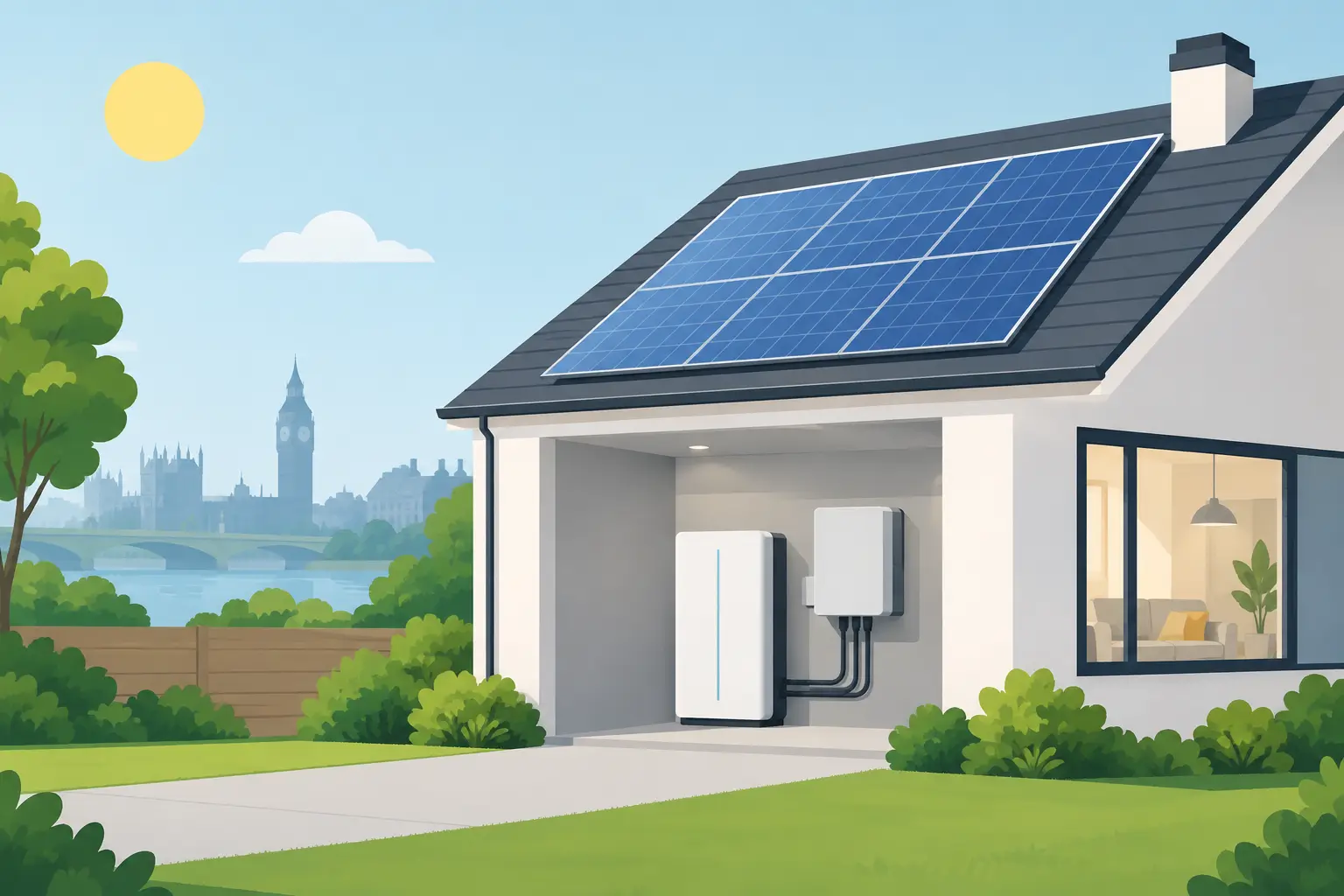
Plenty of UK homeowners assume battery storage only makes sense if you already have panels on the roof. In reality, can a home battery work without solar? Yes, it can – and for many households, that is exactly how it works best.
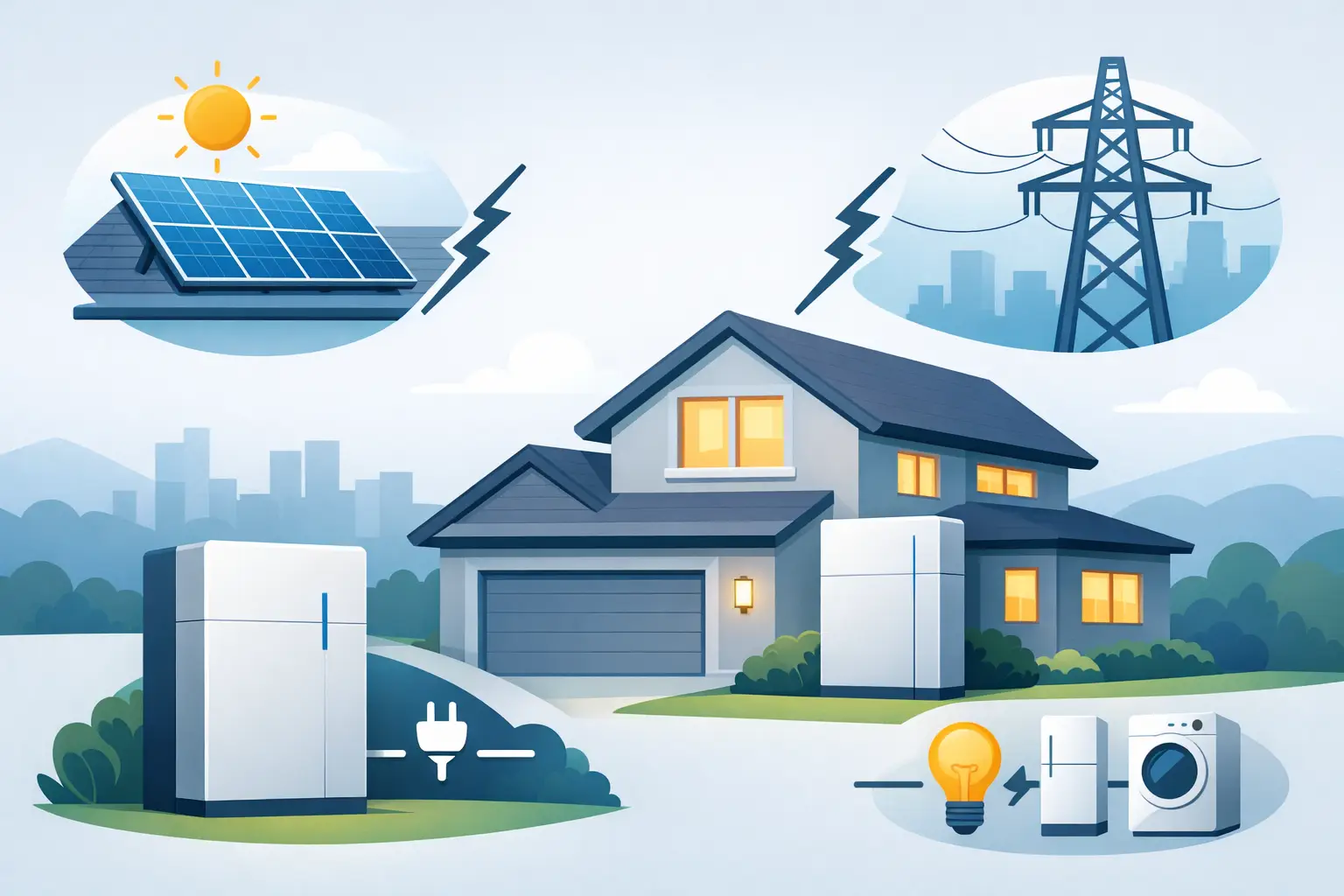
A home battery can be charged directly from the grid, usually when electricity is cheaper, then used later when rates are higher. That means the value is not tied to generating your own power. It comes from using electricity at the right time, storing it, and avoiding more expensive periods wherever possible.
Can a home battery work without solar in the UK?
Yes. A domestic battery does not need solar panels in order to operate. If your home is connected to the UK electricity grid, the battery can charge from that supply and discharge back into your home when needed.
For most people, the practical question is not whether it works, but whether it saves enough money to justify the installation. That depends on your tariff, your household usage, the battery size and how much of your evening or daytime demand can be covered by energy stored overnight.
This is where battery storage becomes a straightforward bill-saving tool rather than a specialist green-tech project. You are not relying on sunshine, roof suitability or planning around panel installation. You are using the tariff structure to your advantage.
How a grid-charged home battery actually works
The process is simpler than many people expect. Your battery is installed alongside the equipment that manages charging and discharging safely. It charges from the grid during cheaper off-peak hours, stores that electricity, then supplies your home later when electricity is more expensive.
If your household uses a meaningful amount of electricity in the morning, late afternoon or evening, the battery can help reduce how much energy you buy at peak rates. Appliances, lighting, refrigeration, broadband, televisions and general background usage can all be supported by stored electricity.
The system does not mean you go off-grid. Your home remains connected as normal. The battery simply reduces your reliance on buying electricity at the costliest times.
Why some homes are better suited than others
Battery storage without solar is not a one-size-fits-all answer. It tends to suit homes where there is a clear gap between cheap overnight pricing and more expensive daytime rates, and where the household can shift enough electricity use onto stored power.
If you are out all day and use very little electricity until bedtime, the savings may be smaller than in a home with steady daytime demand. Likewise, if your tariff does not offer much difference between off-peak and peak rates, there is less opportunity to make the battery pay its way.
That said, many households use more electricity during expensive periods than they realise. Fridges and freezers run all day. Devices stay on standby. Washing machines, dishwashers, cooking, home working and general family life all add up. A properly sized battery can capture a useful slice of that demand.
The main benefit is bill control
The strongest case for a battery without solar is often control. Electricity prices can feel unpredictable, but a battery gives you a way to buy more of your electricity when it is cheaper and use less of it when it is not.
For homeowners watching monthly bills closely, that matters. You are not waiting for ideal weather or hoping generation matches your usage. You are making a deliberate shift in when you buy power.
This also makes battery storage more accessible. Not every property is suitable for panels. Some homeowners do not want the additional cost or disruption. Others simply want a practical route to lower bills without changing the look of their home. A grid-charged battery offers that option.
What a home battery can and cannot do
It helps to be clear about expectations. A battery can reduce electricity costs by time-shifting your energy use. It can help your home rely less on peak-rate electricity. In some systems, it may also provide a level of backup support, depending on the equipment installed.
What it cannot do is create energy out of nowhere. The savings come from buying electricity more cheaply, storing it efficiently and using it later. If the difference between cheap and expensive rates is too small, the financial benefit falls.
Battery efficiency also matters. Some energy is always lost in the charging and discharging process. That is normal, and any honest assessment should take it into account. The aim is not perfection. The aim is that the savings still stack up after those losses.
Is it worth getting a battery without solar?
Often, yes – but only when the numbers are right.
The households most likely to benefit are those with a suitable time-of-use tariff, enough daily consumption to use stored electricity well, and a battery sized sensibly for their real habits. Oversizing a system can weaken the return. Undersizing it can mean missing savings that were available.
This is why straight answers matter more than hype. A battery should be recommended because it fits your usage and tariff pattern, not because battery storage sounds modern or future-facing. The strongest installations are built around practical household data.
For many homeowners, the appeal is that this can be a lower-friction step than installing panels. There is no need to assess roof orientation, shading or structural constraints. The focus stays on cost reduction, safe installation and long-term reliability.
Common concerns homeowners have
One common concern is whether a battery charged from the grid is somehow less valid than one paired with panels. It is not. The battery is still doing useful work by shifting consumption away from higher-cost periods.
Another concern is whether installation is complicated. In most cases, it is far less disruptive than people expect. A qualified installer assesses the property, confirms compatibility and fits the system in line with current standards. As with any electrical installation, quality matters. Good equipment and proper workmanship are not optional.
There is also the question of lifespan. Batteries are long-term products, so homeowners should look beyond headline capacity and ask about safety, warranty support and real-world performance over time. A cheaper unit is not necessarily the better buy if it delivers weaker support or shorter service life.
Can a home battery work without solar if your goal is simpler savings?
Yes, and this is arguably where standalone battery storage makes the most sense. If your main goal is not generating electricity but lowering the cost of the electricity you already use, a battery can be a very practical fit.
That is especially true for homeowners who want a clear, manageable upgrade. No panels, no need to reshape the property, and no dependence on daytime weather conditions. Instead, the system works quietly in the background, charging at cheaper times and helping your home use that stored energy later on.
For a lot of people, that feels more realistic than a larger renewable installation. It addresses the immediate problem – rising electricity costs – with a solution that is easier to understand and easier to live with.
What to look for before going ahead
The best starting point is your tariff and your usage pattern. If there is a strong difference between low-cost overnight electricity and expensive daytime rates, that creates the opportunity. After that, the key questions are how much electricity you use during peak periods and whether a battery can cover a worthwhile portion of it.
You should also look for clear guidance, not vague promises. A trustworthy provider should explain expected savings in plain English, size the system around your home rather than a generic template, and install equipment that is designed for safe, dependable operation in UK homes.
That is where an education-led approach matters. Companies such as Volt Wiser Energy focus on helping homeowners understand whether battery storage is suitable before pushing them towards a decision. That tends to lead to better outcomes than broad claims that a battery suits everybody.
A home battery without solar is not a compromise. For many households, it is the more direct answer – a way to make better use of the grid you already have, trim the cost of everyday electricity, and bring a bit more certainty to the monthly bill.