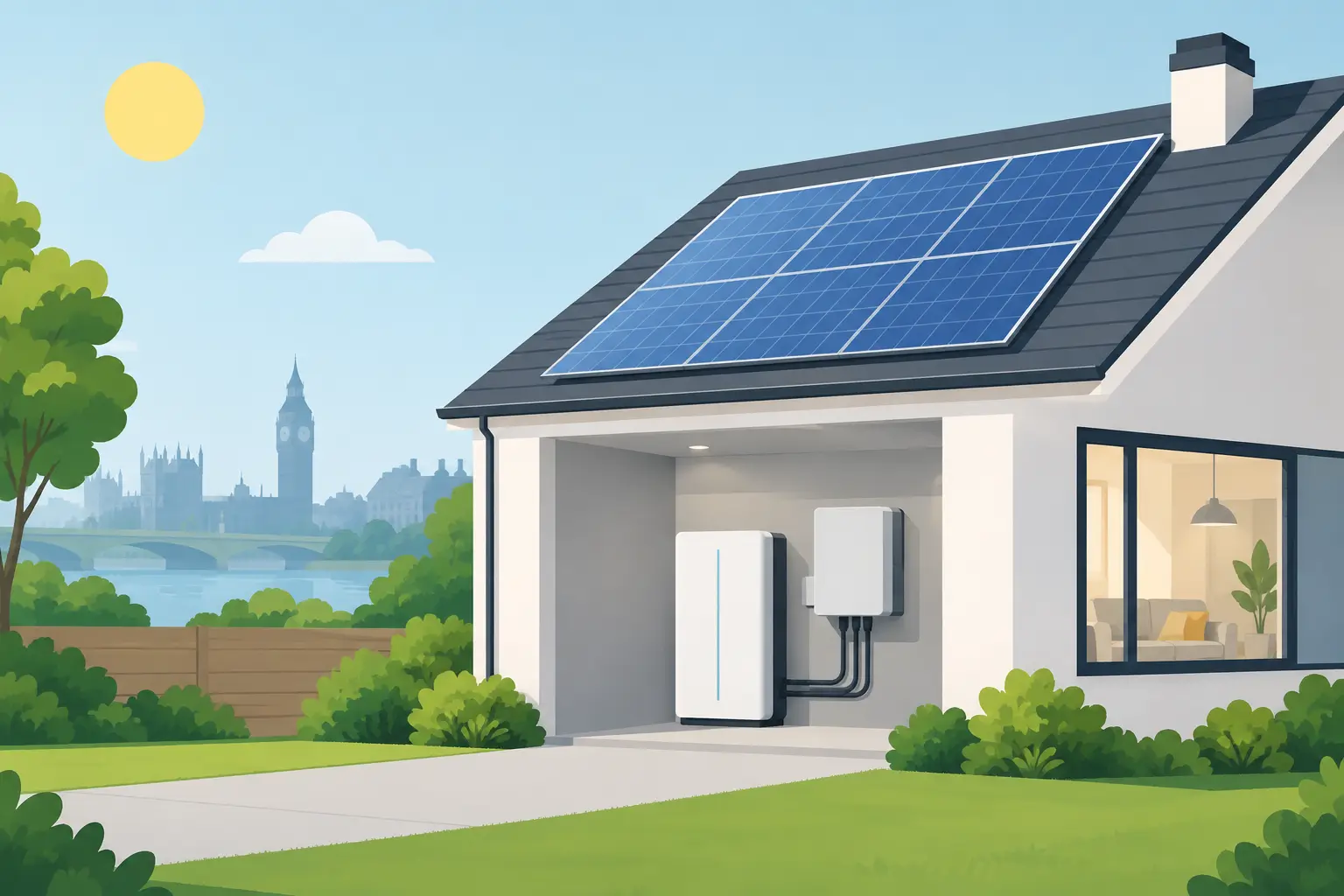

A 5 kWh battery can look like a sensible starting point until the family gets home, the oven goes on, a load of washing starts and an electric car is plugged in. Choosing the best battery sizes for family homes is less about buying the largest unit available and more about matching storage to the way your household uses electricity – and the hours when your tariff is cheapest.
For many UK homes, a grid-charged battery provides a practical route to lower bills without installing panels. It charges during lower-priced overnight periods, then supplies stored electricity when daytime rates are higher. The right capacity gives you useful savings without paying for storage your household is unlikely to use.
Start with your household’s evening electricity use
Battery capacity is measured in kilowatt-hours, or kWh. Think of this as the size of the energy store. A 10 kWh battery can hold roughly twice as much electricity as a 5 kWh battery, although the usable capacity can differ slightly between systems.
The key question is not simply, “How much electricity do we use in a day?” It is, “How much expensive electricity can we realistically replace after the cheap-rate charging window ends?” A family that uses 20 kWh across a full day may only need to cover 8 to 12 kWh during the higher-cost afternoon and evening period. That is the portion a battery is designed to target.
Look at your smart meter or energy app over at least a few ordinary weeks. Pay particular attention to breakfast, after-school hours, cooking, laundry and bedtime. These are often the periods when family homes draw the most power from the grid at higher rates.
Typical battery sizes for family homes
There is no single correct answer, but the ranges below offer a sensible starting point for most grid-connected homes.
5 to 7 kWh: smaller households and modest evening demand
This size can suit a couple or smaller family with relatively controlled electricity use. It may cover lighting, refrigeration, television, cooking appliances used selectively and some daytime background demand. It is often a good entry point where the aim is to reduce bills without a large upfront commitment.
The trade-off is that a smaller battery can empty before the evening is over, particularly if the tumble dryer, dishwasher and oven are all running. It will also have limited capacity to support a household charging an EV alongside normal family use.
8 to 12 kWh: the practical middle ground for many families
For a typical three or four-person household, 8 to 12 kWh is often the most useful range. It provides enough stored electricity to make a noticeable difference through the busy part of the day, while remaining proportionate to many homes’ off-peak charging opportunities.
A 10 kWh system, for example, may be well matched to households with evening cooking, regular washing and drying, home working, children’s devices and a standard time-of-use tariff. It will not make every unit of electricity free, but it can reduce the amount bought at the most expensive times.
13 to 20 kWh: larger demand, larger families and EV households
A larger battery becomes more relevant where daily demand is consistently high. This may include a five-person household, frequent use of electric cooking and heating appliances, multiple people working from home, or an electric vehicle that is not always able to complete all charging overnight.
More capacity is not automatically better. If your lower-rate tariff window is short, the battery must have enough charging power to fill meaningfully during that period. A large unit that cannot be charged cheaply and used regularly may take longer to justify than a well-sized 10 or 12 kWh system.
Capacity is only half the decision
When comparing battery sizes, ask about usable capacity, charging power and discharge power as well as the headline kWh figure. These details affect how the system performs in a real family home.
Usable capacity is the electricity available for your household after built-in protection margins. Charging power determines how quickly the battery can take in low-cost electricity overnight. Discharge power determines how much it can supply at once when several appliances are running.
For example, a battery with ample capacity but a low discharge rate may still need to draw from the grid when the oven, kettle and washing machine are used together. A qualified installer should assess your consumption profile, tariff window, consumer unit and future plans before recommending a system.
EV charging changes the calculation
An EV can use more electricity in one overnight session than many homes use across an entire day. That does not mean you need a very large battery solely to charge the car. In most cases, the most cost-effective arrangement is to charge the EV directly from the grid during the cheapest tariff hours, while the home battery stores enough low-cost electricity for household use later on.
The comparison below shows why separating these jobs often makes sense.
“`text EV tariff comparison: charging the car at home
Lower-rate overnight EV tariff
Grid at low rate ──> EV charger ──> Electric car │ └────────────> Home battery ──> Family home at peak times
Aim: buy both EV and household electricity when prices are lower, then use the battery to avoid more expensive household imports later.
Standard single-rate tariff
Grid at one rate ──> EV charger ──> Electric car │ └───────────> Family home throughout the day
Result: no dedicated low-cost window for filling the battery, so the savings case may be weaker depending on the tariff and usage. “`
If your EV tariff provides a set overnight window, check whether it is long enough to charge the car and battery at the same time. A 7 kW home charger, for instance, can place a substantial load on the supply. Your installer can help establish whether charging schedules, battery settings or a different tariff structure will give the best result.
“`text A practical overnight charging priority
- Set the EV to receive the mileage you need for the next day.
- Charge the home battery in the remaining low-cost period.
- Use battery energy for household demand when daytime prices rise.
- Keep a sensible reserve if backup capability is part of your system.
The goal is lower household bills, not simply the biggest battery. “`
A simple way to estimate the right size
Start with the number of kWh you typically use outside your cheapest tariff period. If that figure is around 9 kWh on most days, a battery with around 10 kWh of usable capacity may be a sensible point to discuss. If the figure is closer to 15 kWh and your household demand is consistently high, a larger system may be worthwhile.
Then consider how often that pattern occurs. A battery is best value when it cycles regularly: charging at a lower price and discharging when the alternative would be buying electricity at a higher price. A system sized for occasional exceptional days may sit partly unused for much of the year.
It also helps to allow for change. If you expect to buy an EV, replace gas cooking with induction, add a heat pump, or have older children using more electricity at home, choosing an expandable system can be more practical than replacing a small battery later.
Why tariff choice matters more than most people expect
A battery does not create electricity. Its value comes from moving electricity purchased at a lower rate into the hours when your home would otherwise pay more. The difference between those rates, your household consumption and the system’s efficiency all affect potential savings.
This is why a clear tariff review should come before a final battery recommendation. A household on a suitable time-of-use plan, with reliable overnight lower pricing and meaningful evening consumption, will usually have a stronger case than a household on a flat tariff with little variation in price.
Volt Wiser Energy focuses on this practical approach: understanding how your home uses grid electricity, then pairing it with UK-engineered battery technology and professional installation. The recommendation should be transparent about likely usage, not based on a one-size-fits-all capacity claim.
Questions worth asking before you choose
Ask whether the quoted figure is total or usable capacity, how much power the battery can deliver at once, and whether it can be expanded. Confirm how it will charge around your EV schedule, what tariff assumptions are being used, and whether the proposed savings reflect your own meter data rather than a generic household average.
Also ask about warranty terms, safety features, installation standards and monitoring. A battery is a long-term household appliance, so dependable performance and qualified installation matter just as much as capacity.
The best next step is to take a recent view of your half-hourly electricity use and identify the costly hours you want to avoid. Once you can see that pattern clearly, the right battery size becomes a practical household decision rather than a guess.