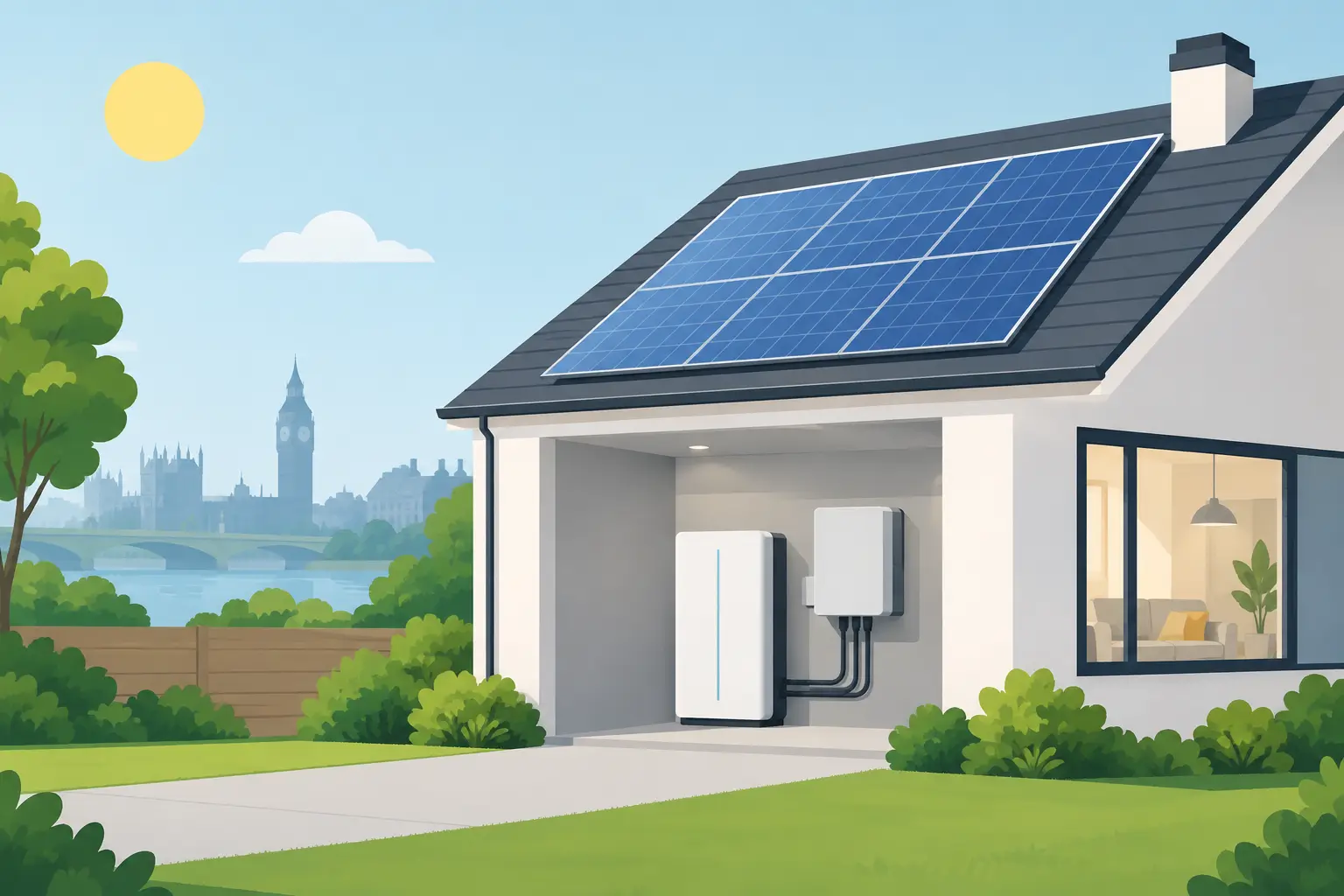
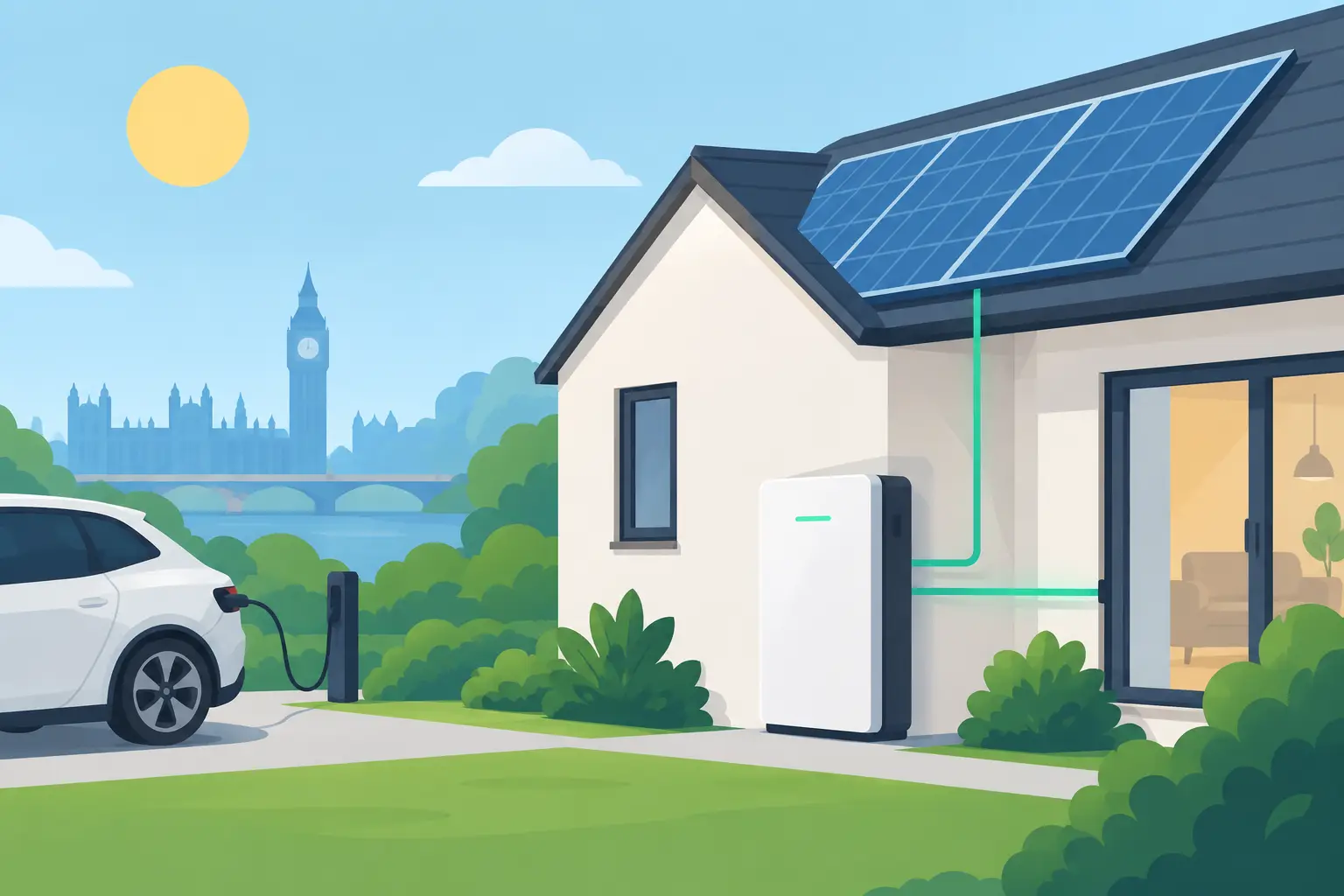
A home battery is only as cost-effective as the tariff behind it. The best tariffs for home batteries give you a clear low-cost window, usually overnight, so your battery can charge from the grid and power more of your home when daytime electricity costs more. No panels are required: the saving comes from buying electricity at the right time.
For many UK households, this is a practical way to take more control of energy bills. But the lowest advertised unit rate is not the whole story. You need a tariff that suits your household’s electricity use, battery capacity and, if you have one, how and when you charge an electric vehicle.
What makes a tariff work well with a home battery?
A time-of-use tariff charges different prices at different times of day. The most useful options for a battery have a substantial gap between the overnight rate and the daytime rate. Your system is scheduled to charge during the cheaper period, then releases stored electricity for household use once rates rise.
The bigger the difference between those rates, the more potential there is for savings. A cheap overnight rate can look attractive, but it must be long enough for the battery to charge properly. A short window may not give a larger battery enough time to fill, particularly if an EV is also drawing power at the same time.
The standing charge matters too, although it should not be considered in isolation. A tariff with a slightly higher standing charge but a much better overnight unit rate may still be the stronger option for a household that regularly shifts a significant amount of electricity into off-peak hours.
Your daytime consumption is equally relevant. If your household uses most electricity during the day, for cooking, laundry, heating controls and family life, a battery can reduce the amount bought at the higher rate. If you are out for most of the day and use little electricity until late evening, the benefit may be smaller, though not necessarily insignificant.
Comparing the best tariffs for home batteries
There is no single best tariff for every property. Tariffs change, availability varies by supplier and some plans are designed primarily for EV owners. Rather than choosing on the tariff name alone, compare the shape of the tariff.
Overnight EV tariffs
EV-focused tariffs commonly offer a low overnight price for several hours. They can be an excellent match for a home battery, particularly where the battery and vehicle charging are managed together. Examples include tariffs such as Octopus Go and EV-focused plans from other major suppliers, including E.ON.
The main advantage is straightforward: lower-priced electricity can be used to charge the battery overnight, while the battery supports household demand during more expensive periods. The possible drawback is that some EV tariffs have a higher daytime rate. This makes correct scheduling essential. Charging a battery or car outside the cheap window can quickly reduce the benefit.
Dedicated smart tariffs
Some suppliers offer tariffs with prices that vary by half-hour. These can offer very low prices at selected times, but they require closer attention. They may suit households that are comfortable with smart controls and flexible routines, especially where battery settings can respond to price signals.
The trade-off is unpredictability. Prices may occasionally be very favourable, but they are not always low at the same time every night. For homeowners seeking predictable costs, a tariff with fixed off-peak hours is often simpler to understand and manage.
Day-and-night tariffs without an EV
You do not need an electric vehicle to benefit from a time-of-use tariff. A household battery can make use of cheap overnight electricity on its own, storing it for breakfast, daytime appliances and the evening period. This is often the clearest route for homeowners who want lower bills without changing how they travel or fitting panels.
Before switching, check whether the low-rate period is available to all household electricity or restricted by tariff rules. Also confirm that your smart meter is working properly and that the supplier can bill you on half-hourly readings where required.
Battery and EV tariff comparison at a glance
The most useful approach is to see the battery and EV as part of the same household electricity plan. Both should be programmed to make the best use of the low-rate period without overloading your supply or drawing costly power later.
“`text LOW-COST OVERNIGHT WINDOW 00:30 to 05:30
EV tariff household Grid —> EV charger ——————> EV ready for morning —-> Home battery —————-> Stored power for the home
Battery-led household Grid —> Home battery —————-> Powers home at higher-rate times
Less suitable set-up Grid —> EV and battery charging after cheap window —> More electricity bought at the daytime rate “`
If the overnight window is five hours, an EV and battery may both be able to charge fully, or nearly fully, depending on charger speed, battery size and your property’s electrical supply. Where they cannot, prioritisation is needed. A household that drives long distances each day may prioritise the vehicle. A household with modest mileage may reserve more of the window for the home battery.
“`text Tariff type Best for Bill-reduction focus Fixed overnight EV rate EV owners with regular routines Charge car and battery overnight Fixed overnight battery Homes without an EV Store cheap power for daytime use Half-hourly smart rate Flexible households Shift charging to lower-price periods Flat-rate tariff Low electricity use overall Simplicity, but less battery opportunity “`
The goal is not simply to charge everything at once. It is to reduce the amount of electricity your household buys when it is most expensive.
How to choose the right tariff for your household
Start with your actual use rather than an estimate. Look at your annual electricity consumption, when you are normally at home and whether high-use appliances tend to run in the morning, day or evening. Smart meter data can make this much clearer.
Next, consider the usable capacity of the battery. A battery that stores enough low-cost electricity to cover your typical expensive-period demand can make a meaningful difference. A much larger system is not automatically better if it cannot be charged within the cheap window or if your household does not use the stored power.
Then check the charging rate. Capacity tells you how much electricity a battery can store; charging power affects how quickly it can fill. A tariff with a four-hour low-rate period may suit one system well and be restrictive for another. This is why tariff selection and battery design should be considered together, not as separate decisions.
Finally, read the tariff terms carefully. Check the overnight times, daytime unit rate, standing charge, smart meter requirements and whether the supplier can alter the low-cost window. Ask whether your battery can be set to charge only during the intended hours and whether it has controls to prevent unnecessary grid imports at peak times.
A practical example of the saving logic
Imagine a household charges a battery overnight at a low unit rate, then uses that stored electricity during the early morning and evening when the standard rate is higher. The potential saving per unit is the difference between those two prices, less any small losses from storing and releasing electricity.
Real-world results will depend on tariff rates, household demand, battery size and efficiency. That is why realistic calculations matter more than headline figures. A dependable assessment should show the assumptions used, rather than promising a saving that cannot be supported by your usage pattern.
Volt Wiser Energy helps homeowners consider this practical detail, pairing qualified installation with UK-engineered ESME Energy technology and straightforward guidance on how tariff-led battery storage can work in a normal grid-connected home.
Common questions about battery tariffs
Can a home battery charge from the grid?
Yes. A grid-charged battery takes electricity during lower-priced periods and stores it for later household use. It does not need panels to operate or to create a tariff-based saving opportunity.
Will an EV tariff always be the cheapest option?
Not always. It can be highly competitive if you charge an EV regularly and can also charge a battery overnight. However, a higher daytime rate may make it less suitable for a household that cannot shift enough electricity into the off-peak window.
Can I use the battery while charging my EV?
Usually, yes, but the system needs sensible settings. Whether both can charge at full speed depends on your incoming supply, charger rating, battery charger rating and the available off-peak time. A professional installer can help ensure the arrangement is safe and practical.
The right tariff should make your daily routine cheaper, not force you to build your life around a complicated energy timetable. When the overnight window, battery capacity and household demand line up, lower-cost electricity can become a useful part of how your home runs.