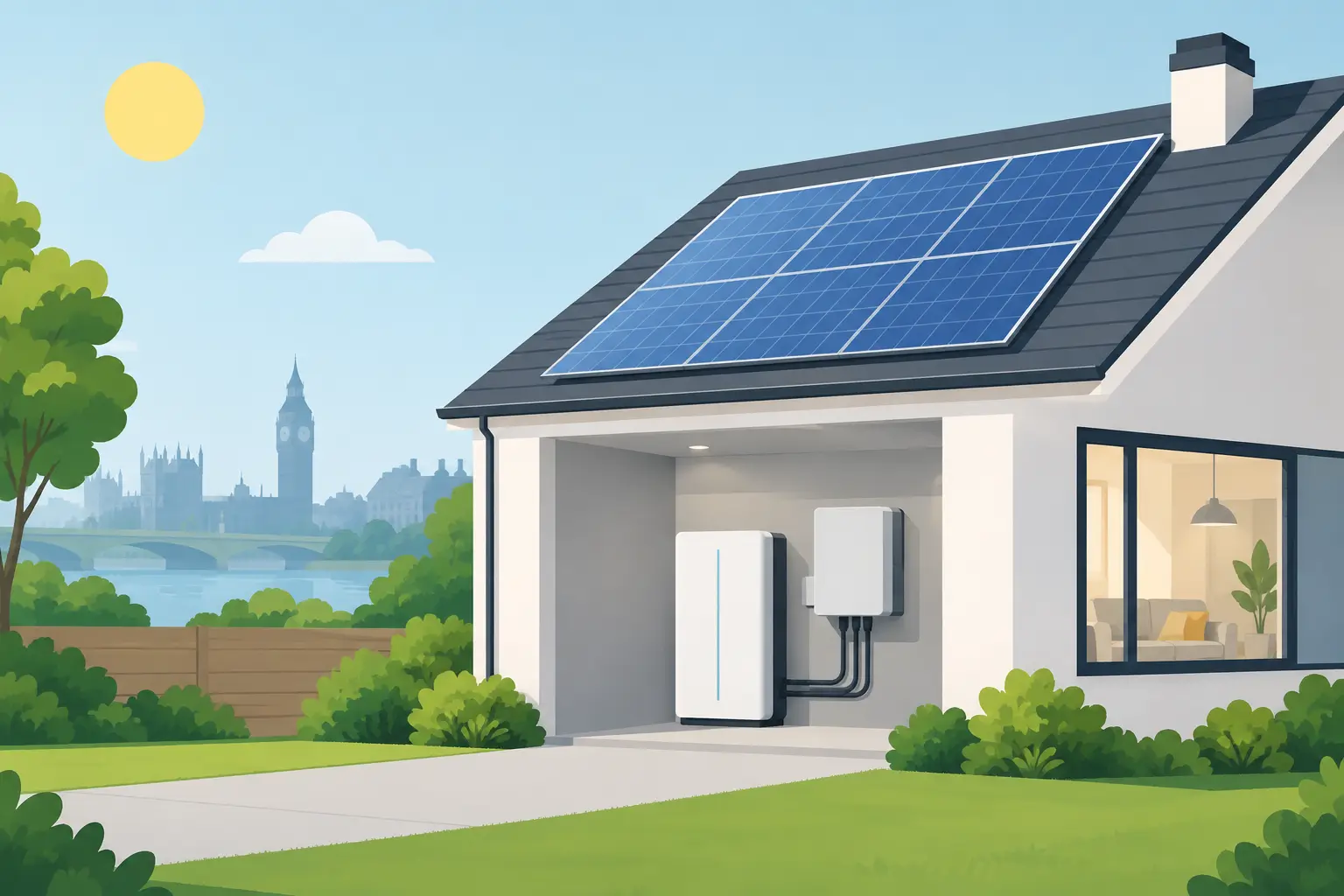

A high electricity bill is rarely caused by one appliance. It is often the result of using most of your power when the tariff costs most. A professional home battery installation gives a household another option: charge a battery from the UK grid during cheaper overnight periods, then use that stored electricity when daytime prices rise.
This is not a complex lifestyle change or a project that requires roof panels. It is a practical way for suitable UK homes to make more of a time-of-use tariff, with the system designed, fitted and commissioned by qualified professionals.
What a home battery actually does
A domestic battery stores electricity rather than creating it. It is programmed to charge when your chosen tariff offers lower unit rates, usually overnight, and discharge to support your household demand at more expensive times. Depending on the system settings and your usage, that could cover electricity used for cooking, lighting, washing, entertainment and everyday plug-in appliances.
The principle is straightforward. Buy grid electricity at the lower rate, store it, and use it later rather than buying every unit at the higher daytime rate. The value comes from the difference between tariff periods, balanced against the energy lost during charging and discharging.
A battery is not a promise that you will never buy electricity at peak rates. Large loads, an undersized battery, winter demand and a changing household routine can all affect results. It is, however, a way to put more control around when you buy a meaningful share of your electricity.
Why professional installation matters
A battery is connected to your home’s electrical system and must be selected and installed with care. Capacity is only one part of the decision. The installer also needs to consider battery output, the consumer unit, cable routes, earthing arrangements, communications, ventilation requirements and how the system will operate during normal grid-connected use.
A professional home battery installation begins with a proper assessment rather than a one-size-fits-all quotation. Your installer should ask about annual usage, your half-hourly tariff, typical daytime consumption, major electrical loads and whether you charge an electric vehicle at home. They should also establish a suitable location for the equipment, such as a utility area, garage or other appropriate space.
Qualified installation helps ensure the system is safely connected, correctly configured and tested before handover. It also means you have clear instructions on the monitoring app, operating settings and what to expect from your battery over time. Volt Wiser Energy works with ESME Energy and qualified installers to provide UK-engineered battery technology with that practical support behind it.
The installation process, without the mystery
For most homes, the process is more straightforward than people expect. After an initial discussion of your tariff and electricity use, the proposed system can be sized around your likely savings opportunity rather than simply choosing the largest battery available.
The installation team then confirms the equipment position, electrical connection and any site-specific requirements. On installation day, the battery, inverter and associated protection equipment are fitted and connected. The work is tested, commissioned and set up to charge and discharge in line with your agreed tariff plan.
You should leave with a clear explanation of the controls. In many cases, day-to-day operation is automated, but you still need to understand how to check performance and what happens if you change supplier, tariff or household routine. A good installer will explain these points plainly rather than leaving you to interpret technical screens on your own.
EV charging: use the cheap window wisely
An electric vehicle can make an off-peak tariff especially worthwhile because it is often one of the largest electrical loads in the home. The sensible approach is usually to schedule the car to charge directly from the grid during the lowest-priced overnight window while the home battery charges at the same time, if your supply and agreed system design allow it.
The key point is that a home battery is not normally intended to fill an EV at expensive times. EVs need a large amount of energy, and charging the car from the battery later can add losses and may empty the stored energy needed for household use. Instead, let the tariff do the hard work overnight.
Illustrative EV tariff comparison
The figures below are examples only. Rates, charging windows and standing charges vary by supplier, region and tariff, so always check your own tariff details before making a decision.
“`text EV charging at home: same 40 kWh charge, different timing
Daytime-rate charging Off-peak EV tariff charging 40 kWh x 30p per kWh 40 kWh x 8p per kWh | | v v £12.00 £3.20
Potential difference for one charge: £8.80 “`
When an EV and home battery are timed together, the aim is to reduce both vehicle charging costs and the household’s exposure to daytime electricity prices.
“`text Overnight lower-cost period Higher-cost daytime period
Grid supply Stored household electricity | | +–> EV charger –> electric car +–> lights, cooking, appliances | | +–> home battery charges +–> reduced daytime grid use
Goal: charge the EV directly at the lower rate, then reserve stored battery energy for normal household demand when electricity costs more. “`
Your installer can help assess whether your incoming supply, charger settings and battery configuration are appropriate for this approach. The answer depends on how many kilowatt-hours your car needs, how often you drive, your overnight tariff window and your wider household demand.
Choosing the right battery size
A larger battery can store more cheap-rate electricity, but it is not automatically the better purchase. If a household does not use enough electricity during higher-priced periods, part of a very large battery may sit unused. Conversely, a small battery can fill quickly and run out before the evening peak is over.
The best size is linked to the amount of electricity you can realistically shift from expensive periods to cheaper ones. It should also reflect the battery’s usable capacity, its charge and discharge power, and the tariff itself. A battery that charges overnight must have enough time and available power to reach a useful level before the lower-price window ends.
This is why annual consumption alone is not enough. Two homes with the same yearly usage can have very different savings potential. One may use most electricity after work, while another uses more during the day. Smart-meter data and a realistic discussion about your routine provide a much better starting point.
Questions worth asking before you proceed
Ask who will carry out the electrical work and what qualifications they hold. Confirm what is included in the quote, where the equipment will be fitted, how the system will be monitored and what warranty support is available. It is also sensible to ask how the battery will be configured for your current tariff and what changes would be needed if you move to a different one later.
Be wary of savings figures that assume every stored unit replaces the highest possible daytime price, every day of the year. Honest projections allow for battery efficiency, seasonal changes, standing charges, household behaviour and tariff variation. The point is not to make a headline look impressive. It is to understand whether the likely benefit is worthwhile for your home.
A practical next step for lower bills
Before choosing a system, look at your recent electricity statements and identify when you use the most power. If you have a smart meter, half-hourly data can reveal far more than an annual total. Compare that pattern with the cheaper periods available on tariffs you could realistically use, particularly if you charge an EV at home.
A professionally specified battery can turn that information into a working plan: buy lower-cost electricity overnight, charge the car at the right time, and keep stored energy available for the household when the day becomes more expensive. That is a modest change to how electricity is bought, but for the right home it can make monthly bills feel far less unpredictable.