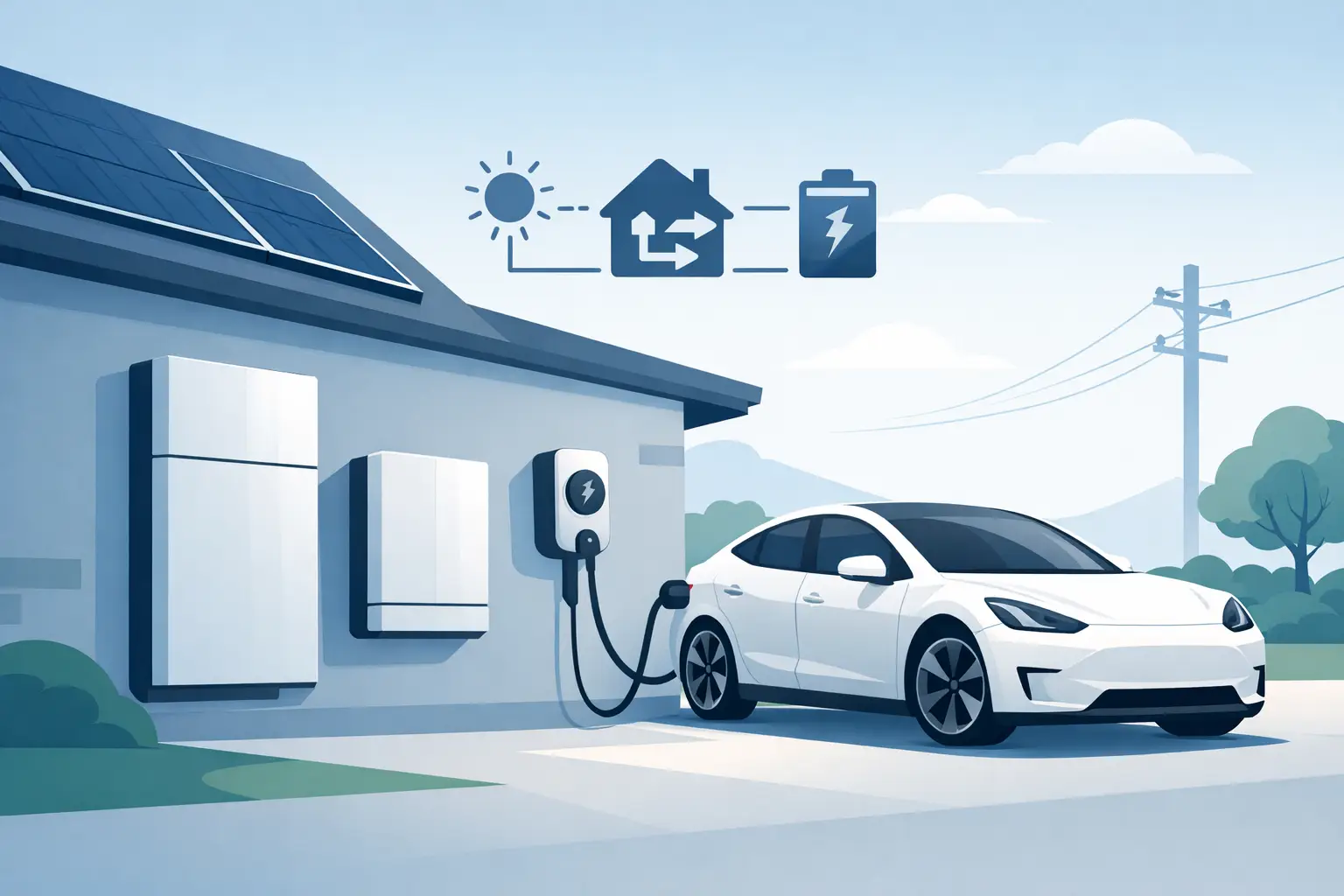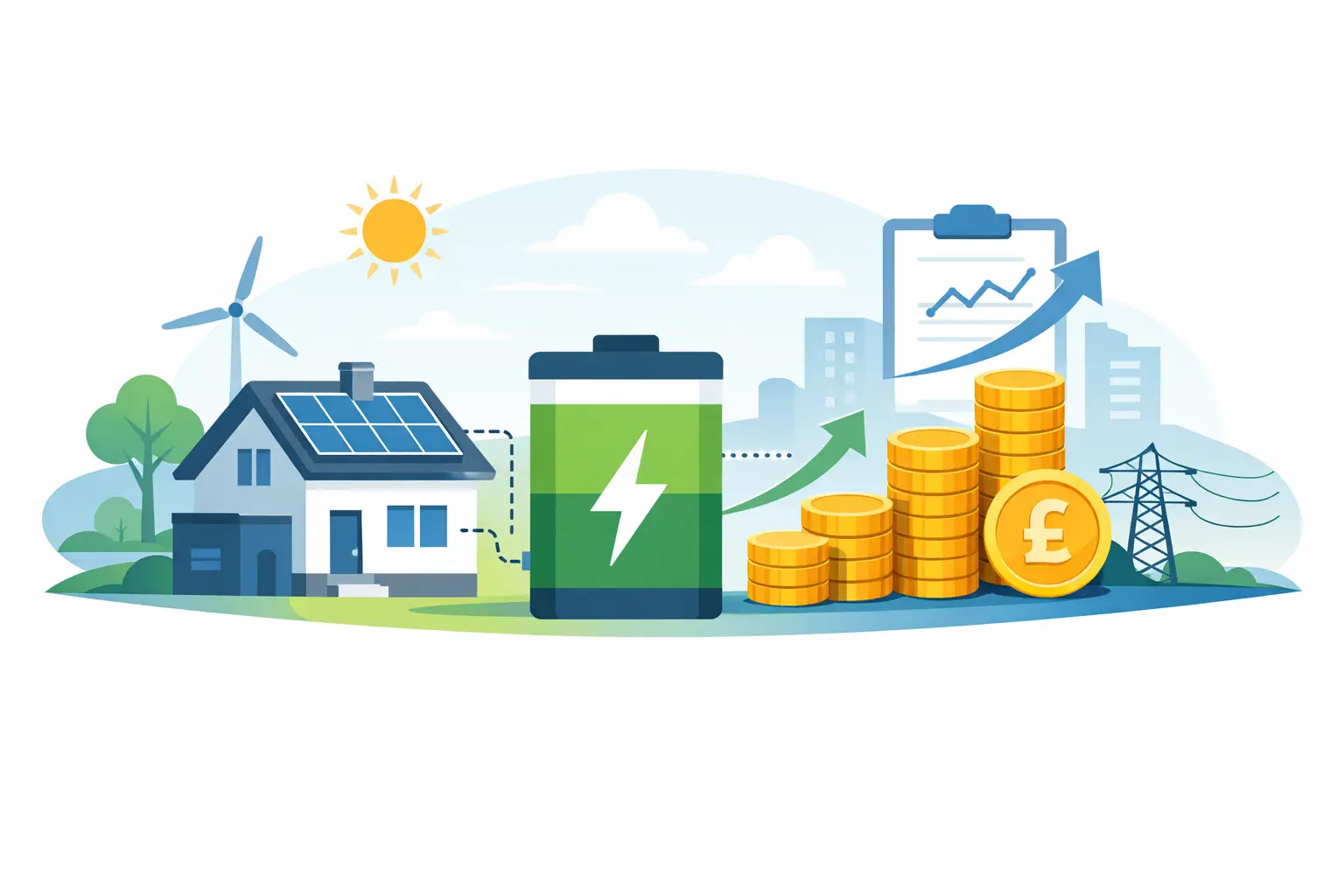

When your electricity rate jumps in the early evening, that is the expensive part of the day most households feel without always noticing. Kettles go on, ovens heat up, televisions are running, and for many homes the car is either charging or needs to be. This is exactly how domestic batteries reduce peak costs – by shifting when you buy electricity, so less of your household demand is exposed to those higher-rate periods.
For many UK homeowners, the appeal is simple. You do not need panels on the roof to make battery storage worthwhile. If you are on a time-of-use tariff, a domestic battery can charge from the grid when electricity is cheaper, usually overnight, then supply that stored electricity back to your home when prices rise. The result is not free electricity. It is smarter electricity buying.
How domestic batteries reduce peak costs in practice
A domestic battery works a bit like a buffer between your home and the grid. Instead of taking all your power at the moment you need it, the system stores lower-cost electricity in advance. Later, during the pricier parts of the day, your home can draw from the battery rather than importing as much from the grid.
That matters because peak pricing is where many bills start to creep up. On a flat tariff, every unit costs the same, so there is less room to optimise. On a time-of-use tariff, however, the gap between cheap overnight electricity and expensive daytime or evening electricity can be significant. The wider that gap, the more valuable battery storage usually becomes.
A simple example makes the logic clearer. Imagine your tariff offers a low overnight rate and a much higher rate between late afternoon and bedtime. Your battery charges during the low-rate window. Then, when you are cooking, doing laundry, running the dishwasher or simply using the house as normal, the battery discharges to cover some of that demand. You have effectively moved part of your energy purchase to a cheaper time.
Why peak periods cost so much
Peak periods are expensive because overall demand on the grid is higher. More households are active at the same time, and suppliers reflect that pressure in tariff structures. For the average home, these are also the hours when electricity use tends to be concentrated.
That overlap is the key problem. You are not just using more power during peak times – you are using it when each unit costs more. A battery does not necessarily reduce how much electricity your home needs overall. What it can reduce is how much of that electricity is bought at the worst possible price.
This is why battery storage is often best viewed as a tariff optimisation tool rather than just a piece of hardware. The savings come from timing.
Where the savings come from
In most homes, savings come from three moving parts working together. First, you need a tariff with a clear gap between off-peak and peak rates. Second, you need enough battery capacity to cover a useful chunk of your higher-cost usage. Third, your usage pattern has to line up reasonably well with the system.
If your household uses very little electricity during peak hours, the savings may be modest. If your evenings are busy and you are on a strong time-of-use tariff, the difference can be more noticeable. Homes with consistent early evening demand often get the clearest benefit because that is where the battery has the best chance to displace expensive imported electricity.
There is also a practical point many homeowners appreciate. Battery storage can make your bills feel more predictable. Instead of being fully exposed to the costliest parts of the day, you are pre-buying some of your electricity at a lower rate.
Adding an electric car changes the picture
An electric car can increase household electricity use substantially, but it also creates one of the biggest opportunities to save if charging is managed properly. The challenge is that EV charging can become expensive very quickly if it spills into standard daytime or evening rates.
When a domestic battery is paired with the right tariff strategy, the household can make better use of cheaper charging windows. In some homes, the battery supports general household demand during peak times while the EV takes advantage of lower overnight pricing directly. In others, timing needs to be coordinated more carefully so the car charger and battery system are not competing for the same cheap-rate window.
That is where good advice matters. Not every property, tariff or driving pattern is the same.
EV tariff comparison example
Below is a simple illustration of how different charging patterns can affect household costs. Figures vary by supplier and tariff, but the principle stays the same.
| Charging approach | Example rate | 40 kWh EV charge cost | | — | — | — | | Standard daytime import | 30p per kWh | £12.00 | | Overnight EV tariff window | 9p per kWh | £3.60 | | Mixed charging without planning | 20p per kWh average | £8.00 |
That difference is why tariff timing matters so much. A battery does not replace the need for an EV-friendly tariff, but it can help the wider household avoid expensive import periods while the car is charged more economically.
Simple household and EV timing diagram
A straightforward way to think about it is this:
| Time | Grid price tendency | Best use | | — | — | — | | Overnight | Lower | Charge battery and, where suitable, charge EV | | Morning | Medium | Use battery for household demand if rates rise | | Late afternoon to evening | Highest | Run home from battery to reduce peak import | | Late evening | Falling | Prepare for next low-rate window |
For homes with an EV, the main goal is reducing total expensive import, not just charging the car cheaply in isolation. The battery can play a useful role by protecting the rest of the household from peak rates while the overall energy plan is built around lower-cost windows.
How domestic batteries reduce peak costs without solar panels
This is the point many people miss. A domestic battery does not depend on having generation at home. If you can access cheaper electricity at certain times, the battery can store it from the grid and use it later.
That makes battery storage relevant to a much wider range of UK homes. You do not need to consider roof suitability, panel orientation or whether a property is ideal for solar. For many households, the simpler question is whether their tariff and usage pattern make storage worthwhile.
It also tends to mean less disruption. A grid-charged battery installation is a more direct route to bill reduction for homeowners who want practical savings without changing the outside of the property.
What affects the real savings
Battery savings are never one-size-fits-all. Capacity matters, because a smaller battery may not cover enough of your peak-time demand to make a big difference. Tariff choice matters just as much. A battery paired with a weak tariff spread will usually save less than one paired with a stronger day-night price difference.
Household behaviour matters too. If you regularly use high-demand appliances in the evening, savings potential tends to improve. If most of your usage is already overnight, the benefit may be less dramatic. EV ownership can increase the opportunity, but only if charging is planned carefully.
There is also the question of system efficiency. No battery is perfectly lossless. Some energy is always lost in charging and discharging, so the maths depends on the price gap being large enough to outweigh those losses. That is why clear, realistic guidance is more useful than exaggerated claims.
Is it worth it for every home?
Not every home will see the same return. If you are on a flat tariff and have no intention of switching, the case is weaker. If your household uses most of its electricity during lower-cost periods already, there may be less to gain. But if you are on a suitable tariff, have meaningful evening demand, and want more control over household energy costs, a battery can be a sensible upgrade.
This is where a straightforward assessment is better than a sales pitch. The right system should fit your actual usage, not an idealised example. A dependable installer should explain what is realistic, how the tariff strategy works, and where the savings are likely to come from.
For households looking at rising electricity costs and wondering what can actually be done about them, battery storage offers something refreshingly practical. It does not ask you to use less power than you need. It gives you a better way to buy it.