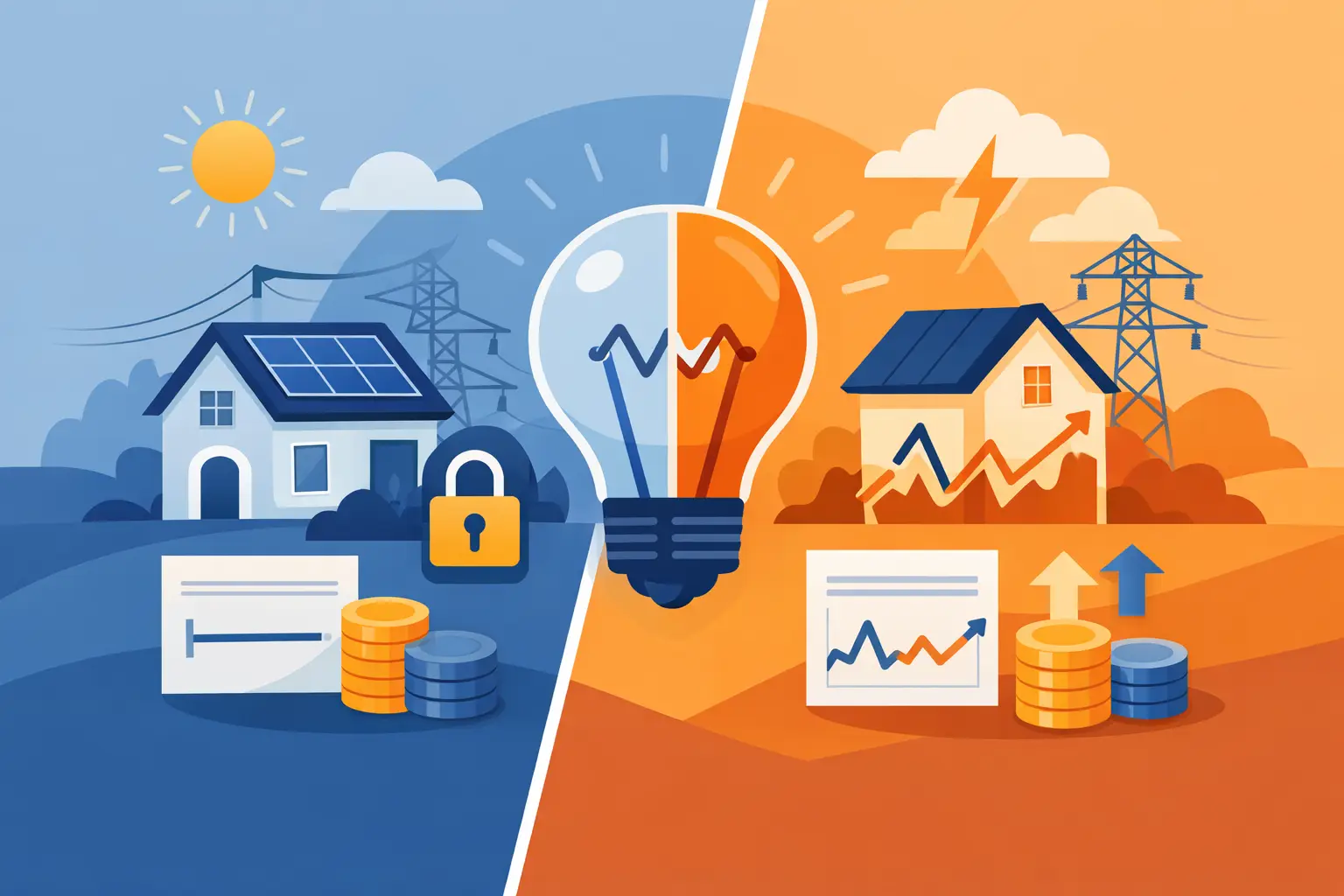
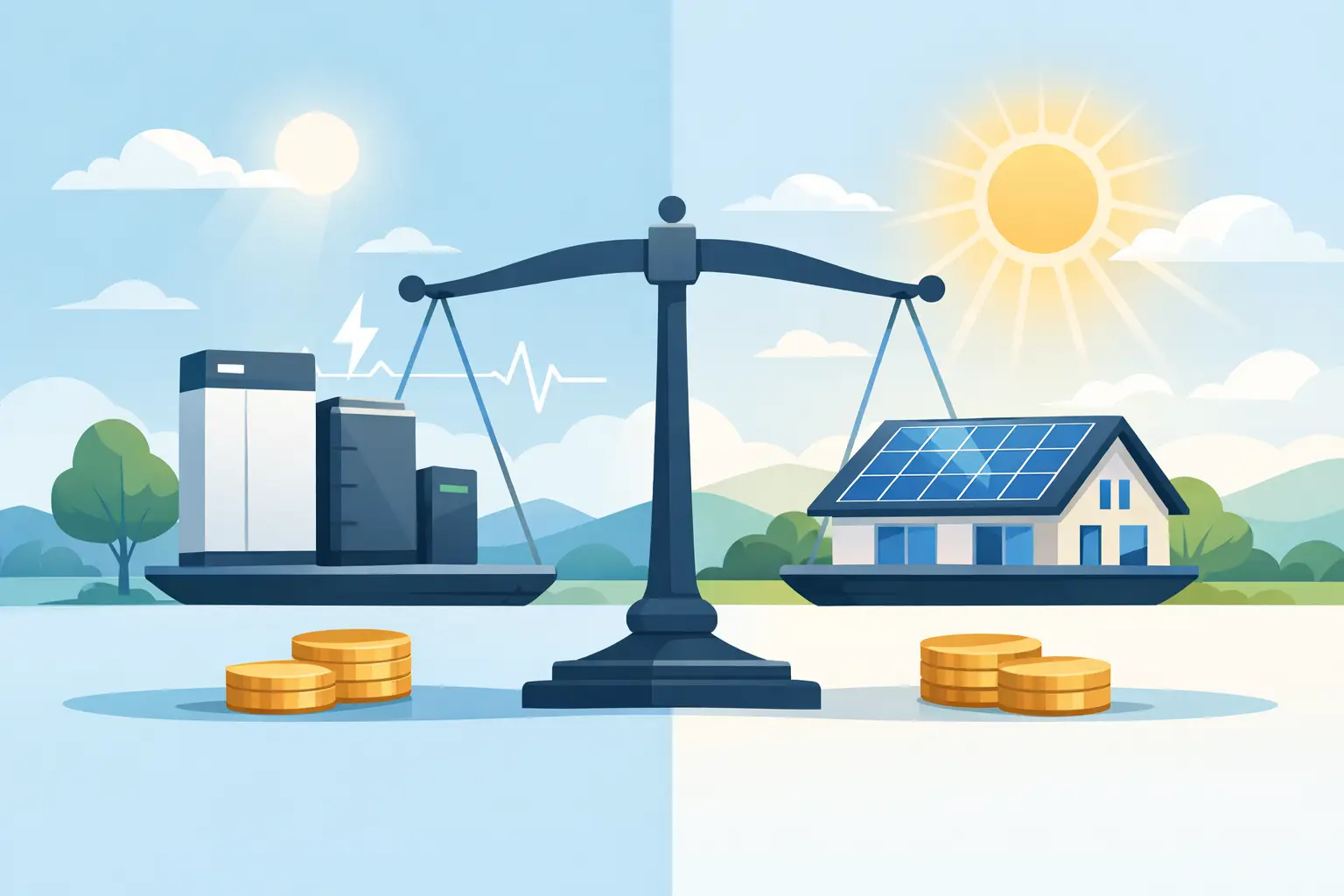
When people compare home battery vs solar panels, they often assume the battery only makes sense if it is paired with panels on the roof. For many UK households, that simply is not true. A home battery can work as a standalone system, charging from the grid when electricity is cheaper and supplying that stored power later when rates are higher.
That difference matters because the real question is not just which technology sounds greener or more modern. It is which one suits your home, your tariff and your budget. For plenty of homeowners, especially those who want lower bills without the cost and disruption of roof work, a battery can be the more practical first step.
Home battery vs solar panels: what is the difference?
Solar panels generate electricity when daylight is available. That means their performance depends on the size, angle and shading of your roof, along with the time of year and the weather. In summer they can produce a useful amount of power. In winter, output drops, often when household demand is still high.
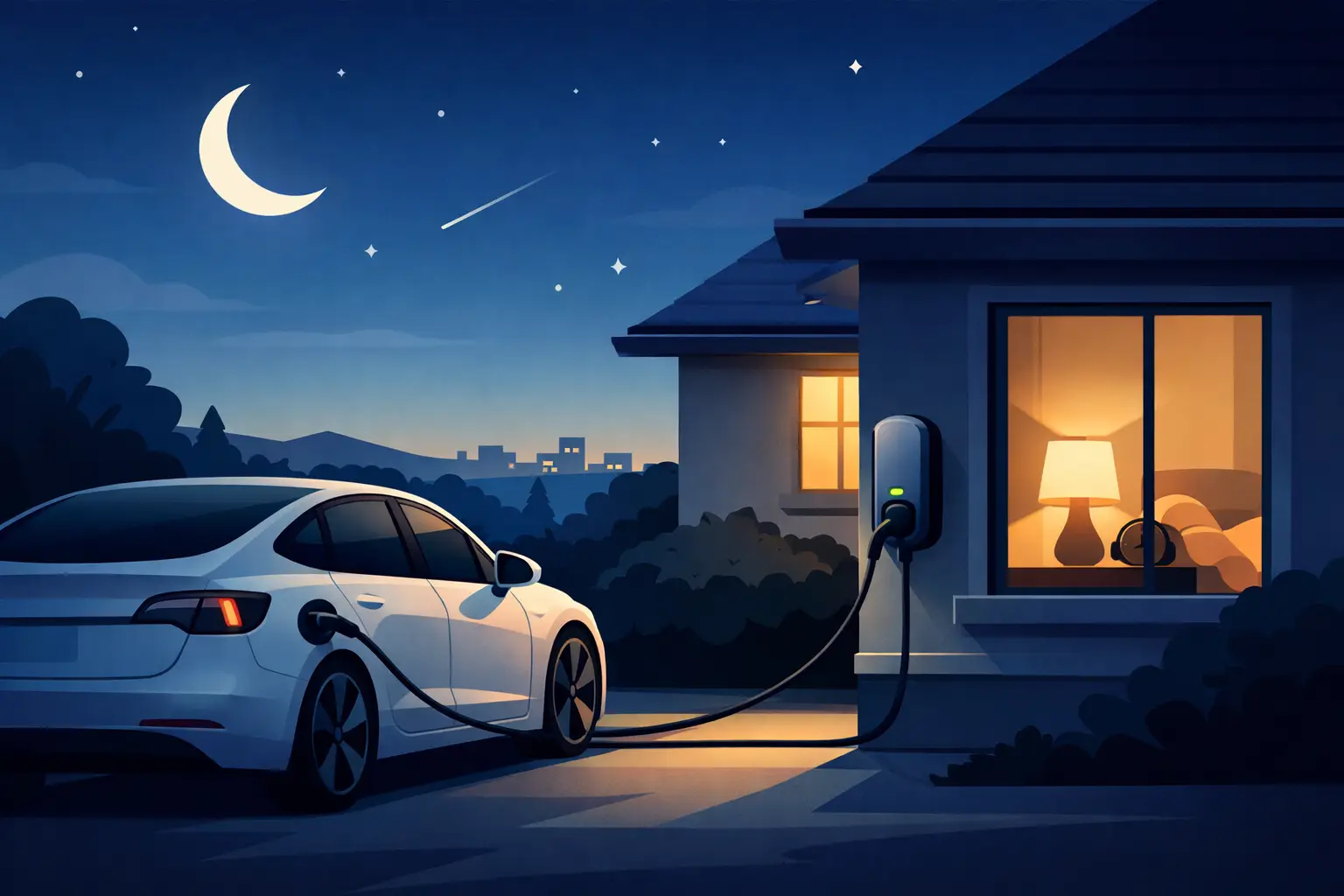
A home battery does a different job. Rather than generating energy, it stores it for later use. In the model most relevant to many UK homes, the battery charges from the grid during lower-cost periods overnight, then discharges during the day when electricity is more expensive. The value comes from tariff optimisation rather than roof generation.
So this is not a like-for-like contest. Solar panels are about producing electricity. A battery is about using electricity more cleverly. In some homes, they work well together. In others, a battery on its own is the simpler and more effective route.
Why the comparison matters more in the UK
UK homeowners face a fairly specific set of conditions. Roof space is not always ideal, planning or property type can complicate solar, and many people do not want the upfront cost or disruption of a full panel installation. At the same time, electricity pricing has made timing more important than ever.
If your tariff offers cheaper off-peak electricity, a battery gives you a way to buy power when it costs less and use it when it costs more. That can be attractive even if you never install a single panel. It also means the decision should be based on how your home uses energy, not on the idea that solar is the default and everything else is an add-on.
Upfront cost and installation
For many households, this is where the decision starts to become clearer.
Solar panels usually involve a higher total cost because you are paying for the panels themselves, roof mounting equipment, electrical work and installation. The process can be more involved, and suitability depends on your roof. If your roof is shaded, awkwardly shaped, ageing or simply not facing a helpful direction, the returns may be less appealing.
A home battery installation is often more straightforward. Because it does not depend on roof conditions, more properties can be suitable. That makes it a practical option for homeowners who want to reduce bills without taking on a larger home improvement project.
This is one reason battery storage is gaining attention in its own right. It removes one of the biggest barriers people associate with energy upgrades – the belief that they need to start with solar.
Which one can save you more?
There is no honest one-size-fits-all answer here. Savings depend on your home, your tariff and how you use electricity.
Solar panels can reduce the amount of electricity you buy from the grid during daylight hours. That can work well if you are at home during the day and able to use a good share of the electricity as it is generated. If you are out for much of the day, some of that benefit can be less immediate unless you also have a battery.
A standalone battery works differently. It is less about generating free electricity and more about avoiding peak-rate electricity. If you can charge overnight at a lower rate and use that stored energy during expensive daytime periods, the savings can be more predictable and easier to understand.
For households focused on bill control rather than renewable generation, that predictability matters. A battery is not waiting for sunshine. It is working around tariff timings. In practical terms, that can make it a better match for everyday UK living.
Home battery vs solar panels for typical household routines
Think about when your home uses the most electricity.
If your highest demand is in the morning and evening, solar panels may not always line up neatly with that pattern, particularly outside summer. You may still need to buy a fair amount of electricity from the grid when prices are higher.
A battery can be better aligned with that routine. It can store lower-cost overnight electricity and release it when the kettle is on, dinner is cooking and the washing machine is running after work. That makes it especially relevant for busy households that do most of their energy use outside the middle of the day.
This is where a lot of comparisons go wrong. People look at annual generation figures for solar but forget to ask whether that electricity appears when they actually need it.
The roof question
Solar panels need the right roof. A battery does not.
That single fact rules the decision for some homes straight away. Flats, shaded properties, homes with complex rooflines, listed buildings or households that simply do not want panels fitted can all find solar less attractive. Even where solar is possible, some people would rather avoid the visual change, the scaffolding and the added project complexity.
A battery installation is usually less dependent on those factors. That opens the door for many more standard grid-connected homes. If your main aim is lowering electricity costs, not producing power on-site, that flexibility is hard to ignore.
What about energy independence?
Solar panels are often associated with self-sufficiency, and there is some truth in that. Generating your own electricity can feel like a step away from reliance on the grid.
But full independence is rarely the reality for most UK homes. Solar output changes through the year, and many homes still rely heavily on grid electricity in winter or in the evenings. Without storage, solar alone may not cover the times when demand is strongest.
A battery does not make you independent either, especially when it is grid-charged. What it can do is give you more control over when you buy electricity. For many households, that kind of control is more useful than the idea of independence. Lowering costs reliably is often a more practical goal than chasing a fully self-powered home.
Maintenance, reliability and long-term thinking
Both technologies should be treated as long-term investments, but they involve different considerations.
Solar panels tend to be relatively low maintenance once installed, though performance can be affected by roof condition, dirt, shading and inverter issues over time. Because they are mounted externally, any future roof work can also become more complicated.
A battery system is generally easier to think about as an internal electrical upgrade rather than a structural one. The key is choosing a quality system, fitted properly, with clear guidance on performance and safe operation. That is why professional installation and trusted technology matter so much.
For homeowners who prefer straightforward solutions, a battery-only system can feel less intrusive and easier to understand from day one.
So which is better?
If your roof is ideal, you are happy with the higher upfront commitment and you want to generate your own electricity, solar panels may be a strong fit. They can make good sense in the right property with the right usage pattern.
If your priority is reducing bills in a simpler, more accessible way, a home battery may be the stronger option. That is especially true if you are on a time-based tariff, use most of your electricity outside daylight hours or want to avoid the complexity of roof-mounted equipment.
For many UK households, the most useful shift in thinking is this: battery storage is not just an extra for solar homes. It can be a practical standalone solution. That is exactly why businesses such as Volt Wiser Energy focus on helping homeowners understand how battery storage can work with the grid they already use.
A good energy decision should fit your home as it is, not the version of it that would need scaffolding, roof alterations and a bigger budget. If a battery helps you take control of electricity costs with less friction, that is not a compromise. It may be the smarter move.