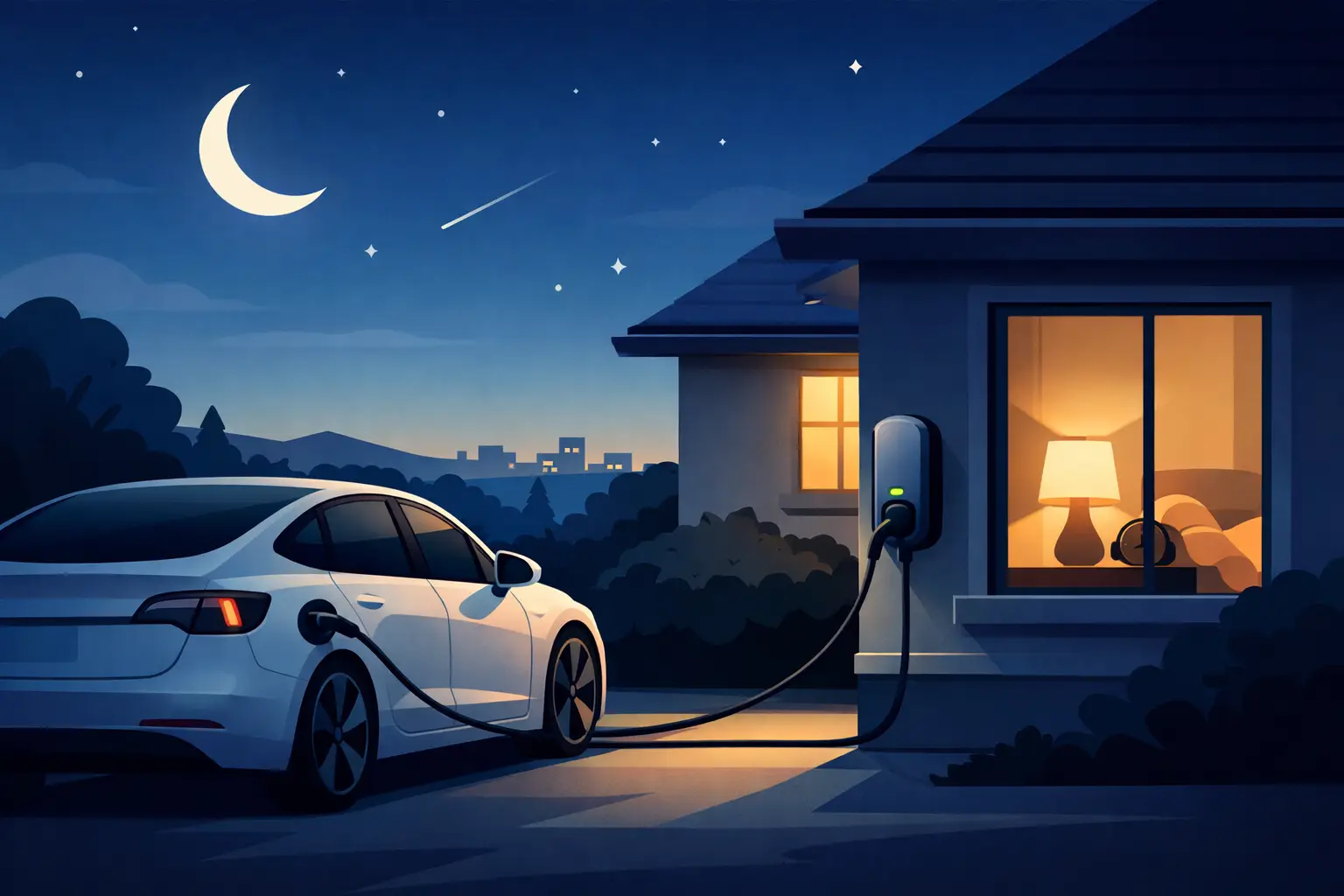
Plugging in at 6pm can be one of the most expensive ways to run an electric car. If you are asking, “when should EVs charge overnight?”, the practical answer is: during your electricity tariff’s cheapest off-peak window, provided the car has enough time to reach the charge level you need by morning.
That sounds simple, but the best schedule depends on your tariff, your daily mileage, your charger speed and the time you leave home. For many UK households, getting this right can make a noticeable difference to the cost of driving and create a better opportunity to reduce wider household electricity bills.
When should EVs charge overnight on a UK tariff?
Most EV-focused time-of-use tariffs offer a lower unit rate for a set overnight period. The exact hours and price vary by supplier and tariff, so check your current terms rather than relying on a neighbour’s schedule or an old online example.
Set your vehicle or smart charger to begin within that low-cost window and finish shortly before you need to leave. If your cheaper period runs from 00:30 to 04:30, for example, there is little value in starting at 8pm unless the car genuinely needs more energy than the overnight window can provide.
A delayed-charge setting is usually available in the car’s app, its on-board menu or the charger app. Choose one method as the main controller. Setting competing schedules in both the car and charger can lead to missed charging sessions.
A simple EV tariff comparison
The figures below are illustrative, not a promise of a particular tariff price. They show why timing matters when a 40 kWh top-up is needed.
“`text Illustrative electricity cost for a 40 kWh EV charge
Unit rate Cost of 40 kWh Standard flat rate 30p/kWh £12.00 EV off-peak period 7p/kWh £2.80
Potential saving from charging in the lower-cost period: £9.20 “`
The saving will be smaller or larger depending on your rates and how much energy the car needs. Yet the principle remains the same: shifting a sizeable, flexible electricity use into a cheaper window is often more effective than trying to reduce small everyday uses around the home.
Work backwards from your morning departure
A useful charging plan starts with the time you need the car, not simply the start of the off-peak window. First, estimate the energy required for your usual driving. Then allow enough time for charging, with a little margin for cold weather, charge losses or an unexpected extra journey.
For example, a 7 kW home charger can theoretically add around 28 kWh in four hours. In real use, the amount delivered to the battery will be slightly lower because charging is not perfectly lossless. A lower-powered charger will need longer, while a plug-in schedule may also be restricted by the vehicle’s own settings.
You do not need to charge to 100% every night. For routine use, many manufacturers recommend a lower daily charge limit, often around 80%, to support long-term battery health. Follow the guidance for your particular vehicle. Save a full charge for days when you actually need the additional range.
Avoid the expensive shoulder hours
The most common mistake is charging either side of the low-rate period. An EV may start immediately when plugged in, or continue charging after the cheaper window ends, if the schedule is not set correctly.
It is worth checking the first few sessions in your supplier app or smart meter data. Look for electricity use rising only in the intended overnight hours. This also helps identify whether another device, such as a hot water cylinder or storage heater, is adding to your overnight demand.
If your off-peak window is short, prioritise the EV charge within it. The car is usually the largest flexible load in the house, and charging it at daytime rates can quickly outweigh savings made elsewhere.
EV charging and a home battery: use the same cheap hours wisely
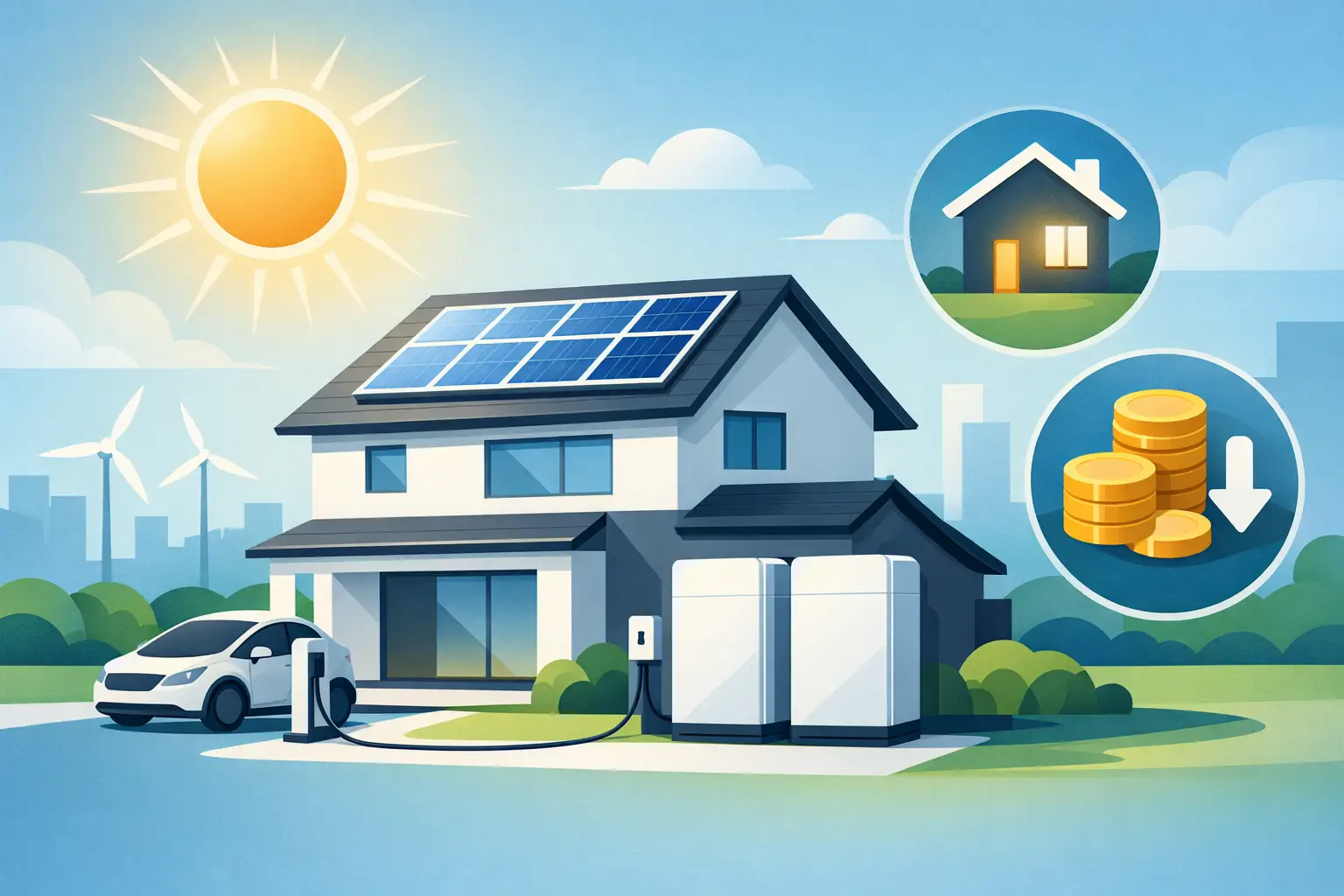
A grid-charged home battery can complement an EV tariff by storing lower-cost overnight electricity for use when household electricity costs more during the day. It does not need panels to do this. The EV is normally charged directly in its allocated off-peak period, while the home battery stores energy to help cover daytime household use.
“`text Overnight lower-cost period Higher-cost daytime period
Grid electricity at lower rate Home uses stored energy first | | +–> EV charge for morning journey +–> Lights, cooking, appliances | | +–> Home battery charges +–> Less electricity bought at higher rate “`
This approach can make an EV tariff work harder for the whole household, rather than only reducing motoring costs. However, the system needs to be sized and configured sensibly. Charging an EV and a battery at the same time increases the household’s demand from the grid, so the property’s supply capacity, charger rating and battery settings all matter.
A qualified installer can assess the likely loads and ensure the installation is safe and suitable. That is particularly useful for homes with an electric shower, induction hob, heat pump or other high-demand equipment. The aim is not to force every device into one overnight period. It is to use the cheapest available electricity without overloading the supply or making daily life inconvenient.
How the household bill comparison can look
Again, this is an illustration using simple figures. It shows the difference between using lower-cost electricity only for the car and using it strategically for the home as well.
“`text Illustrative daily electricity use
EV tariff only EV tariff plus home battery EV charge: 20 kWh charged overnight charged overnight Daytime home use: 10 kWh bought at day rate supplied from stored lower-cost energy*
Result lower driving cost lower driving and daytime household cost
*Subject to battery capacity, settings, losses and actual household demand. “`
Battery storage is not a magic reduction on every bill. There are equipment costs, installation considerations and small energy losses when electricity is stored and released. Savings depend on the gap between your cheap and peak rates, how much electricity your household uses at expensive times, and how consistently the battery can be used. Clear tariff figures and realistic consumption data matter more than headline claims.
Should you charge every night?
Not necessarily. If you have driven only a few miles, charging every night may be unnecessary. But if your tariff offers a predictable low-cost window, regular scheduled charging can still be convenient, particularly when the car is set to a sensible charge limit.
The better question is whether the car has enough charge for tomorrow, plus a reasonable buffer. For a household with a predictable commute, a daily schedule is easy. For irregular journeys, use the app to add a one-off charge or temporarily raise the charge limit before a longer trip.
Cold weather deserves some planning. EVs can use more energy in winter, and battery charging can be slower when conditions are very cold. Plugging in overnight gives the vehicle time to manage the battery temperature and, where available, pre-condition the cabin before departure. That can preserve more driving range for the journey itself.
Check these settings before relying on overnight charging
Start by confirming your off-peak hours and rates. Then check that your charger clock, vehicle clock and app are all correct, especially after seasonal clock changes. Set the desired charging limit, programme the schedule, and review your first bill or half-hourly usage data to confirm the charge landed in the expected period.
Also consider what happens if you plug in late. Some cars will intelligently calculate when to begin charging; others will wait for a fixed start time and may not finish by morning. If your vehicle cannot reliably schedule to a departure time, set a slightly earlier start inside the lower-cost window.
For households considering battery storage, a proper usage assessment is worthwhile. Volt Wiser Energy focuses on helping homeowners understand whether their tariff pattern and daytime electricity use offer a realistic route to lower bills, with professionally installed UK-engineered systems designed for dependable everyday use.
The best overnight charging routine is the one that gives you the range you need, keeps charging inside your lowest-cost hours and fits naturally around the way your household uses electricity. Once that routine is in place, your EV becomes less of a new demand on the bill and more of a reason to take control of it.