
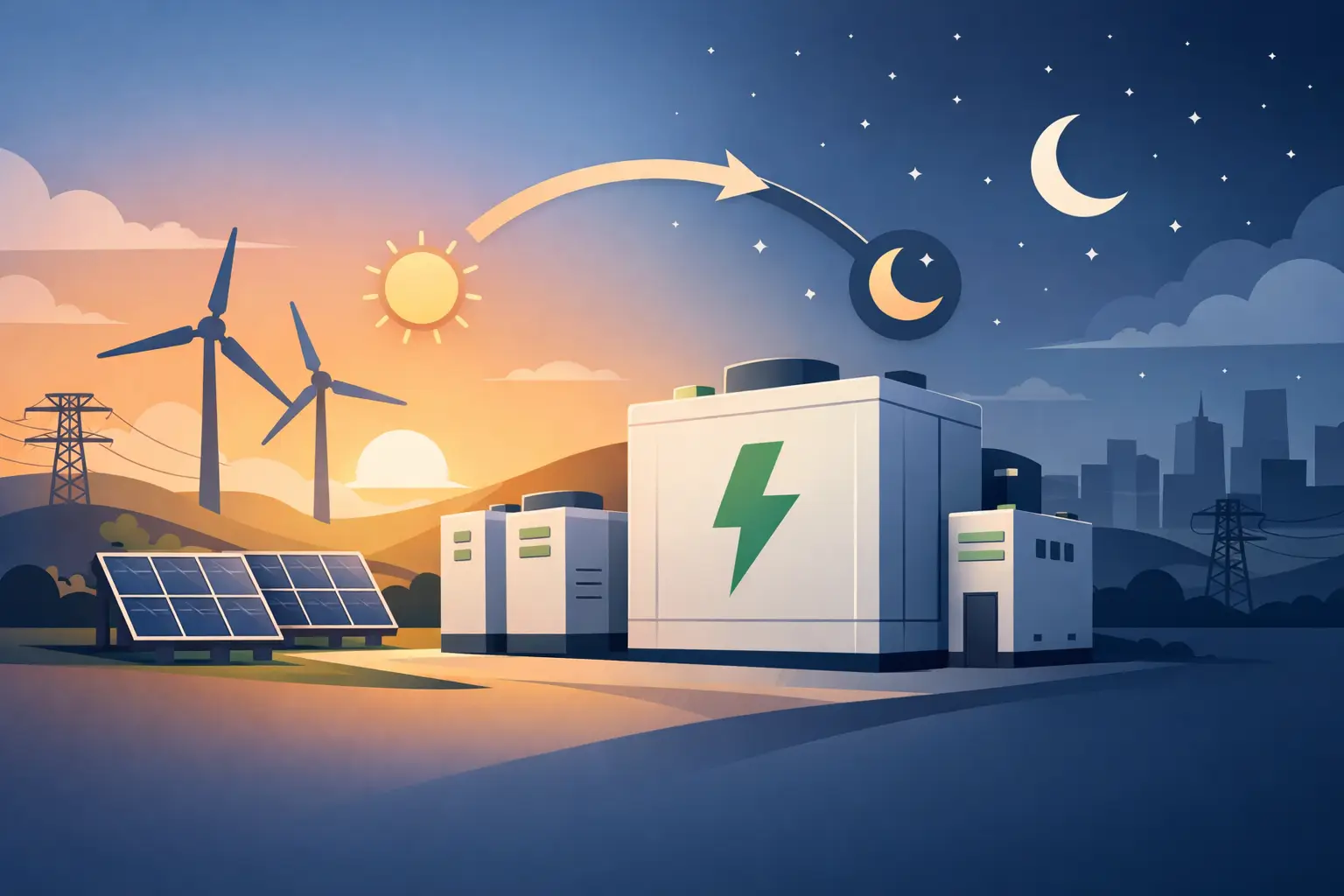
If your electricity rate is much lower at night than it is during the day, letting that cheaper power go unused is a missed opportunity. That is where overnight electricity storage benefits become very real for ordinary UK households. Instead of simply buying electricity when it is most expensive, a home battery can store lower-cost grid electricity overnight and use it later, when daytime rates are higher.
For many homeowners, that is a more practical starting point than people assume. You do not need panels on the roof for battery storage to make sense. If your home is connected to the grid and you are on a suitable time-of-use tariff, the battery can do one very simple job well – buy low, use later.
What overnight electricity storage benefits look like in practice
The main benefit is cost control. A battery charges while electricity is cheaper, then helps power the home when prices rise. That shift can reduce the amount of peak-rate electricity you need to buy from your supplier.
In everyday terms, it means the washing machine, kettle, lighting, fridge, television and other household demand during the day can be partly supplied by energy bought overnight at a lower rate. The savings depend on your tariff, your usage pattern and the size of the battery, but the principle is straightforward.
There is also a predictability benefit. Many households feel they have very little influence over energy costs beyond turning the heating down or switching lights off. Battery storage gives you a more active way to manage when you buy electricity, rather than only how much you use.
Why this matters more in the UK
UK electricity prices have made people much more aware of when they use power, not just how much. Time-based tariffs reward households that can move demand away from expensive periods. The challenge is that most people are not at home all day turning appliances on and off to chase lower rates.
A battery solves that timing problem. It stores energy automatically when rates are lower and makes it available when you actually need it. That makes tariff optimisation far easier for a normal household.
This is one reason battery storage without solar is attracting more attention. It removes the cost, planning questions and installation complexity that some people associate with a larger home energy project. For many properties, using the grid more intelligently is the simpler route.
Lower bills without changing your whole routine
One of the strongest overnight electricity storage benefits is that it can reduce bills without asking you to run your life around your tariff. You may still choose to use some appliances at cheaper times, but the battery does much of the heavy lifting in the background.
That matters because most people want savings that fit around real life. Families still cook in the evening. People still work from home during the day. Children still need lights, devices and hot meals at the times they need them. Battery storage helps bridge the gap between low-cost buying times and normal daily living.
It is not magic, and it is not unlimited. If your battery is too small for your household demand, it may cover only part of the day. If your tariff has only a small difference between off-peak and peak rates, the savings may be modest. But where there is a meaningful price gap, the financial case can be strong.
Better use of time-of-use tariffs
A time-of-use tariff is only useful if you can take advantage of it. Some households can do that manually, but only to a point. Staying up late to put every appliance on or trying to cram all energy use into a small overnight window is not realistic.
Battery storage makes those tariffs work harder. Rather than changing every household habit, you are storing cheaper electricity in advance. That gives you more value from the tariff itself.
This is often where people begin to see battery storage differently. It is not just a piece of technology sitting on the wall. It is a tool for buying electricity more strategically.
More control over household energy spending
Energy bills can feel frustrating because they are often reactive. You use power, then you find out what it cost. A battery adds a layer of planning. You know that part of tomorrow’s electricity has already been bought at a cheaper rate overnight.
That can make monthly costs feel less exposed to the most expensive parts of the day. For budget-conscious households, that sense of control is valuable in its own right.
It also helps people think about energy in a more practical way. Instead of seeing electricity as a flat, fixed cost, you begin to treat it like something that can be managed. That shift is often as important as the technology itself.
A simpler option for homes without solar
A common misconception is that battery storage only makes sense if it is paired with rooftop generation. In reality, a battery can still provide value purely through tariff optimisation. For many homeowners, that is the more relevant use case.
Not every property is suitable for panels. Some people do not want the extra upfront cost. Others simply want a solution focused on lowering bills through smarter grid use. Charging a battery from the grid overnight keeps the proposition much clearer.
That simplicity is a genuine benefit. It means more households can consider battery storage without first committing to a wider home upgrade.
Reliability and peace of mind matter too
Most people start by asking about savings, quite rightly. But reliability matters as well. A professionally installed battery system from a credible UK-led setup should be designed for safe, dependable everyday use. That matters because no one wants to reduce bills by introducing uncertainty into the home.
Peace of mind comes from good equipment, correct sizing and proper installation. A system that is too small may disappoint. A system sold with vague promises may create unrealistic expectations. The best results come when the advice is clear about what the battery can and cannot do for your specific home.
That is why straightforward guidance matters so much. A trustworthy installer should explain expected performance in plain English, not hide behind jargon.
The trade-offs to understand before you decide
Battery storage is not a one-size-fits-all saving. The size of the overnight rate discount matters. Your daytime usage matters. Your household’s total electricity demand matters. So does the battery capacity and how efficiently it charges and discharges.
If you use very little electricity during higher-cost periods, the benefit may be smaller than you expect. If your home uses a lot of power during the day and early evening, the system may have more opportunity to save you money.
There is also the question of payback over time. A battery is a long-term household upgrade, not a quick gimmick. The right way to assess it is by looking at realistic savings over years, alongside product quality, installation standards and ongoing reliability.
That is why measured advice is better than overblown claims. Good battery storage should make financial sense on practical terms, not wishful ones.
Overnight electricity storage benefits and everyday comfort
The most useful technology at home is usually the kind you do not have to think about very much. Once set up correctly, a battery should support normal living rather than complicate it. You wake up knowing cheaper electricity has already been stored. The system then helps carry part of your household demand into the day.
That can feel less like chasing savings and more like building them into the routine of the home. For many people, that is the appeal. It is a practical change, not a lifestyle overhaul.
For UK households looking for a more direct way to manage rising electricity costs, this approach deserves serious attention. Volt Wiser Energy focuses on that exact principle – helping homeowners use overnight charging to turn tariff differences into everyday savings with clear advice and professional installation.
A good home energy decision should leave you feeling more in control, not more confused. If battery storage lets you buy electricity at a better time and use it when your home actually needs it, that is not a complicated idea. It is just a smarter way to run the house.