If your electric car is pushing up your electricity bill more than expected, the tariff is often the real issue. This guide to EV tariffs UK homeowners can actually use is built around one simple question: when you charge at home, are you paying the right rate for those extra kilowatt-hours?
For many households, the answer is no. An EV can be one of the cheapest ways to travel, but only if home charging is matched to the right tariff and the right charging pattern. If you charge at the wrong time, or pick a tariff that suits the car but not the rest of the house, savings can shrink quickly.
Why a guide to EV tariffs UK households need starts with timing
EV tariffs work differently from standard single-rate tariffs because electricity does not cost the same amount all day. Suppliers typically offer a cheaper overnight window for charging, then a higher daytime rate outside those hours. That can suit an EV very well, but it also creates a trade-off for the rest of the home.
If your car can be charged mostly overnight, a time-of-use tariff may cut driving costs significantly. If you often need to top up during the day, or your household uses a lot of electricity in peak periods, the picture changes. The cheapest EV tariff on paper is not always the cheapest overall household tariff.
That matters because most people do not run a home around the car alone. You are balancing cooking, heating, appliances, work-from-home routines and now EV charging as well. A good tariff should reduce the total bill, not just the cost per mile.
What makes an EV tariff worth considering?
At a practical level, there are four things to look at: the off-peak unit rate, the length of the cheap charging window, the standard rate outside that window and whether there are any conditions around compatible chargers, smart meters or charging schedules.
The off-peak rate gets the attention, and rightly so. If you can charge most of your EV usage during a cheap overnight period, your running costs can fall well below petrol or diesel. But the daytime rate matters just as much. A very low night rate paired with an expensive day rate can work brilliantly for some homes and poorly for others.
The length of the off-peak window also makes a difference. A smaller battery EV with modest weekly mileage may be easy to charge in a short overnight slot. A larger vehicle, or a household with two EVs, may need longer cheap periods to make the tariff worthwhile.
Then there is the practical side. Some tariffs depend on a compatible smart charger or scheduled smart charging. Others are more flexible. If a tariff sounds attractive but adds complexity you are unlikely to stick with, it may not deliver the savings you expect.
EV tariff comparison diagram for home charging
Below is a simple example to show how tariff structure can change both EV charging costs and overall household spending. These are illustrative figures only, but they show the logic clearly.
Diagram 1: Typical EV tariff comparison
| Tariff type | Night rate | Day rate | Cheap window | Best suited to | |—|—:|—:|—|—| | Standard single-rate tariff | 27p/kWh | 27p/kWh | None | Homes with no time shifting | | EV tariff A | 8p/kWh | 31p/kWh | 5 hours overnight | Drivers charging most nights | | EV tariff B | 10p/kWh | 29p/kWh | 7 hours overnight | Homes needing longer charging time | | EV tariff with battery support | 8p/kWh | 31p/kWh | 5 hours overnight | Homes shifting car charging and household use |
On first look, EV tariff A appears strongest because the night rate is lowest. But if your home uses a lot of electricity outside the cheap window, EV tariff B could be better overall. The right choice depends on how much electricity you can move into lower-cost periods.
How charging habits change the maths
A driver covering regular commuting miles and charging overnight two or three times a week will usually benefit far more from an EV tariff than a driver who plugs in at random times. The tariff only works if your habits line up with it.
For example, if you come home at 6pm and charge immediately every evening, you may be charging at the highest rate of the day. If instead you schedule charging to begin after midnight, the same electricity may cost far less. That difference adds up over a year.
This is why smart charging matters. You do not need to stay awake to plug in at the cheapest time, but you do need a setup that can follow the tariff window reliably. The more consistent your charging pattern, the more predictable your savings.
Reducing household bills, not just EV charging costs
Here is where many comparisons stop too early. A proper guide to EV tariffs UK households can trust should not look at the car in isolation. It should ask what happens to the rest of the home.
If your washing machine, dishwasher and other flexible usage can also run overnight, the tariff becomes more attractive. If your household electricity demand stays high during the day, a steep daytime rate may offset some of the benefit.
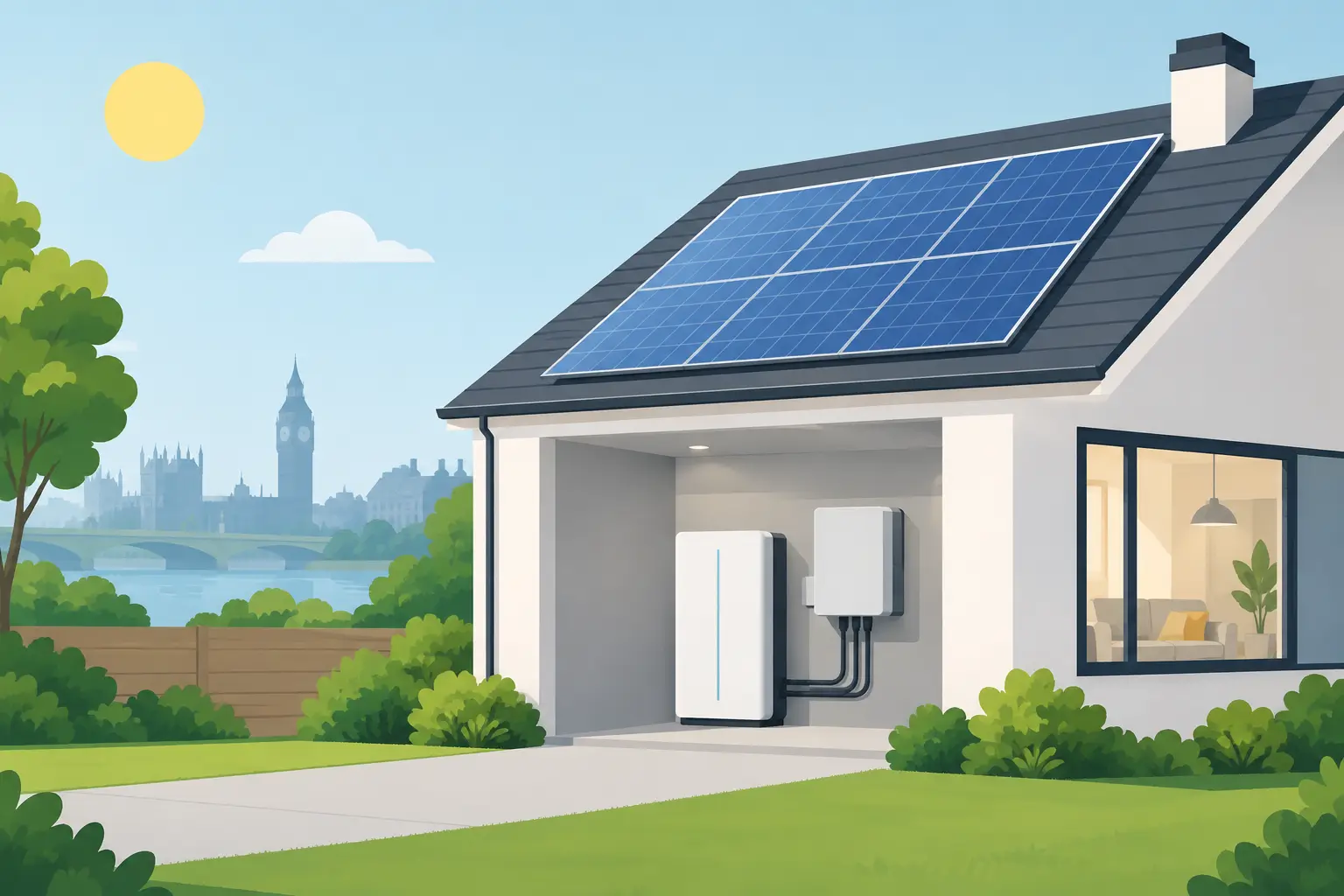
This is where battery storage becomes especially useful. Instead of only charging the car cheaply overnight, a home battery can also store lower-cost grid electricity during the off-peak period and use it later when daytime electricity is more expensive. That means the tariff can support both cheaper driving and lower household electricity costs.
Diagram 2: Home charging with and without battery support
| Scenario | EV charged overnight | Household uses stored cheaper electricity in daytime | Likely effect on total bill | |—|—|—|—| | EV tariff only | Yes | No | Lower driving costs, mixed household outcome | | EV tariff plus home battery | Yes | Yes | Lower driving costs and better protection from high daytime rates |
For homeowners who want more value from a time-of-use tariff, this can make the tariff work harder. You are not only using cheaper overnight electricity for the car. You are also reducing how much higher-priced electricity the home needs during the day.
Common mistakes when choosing an EV tariff
One common mistake is choosing purely on the headline night rate. That is understandable, but incomplete. If the daytime rate is too high for your household pattern, the annual bill may disappoint.
Another mistake is overestimating how much charging will happen overnight. Some drivers intend to schedule every session neatly, then real life gets in the way. Late arrivals, forgotten plugs and unexpected mileage can all reduce the benefit.
A third mistake is ignoring future changes. If you are likely to add a second EV, work more from home or install battery storage, the best tariff today may not be the best tariff in twelve months.
How to compare EV tariffs in a practical way
Start with your actual driving. Roughly how many miles do you cover in a week, and how many kilowatt-hours does that translate to for your car? Then look at your household usage pattern. Are you usually heavy users in the evening, or can much of your demand be shifted?
Next, compare the full tariff, not one number. Look at the cheap rate, the standard rate, the off-peak hours and any technical requirements. If you are considering battery storage, think about how much of your overnight electricity could be stored for daytime use.
Finally, test the tariff against your routine, not an ideal version of it. The best option is the one you are likely to use properly week after week.
When an EV tariff is a strong fit
An EV tariff tends to work well if you have off-street parking, regular overnight charging, a smart meter and a routine that allows most charging to happen in the cheap window. It becomes even more compelling if you can shift some wider household demand as well.
It is a stronger fit again if you want to use battery storage without needing solar panels. For many standard UK homes, that creates a simpler route to bill reduction. The tariff gives you access to lower-cost overnight electricity, and the battery helps you keep more of that value during the day.
For households looking at this in a practical, no-nonsense way, Volt Wiser Energy focuses on exactly that kind of tariff-led saving. The point is not gadgetry for its own sake. It is using cheaper grid electricity more intelligently to cut everyday costs.
A final thought on choosing well
The best EV tariff is rarely the flashiest one. It is the one that fits how your home actually uses electricity, gives your car a reliable cheap charging window and supports lower bills across the whole property. If you view the tariff as part of a bigger household energy plan rather than a car-only product, the savings usually become clearer.