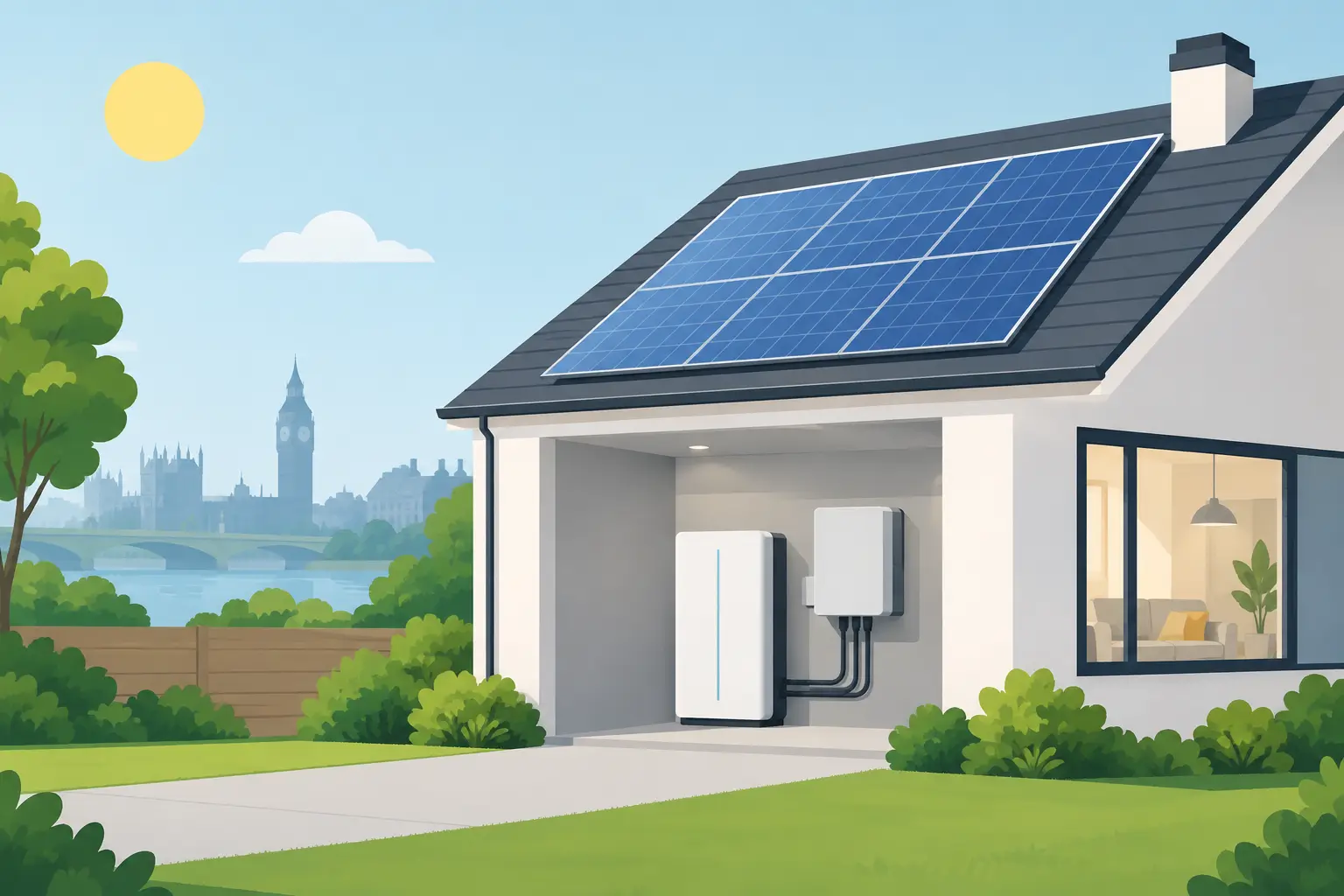

A lot of homeowners ask the same question after another expensive electricity bill lands on the doormat: is battery storage worth it if you are mainly trying to cut costs, not turn your home into a science project? In the UK, the answer is often yes – but not always for the reason people expect.
Many assume battery storage only makes sense if you already have solar panels. That is no longer true. For a growing number of households, the real value comes from buying cheaper electricity overnight on an off-peak tariff, storing it in a home battery, and using that stored power during the day when rates are higher. If your goal is lower bills with less disruption than a full solar installation, battery storage becomes a much more practical option.
Is battery storage worth it for bill savings?
If you are looking at battery storage purely through the lens of savings, the key question is simple: can you shift enough of your electricity use away from expensive daytime rates? If you can, a battery can make a noticeable difference.
In a typical UK home, much of the electricity used during breakfast, late afternoon and evening is bought at the highest unit rates. A battery system changes that pattern. Instead of paying peak prices at those times, you charge the battery when electricity is cheaper and draw from it later. The wider the gap between your off-peak and peak tariff, the stronger the case becomes.
This is why battery storage now appeals to households with no solar at all. You are not relying on sunshine or roof suitability. You are making the tariff work harder for you.
That said, savings are not automatic. A battery is only worthwhile if your tariff, daily usage and battery size line up properly. A system that is too small may run out early. One that is too large may cost more than you can realistically recover through bill reductions.
Why the old answer has changed
A few years ago, battery storage was usually discussed as an add-on to solar panels. The logic was straightforward: store excess solar generation in the daytime and use it later in the evening. That still has value, but it is no longer the only model worth considering.
The UK energy market has changed. Time-of-use tariffs have become more visible, and many households now have access to lower overnight rates through tariffs such as Economy 7 and similar smart options. That has opened the door to standalone battery systems that charge from the grid.
For many homes, this is actually the simpler route. There is no need to assess roof orientation, panel output or planning concerns. Installation is typically more straightforward, and the financial case can be easier to understand because it is tied directly to tariff differences.
In plain terms, you buy electricity when it is cheap and use it when it is not. That is the core benefit.
When battery storage tends to be worth it
Battery storage tends to make the most sense for households that use a fair share of electricity outside the overnight period. If you are out all day and use very little power until bedtime, the savings may be more modest. But if your home is active in the morning and evening, battery discharge can offset some of your most expensive usage.
It is also more attractive if you are on, or can move to, a tariff with a meaningful price gap between off-peak and daytime rates. Without that gap, the battery has less room to save money.
Another good fit is the homeowner who wants lower bills without committing to solar panels. Not everyone wants scaffolding, roof work or the higher upfront spend of a full solar and battery package. A battery-only system can offer a practical middle ground.
Homes that value some backup capability may also see extra appeal, although this depends on the system specification. Not every battery provides the same support in a power cut, so that should never be assumed.
When is battery storage worth it less often?
There are also cases where the numbers are less convincing. If you are on a flat tariff with little difference between day and night prices, a battery has fewer opportunities to generate savings. The same applies if your household electricity use is very low.
If your usage is concentrated overnight already, there may not be enough expensive daytime consumption to replace. And if the system is poorly matched to your routine, you can end up paying for capacity you do not use.
This is where honest advice matters. Battery storage is not a magic fix for every home. It works best when it is sized and configured around real household patterns rather than guesswork.
The numbers behind the decision
Most people do not need a complex model. They need a realistic sense of payback.
The starting point is your electricity bill, particularly how many units you use and when you use them. Then look at your available tariff options. If you can charge cheaply overnight and avoid buying a meaningful chunk of daytime electricity, those avoided costs build up month after month.
Payback depends on several factors: installation cost, usable battery capacity, round-trip efficiency, tariff spread and how consistently you cycle the battery. A bigger spread between cheap and expensive rates usually improves returns. So does regular daily use.
What matters most is not a headline claim but whether the savings fit your home. A properly specified system should come with a clear explanation of likely performance, not vague promises.
More than savings, but savings come first
For most households, the main reason to consider a battery is financial. That is sensible. But there are a few secondary benefits worth recognising.
A battery gives you more control over when you buy electricity. Instead of being exposed to expensive periods every day, you can shift part of your usage into lower-cost windows. That can make bills feel more predictable.
There is also the convenience factor. Compared with a full solar installation, battery-only systems can be less disruptive. For homeowners who want a practical upgrade rather than a major property project, that matters.
And if you later decide to add solar panels, a battery system may still fit neatly into that setup. In other words, starting with storage does not necessarily close off future options.
What to look for in a system
Not all battery installations are equal, and the quality of the setup affects both savings and peace of mind.
First, the technology should be suitable for regular daily cycling and long-term home use. Reliability matters more than gimmicks. You want a system built for consistent performance, not one that looks impressive on paper but offers little clarity in real use.
Second, installation quality is crucial. Domestic battery storage must be fitted correctly and safely by qualified professionals. The cheapest quote is not always the best value if corners are being cut on design, protection or aftercare.
Third, transparency matters. A trustworthy provider should explain how the battery will charge, when it will discharge, what tariff assumptions are being used and what level of savings is realistic. Volt Wiser Energy focuses on that practical, education-led approach because homeowners should understand exactly what they are buying.
Finally, look at the wider support behind the product. UK-engineered systems, credible manufacturing partnerships and proper technical backup can make a real difference over the life of the installation.
The common mistake people make
One of the biggest mistakes is comparing battery storage to solar alone and deciding it is not worth it because they do not have panels. That is outdated thinking.
The better question is whether a battery can help you buy electricity more intelligently. In the current UK market, that is often where the strongest value sits. A home battery is not just a place to store spare solar power. It is also a tool for tariff optimisation.
That shift in thinking is what makes battery storage relevant to many more homes than before.
So, is battery storage worth it?
For plenty of UK homeowners, yes – especially if you can access cheaper overnight electricity and want a simpler route to lower bills than installing solar panels. The strongest cases tend to be homes with meaningful daytime and evening usage, a suitable time-of-use tariff and a properly sized system.
For others, the answer may be not yet. If your tariff offers little off-peak advantage, your usage is very low, or the system cost does not stack up against expected savings, it may be better to wait.
The important thing is to judge battery storage on real household maths, not assumptions. When the setup is right, it can turn the way your tariff works into a genuine household advantage. And for many people, that is far more useful than chasing energy tech for its own sake.