An electric car can be one of the lowest-cost ways to travel, but only when it is charged at the right time. How home batteries support EV charging is less about creating electricity and more about using lower-cost grid electricity intelligently. For UK households on an EV tariff, a domestic battery can store cheaper overnight power for later use, helping reduce the amount bought during expensive daytime periods.
This approach does not require panels on the roof. A grid-charged battery is installed alongside your existing electricity supply, charged during an off-peak window, and used when your household demand is highest. For EV owners, that can make charging routines more flexible while protecting the wider household from peak-rate electricity costs.
The basic idea: buy electricity when it costs less
Many EV tariffs offer a set overnight period with lower unit rates. The exact hours, prices and terms vary by supplier and can change, but the principle is consistent: electricity is cheaper when national demand is lower.
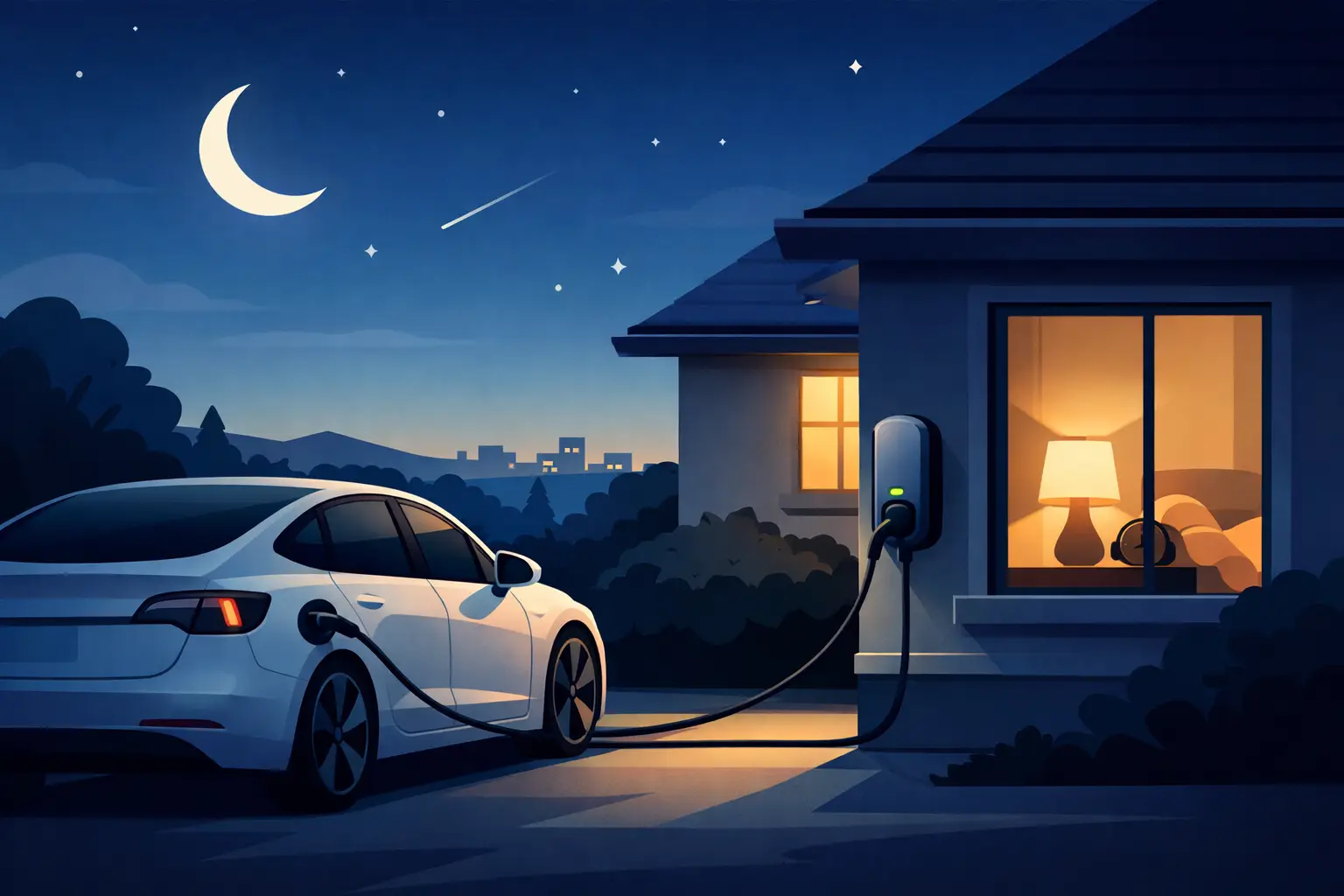
If your car is at home and connected during that window, charging it directly from the grid is usually the most efficient option. There is no reason to send electricity through a battery first if the vehicle can take the charge overnight. Every battery cycle involves a small amount of energy loss, so direct off-peak charging generally gives the best cost per mile.
The home battery adds value around the rest of the household. It can charge at the same lower-cost time, then discharge through the morning and evening when electricity is typically more expensive. Rather than buying peak-rate power for cooking, laundry, lighting and everyday appliances, you use stored electricity purchased overnight.
How home batteries support EV charging in practice
The key is to treat the car and battery as part of one home energy plan, not as competing devices. A properly designed system considers how much electricity your home uses, the size of your EV battery, your overnight tariff window and the power available from your supply.
Here is a simple example using illustrative tariff prices only. Your actual savings depend on your tariff, usage and battery specification.
“`text EV tariff comparison: charging and household use
Overnight rate Daytime rate Likely outcome Direct EV 9p per kWh Not required Lowest-cost EV charging charging
EV direct + 9p per kWh Battery supplies Lower household bills and home battery selected home use low-cost EV charging
Daytime EV Not available 32p per kWh Highest charging cost charging “`
In the second option, the car receives lower-cost electricity directly overnight. At the same time, the home battery takes a planned amount of low-rate grid electricity. When the family starts using more power in the morning or returns home in the evening, the battery can supply part of that demand.
The result is not that the battery magically makes an already cheap overnight EV charge cheaper. Its real benefit is reducing expensive household electricity around the EV charging routine. That distinction matters when comparing potential savings honestly.
A battery can help when overnight charging is not straightforward
Not every driver has the same schedule. You may get home late, have a short off-peak window, need the car ready before charging finishes, or share your supply capacity with other high-demand appliances. In these cases, stored electricity can provide useful flexibility.
For example, if the EV is not connected overnight but needs a top-up after work, a battery that was charged at a lower rate may cover some of that demand. Whether this is worthwhile depends on battery losses, the available battery charge and the price difference between off-peak and daytime electricity.
A home battery can also reduce the risk of several large loads running at once. An EV charger, electric oven, shower and heat pump can create high demand in a busy household. Battery power may support the home during these periods, though it is not a substitute for checking that your electrical installation and supply capacity are suitable. A qualified installer should assess this before recommending a system.
The household bill is where the wider saving sits
An EV increases electricity use, but it also gives you a reason to pay close attention to tariffs. Once you move to a time-of-use tariff for the car, a home battery can help the rest of the house benefit from the same lower-cost period.
“`text A typical overnight plan designed to reduce household bills
00:30 to 05:30 EV charges directly on the lower-cost tariff 00:30 to 05:30 Home battery charges from the grid, within its settings 06:00 to 16:00 Battery supports everyday household electricity use 16:00 to 22:00 Battery helps reduce peak-rate grid imports where charge remains Overnight Cycle starts again, based on your tariff and energy needs “`
The timings above are only a planning example. Your supplier’s tariff window may be different, and some tariffs have more than one price period. The battery control settings should reflect the tariff you actually have, not a generic schedule.
A well-sized system avoids a common mistake: filling a large battery at a cheap rate only to find much of that stored energy is unused before the next charging window. Equally, a battery that is too small may be empty before the expensive evening period. Usage data is more useful than guesswork when deciding on capacity.
What affects the value of a home battery for EV owners?
The off-peak and peak price gap is one of the biggest factors. A larger difference creates more opportunity to save, although battery efficiency means not every unit bought overnight reaches your appliances. The usable capacity of the battery, its charging and discharge power, and your household’s daily consumption also matter.
Your driving pattern matters too. A commuter who plugs in every night has a predictable routine and may leave more scope for the battery to serve the home. A driver who needs frequent daytime charging may benefit from flexibility, but should look carefully at whether the battery has enough stored energy after meeting household demand.
It is also sensible to consider your charger. Smart charging controls can schedule the vehicle to charge in the cheapest available period. In many homes, this is the first and simplest step towards lower EV running costs. Battery storage works alongside smart charging, rather than replacing it.
Why no panels are needed
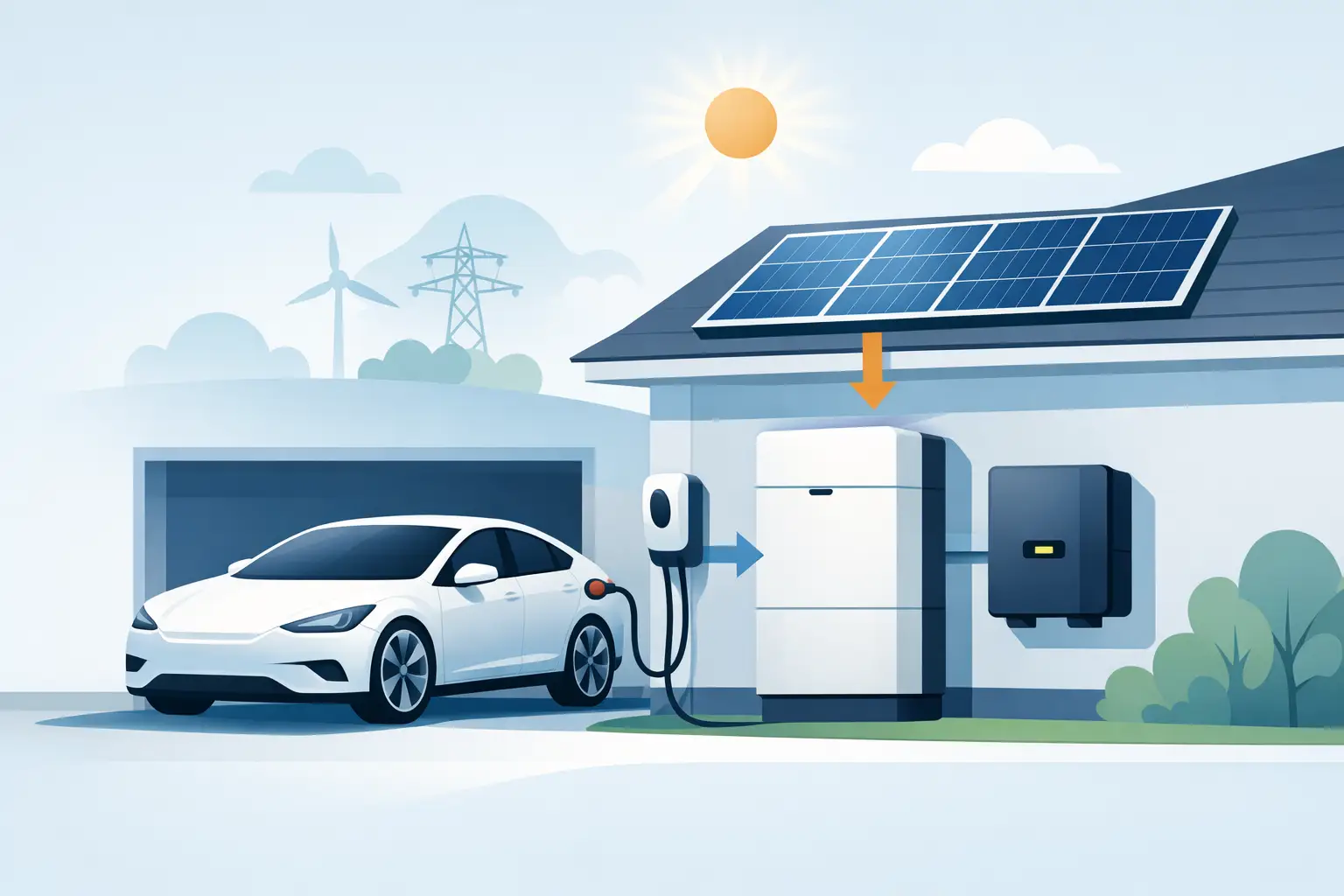
Some homeowners assume a battery only makes sense as part of a larger generation project. That is not the case. A grid-charged battery can work as a standalone upgrade because the saving opportunity comes from tariff differences: storing electricity when it is cheaper and using it later when grid prices are higher.
That can be particularly practical for homes where roof works are unwanted, the property is unsuitable for panels, or the priority is simply to take better control of electricity bills. Installation is focused on the battery system, its protection equipment and safe connection to your existing electrical supply.
At Volt Wiser Energy, this is approached as a household cost-saving decision, not a technology purchase for its own sake. UK-engineered ESME Energy battery systems and qualified professional installation help ensure the recommended setup is suitable for the property, tariff and expected usage.
Ask the right questions before choosing a system
Before installation, establish your current electricity consumption, your EV’s typical weekly charging need and the exact times your tariff is cheaper. It is helpful to review a few months of bills, particularly winter bills, because household consumption often rises when heating, lighting and cooking demand increase.
Ask how much of the battery capacity is usable, how its controls respond to tariff schedules, and what happens when the battery is empty. You should also understand whether your system can prioritise household loads, support planned charging periods and be adjusted if you change tariff later.
Do not judge a battery on capacity alone. A larger figure may sound attractive, but the right system is the one that regularly stores and discharges energy in a way that fits your home. Clear projections should explain assumptions rather than promise a saving that depends on perfect conditions every day.
The most useful starting point is simple: charge your EV directly when your tariff is cheapest, then consider a home battery to carry that lower-cost electricity into the parts of the day when your household needs it most.