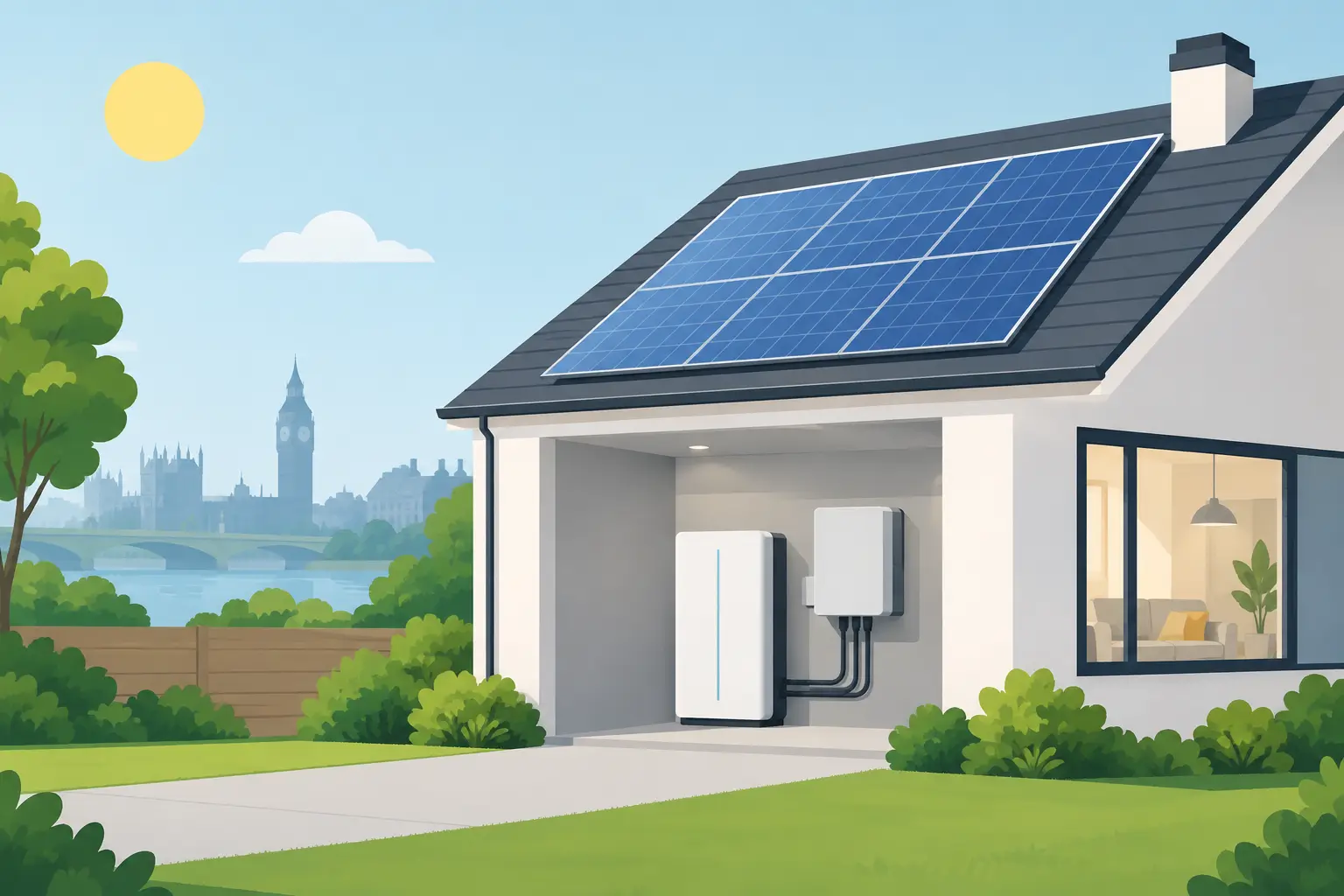

If your electricity bill feels harder to predict than it should, home battery storage installation UK homeowners are choosing is worth a closer look. Not because it is fashionable, and not because you need panels on the roof, but because a well-set-up battery can let you buy electricity when it is cheaper and use it later when rates are higher.
That is the part many people miss. A domestic battery does not have to be tied to solar. For many UK homes, the real value comes from tariff optimisation – charging the battery overnight from the grid at a lower rate, then running parts of the home from that stored power during the day and evening.
How home battery storage installation UK systems actually work
At its simplest, a home battery stores electricity for later use. The battery charges when your tariff is cheaper, usually overnight, and discharges when electricity costs more. Instead of paying peak rates for every unit you use during the day, you shift some of that usage to lower-cost electricity you bought earlier.
This makes the system especially relevant for households that are on time-of-use tariffs and want more control over what they pay. It is a practical solution rather than a complicated one. You are not generating electricity. You are buying it more intelligently.
A professionally installed system is connected to your home’s electrical supply and set up to charge and discharge at the right times. That programming matters. The battery itself is only part of the picture. Good results depend on choosing the right size, pairing it with the right tariff and making sure the installation is configured around how your household actually uses electricity.
Why more households are considering battery storage without solar
For years, battery storage was usually talked about as an add-on to solar panels. That has led some homeowners to assume battery storage is not for them if they do not want roof works, scaffolding or the higher upfront spend that comes with a full solar setup.
That is no longer the full story. A standalone battery can still reduce bills if your tariff gives you a meaningful gap between cheaper off-peak electricity and more expensive daytime electricity. In many homes, that is enough to make the numbers attractive.
There are also simpler practical advantages. Installation is typically less disruptive than adding solar. There is no need to assess roof orientation, tile condition or shading. If your main priority is lowering electricity costs and keeping things straightforward, battery-only installation can be the better fit.
What happens during installation
One of the main concerns homeowners have is whether installation will be disruptive or overly technical. In most cases, it is more straightforward than expected.
The process usually starts with an assessment of your property, your consumer unit, your current electricity use and your tariff. This is where a good installer earns their keep. A battery that is too small may not store enough to make a noticeable dent in peak-time usage. One that is too large can push up the upfront cost without delivering proportionate savings.
Once the right system has been specified, the battery is installed in a suitable location within the home or another appropriate area, depending on the property layout and the product being used. Safety, ventilation, access and compliance all matter here. This is not a DIY job and it should never be treated as one.
The installer then connects the system, tests it and sets up the charging schedule so the battery takes in lower-cost electricity at the right time. You should also be shown how the system works, what level of control you have and what to expect from day-to-day use. A professional installation should leave you informed, not confused.
Costs, savings and the real question to ask
Most people start by asking what a home battery costs. That is reasonable, but it is only half the question. The better question is what value the system can deliver over time for your specific household.
Savings depend on a few key factors: the gap between your cheap and expensive tariff periods, how much electricity you use during higher-rate hours, the size of the battery and how well the system is set up. A household that uses a fair amount of electricity in the morning and evening may see a stronger benefit than one that is empty all day and uses very little outside the cheaper period.
This is where honest advice matters. Battery storage is not magic, and it is not one-size-fits-all. If your tariff spread is narrow or your daytime usage is low, savings may be more modest. On the other hand, if your household regularly uses electricity when rates are highest, the case can be much stronger.
Done properly, battery storage brings something many households value just as much as savings: predictability. It gives you more control over when you buy electricity, which can make monthly costs feel less exposed to peak pricing.
Choosing the right system for your home
Not all batteries are equal, and the right choice is not always the biggest one. Capacity matters, but so do build quality, safety features, warranty support and whether the technology is suited to long-term daily cycling.
UK homeowners should pay attention to who is supplying the system, who is installing it and what kind of aftercare is available. A cheaper product can look appealing on paper, but if support is weak or the installation quality is poor, the initial saving may not hold up.
That is why trusted partnerships and qualified installers carry real weight. Volt Wiser Energy focuses on UK-engineered systems and professional installation because reliability matters more than flashy claims. For most households, a battery should feel like a dependable home upgrade, not an experiment.
Home battery storage installation UK: what to check before you go ahead
Before committing, it helps to be clear on a few practical points. You should know roughly when your home uses the most electricity, whether your current tariff rewards overnight charging, and what level of savings is realistic rather than best-case.
You should also ask where the battery will be installed, what maintenance is required, how the warranty works and what happens if your needs change later. A good provider will answer these questions plainly. If the explanation feels vague, overhyped or evasive, that is a warning sign.
It is also worth checking whether the proposal has been built around your actual usage rather than generic assumptions. A well-advised installation should reflect your home, your habits and your tariff options.
Common concerns homeowners have
One concern is space. Many people assume a battery system needs a large dedicated area, but modern domestic units can often be installed neatly in suitable locations without taking over the house.
Another concern is safety. That is exactly why professional specification and installation matter. A properly selected and fitted system should meet the relevant standards and be installed with the same seriousness you would expect from any major electrical work.
People also worry that the technology will be difficult to manage. In practice, the aim is the opposite. Once the system is set up properly, much of the benefit comes from it working quietly in the background. You should not need to become an energy expert to get value from it.
Finally, there is the question of whether to wait. Sometimes waiting makes sense, especially if you are changing tariff, moving house or still comparing options. But waiting can also mean carrying on buying more electricity at higher rates than necessary. The right timing depends on your household, your tariff and whether the numbers already stack up.
Is it right for every UK home?
No, and that is worth saying clearly. Battery storage works best where there is a useful difference between cheap overnight electricity and pricier daytime electricity, and where the home uses enough power during those higher-cost periods to make shifting that usage worthwhile.
If that sounds like your household, the technology can be a practical way to cut bills without the added complexity of solar installation. If it does not, the answer may be to review your tariff first and look again once your usage pattern or supplier options change.
The key is to treat battery storage as a financial and practical decision, not a lifestyle statement. The best installations are the ones that quietly do their job, reduce costs and make the household a little easier to run.
A good battery system should leave you with fewer surprises on your bill and more confidence in how your home uses electricity – and for many UK homeowners, that is reason enough to take the next step.