
If your electricity bill keeps climbing even though your habits have not changed much, the problem is often not how much power you use – it is when you use it. A UK-engineered home battery system is designed to tackle that exact issue by storing lower-cost electricity from the grid overnight and using it later, when daytime rates are higher.
That matters because many UK households are now on tariffs that reward off-peak use, but most homes still consume the bulk of their electricity in the morning and evening. That mismatch is where battery storage starts to make sense. You are not trying to generate electricity yourself. You are shifting when you buy it, so more of your household runs on lower-cost energy.
What makes a UK-engineered home battery system different?
The phrase can sound like marketing, but there is a practical reason it matters. A battery system built and engineered with UK homes in mind is more likely to suit the way British households actually use electricity, the space constraints found in many properties, and the tariff structures available from UK suppliers.
It also speaks to accountability. When a system is developed for this market, there is usually a clearer understanding of local standards, installer requirements and long-term support expectations. For a homeowner, that is not a minor detail. You are not buying a gadget that can be swapped out next year. You are adding an energy system to your home, and reliability matters more than novelty.
There is also a wider point about confidence. Many people are interested in reducing bills, but they do not want to gamble on unfamiliar hardware or overcomplicated setups. A UK-engineered solution tends to appeal because it feels more grounded – less speculative, more practical.
How the system saves money without solar panels
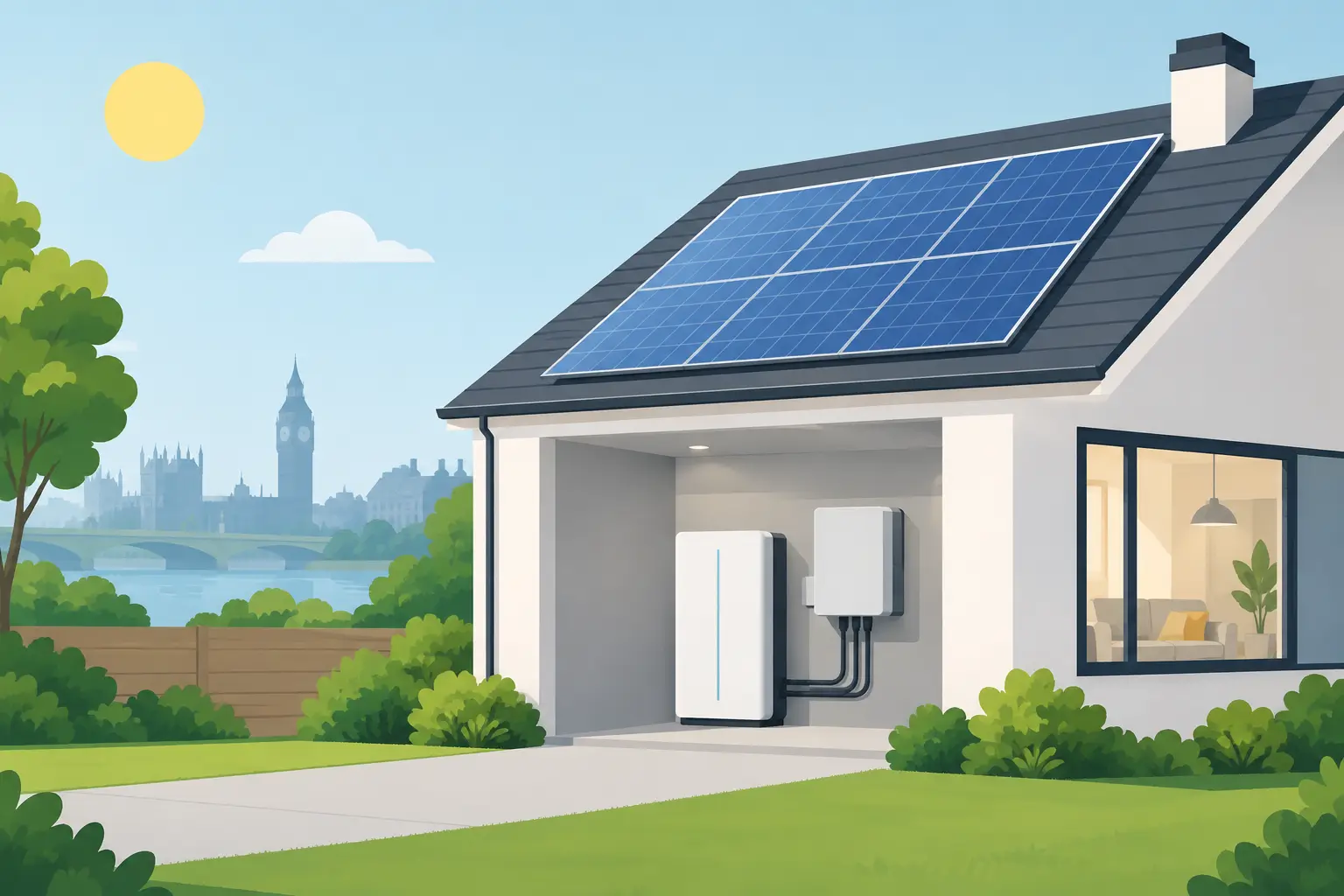
This is the part many homeowners find most useful. You do not need roof panels to make battery storage worthwhile. A UK-engineered home battery system can be charged directly from the mains during cheaper off-peak periods, then discharge stored electricity back into your home during more expensive hours.
In simple terms, the battery buys electricity at one price and helps you avoid buying as much at another, higher price. The saving comes from the gap between those rates, together with how much of your daily usage you can shift.
A typical home might charge the battery overnight, then use that stored power for breakfast-time demand, daytime appliances, and the early evening period when rates are often at their least attractive. If your household is usually occupied in the evening, or if you run washing machines, dishwashers, cooking appliances and general lighting after work, the benefit can be more noticeable.
That said, it depends on your tariff and your usage pattern. If the difference between your off-peak and peak rates is small, savings may be modest. If the spread is wider and your usage is predictable, the numbers become more compelling.
Why this suits ordinary grid-connected homes
One of the strongest points in favour of battery storage charged from the grid is that it removes a major barrier to entry. Not every home is suitable for roof panels. Some households do not want the installation work, some do not plan to stay in the property long enough to consider a bigger project, and some simply want a more straightforward route to lower bills.
Battery storage offers that simpler route. It is well suited to homes that are fully grid-connected and already using time-based tariffs. The idea is not to overhaul the entire property. It is to make your existing electricity supply work harder for you.
That is why the appeal goes beyond people who would normally think of themselves as early adopters. You do not need to be especially technical. You do not need to monitor every appliance. You just need a tariff with cheaper periods and a household profile that can benefit from stored overnight energy being used later in the day.
The practical things homeowners usually ask first
Before any installation, most people want answers to the same sensible questions. Will it fit? Will it be safe? Will it actually make a difference?
Space is often less of an obstacle than expected. Many battery systems are installed in garages, utility rooms or other suitable indoor areas. The right location depends on the property, ventilation, access and installation standards, but it does not usually require major disruption.
Safety is equally important. A professionally installed battery system should never be treated as a casual add-on. The quality of the hardware matters, but so does the standard of the installation. Proper design, correct electrical work and clear operating guidance are what turn battery storage from an interesting idea into a dependable household system.
As for savings, honesty matters here. No installer should suggest that every home will save the same amount. Real savings depend on battery size, tariff structure, daily consumption and how well the charging and discharge pattern matches your routine. The good news is that these are knowable factors. A sensible assessment should look at your home as it is, not an idealised version of it.
Choosing the right UK-engineered home battery system
The best system is not automatically the largest one. Bigger capacity can store more electricity, but if your home does not use that amount efficiently, part of the battery’s potential may sit unused. On the other hand, a battery that is too small may empty too quickly to cover the periods when your electricity is most expensive.
That balance is why advice matters. A good recommendation should take account of your typical day, your current tariff, your annual consumption and whether your usage is fairly steady or changes a lot by season. Families with heavier evening demand often have different needs from smaller households where daytime occupancy is low.
You should also consider service and support, not just headline specifications. Battery performance over time, system controls, warranty terms and the quality of aftercare all deserve attention. For most homeowners, the reassurance of qualified installation and a named technology partner is worth far more than a vague promise of high performance.
Where the trade-offs are
Battery storage is practical, but it is not magic. If you are considering a system, it helps to be clear-eyed about what it can and cannot do.
First, your savings rely on tariff optimisation. If tariffs change significantly, your financial return may change as well. That does not make the system a poor choice, but it does mean battery storage works best when matched to the right tariff and reviewed sensibly over time.
Second, usage habits still matter. A battery helps shift electricity use from expensive periods to cheaper ones, but it cannot erase wasteful consumption. If a home uses large amounts of electricity at times when the battery is empty, grid import at higher rates still happens.
Third, payback is not identical for everyone. Some homes see a stronger case than others. Properties with suitable off-peak tariffs and steady daily demand are usually in a better position than households with very low usage or little difference between night and day rates.
None of that weakens the case for storage. It simply means the right system should be recommended for the right reason – measured savings, not exaggerated claims.
Why trust and installation standards matter so much
A battery system only earns its place in the home if it works quietly, safely and predictably. That is why the installer matters nearly as much as the battery itself. Householders are right to ask who is fitting the system, what standards are being followed, and what support is available after installation.
For a brand such as ESME ENERGY, the value is not just in supplying equipment. It is in making the process understandable, assessing whether the numbers stack up, and fitting a system that is designed for long-term use in real UK homes. That is the difference between being sold a product and being guided towards a sensible upgrade.
When people talk about energy independence, they sometimes make battery storage sound more dramatic than it needs to be. For most households, the real benefit is simpler and more useful. It is about taking greater control of electricity costs, reducing exposure to expensive daytime rates and doing it through technology that fits normal British homes without demanding a complete lifestyle change.
If you are weighing up whether battery storage is worth it, start with the plain question: can your home buy electricity cheaply at night and use more of it when prices rise? If the answer is yes, a well-chosen system may be one of the more practical ways to make your bills less punishing over time.