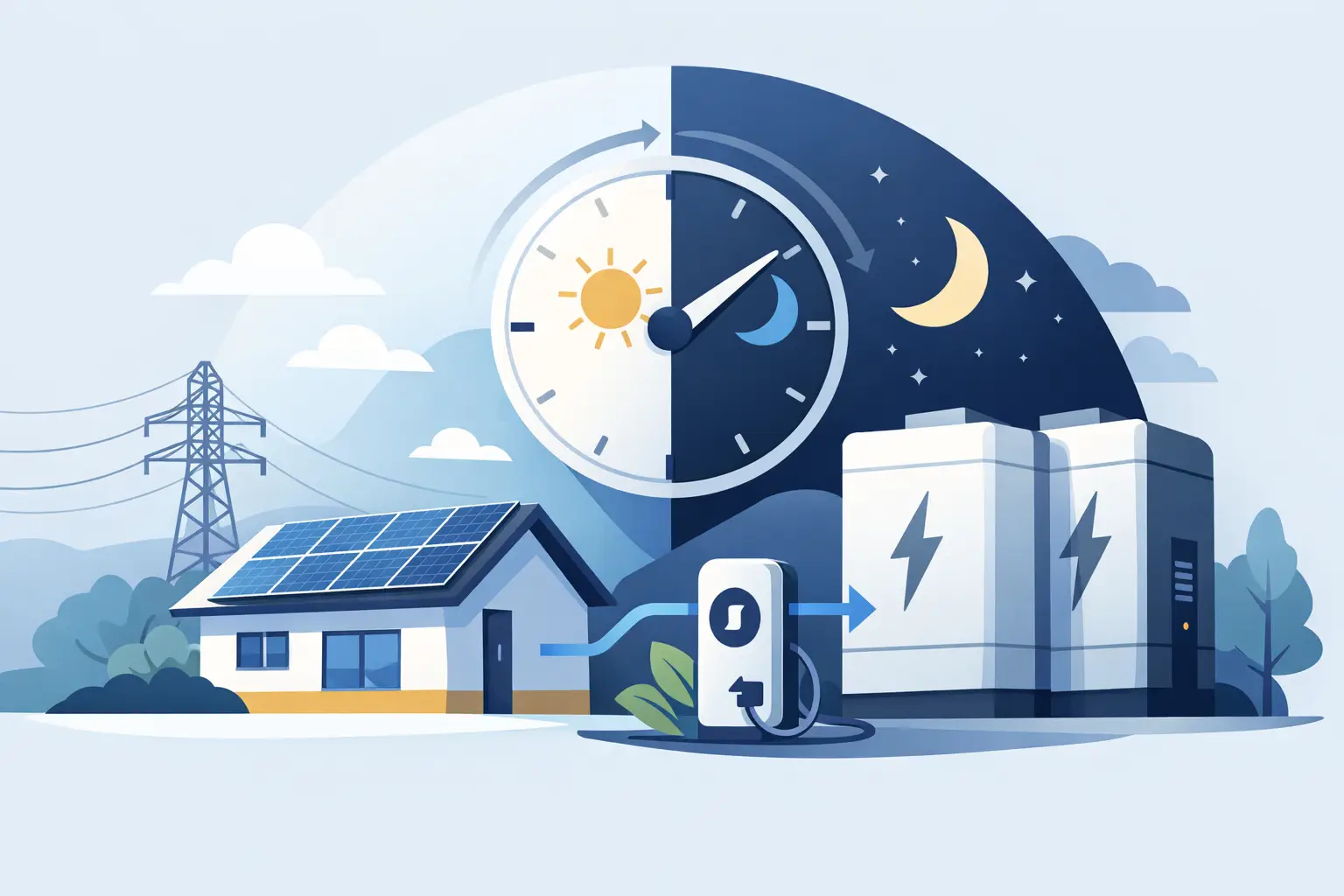

If your electricity bills feel high even when you are being careful, a realistic home battery savings example for three-bedroom house living can make the numbers much clearer. For many UK households, the opportunity is not about using less electricity altogether. It is about buying more of it at a cheaper rate overnight, storing it, and then using that stored power during the day when grid electricity costs more.
That distinction matters. A domestic battery charged from the grid can suit a standard family home without adding panels to the roof or changing how the house works day to day. The value comes from tariff timing, not from turning your home into a science project.
A realistic home battery savings example for three-bedroom house owners
Let us use a typical three-bedroom UK house with annual electricity use of 4,200 kWh. That is a sensible middle-ground example for a family home with standard appliances, working adults, and the usual evening peak of cooking, washing and entertainment.
Now assume the household is on a time-of-use tariff with a low overnight rate of 9p per kWh and a daytime rate of 29p per kWh. Rates vary by supplier and region, but this kind of gap is what makes battery storage worth looking at.
In a house without a battery, most electricity is bought as it is needed. A fair assumption is that around 75 to 80 per cent of that yearly usage happens outside the cheap overnight window. If we keep the maths simple and say 3,300 kWh is bought at 29p and 900 kWh is bought at 9p, the annual electricity cost comes to £1,038 for daytime use plus £81 overnight. That is £1,119 a year.
Now add a battery system that charges overnight and supplies a good share of daytime electricity. Let us say it can shift 2,200 kWh per year from the expensive period to the cheaper overnight one. Battery systems are not 100 per cent efficient, so to deliver 2,200 kWh back into the home, the battery may need around 2,500 kWh of overnight charging. That assumes roughly 88 per cent usable round-trip efficiency, which is realistic rather than optimistic.
The cost of that 2,500 kWh overnight would be £225. If the same 2,200 kWh had been bought in the day at 29p, it would have cost £638. The difference is £413 saved across the year.
That leaves some electricity still bought at the standard daytime rate, because no battery covers every hour or every spike in demand. So this example is not based on perfect conditions. It is based on normal household patterns and the practical limits of battery size and charging windows.
Why the savings are not the same in every home
This is the part many homeowners actually need. The headline number is useful, but it only tells part of the story.
A three-bedroom house can mean very different things in practice. One home may have two adults out all day and modest daytime demand. Another may have children, home working, a tumble dryer used most evenings and higher overall usage. Both are three-bedroom properties, but their savings profile will not be identical.
The biggest factor is not the number of bedrooms. It is when you use electricity. A battery helps most when a meaningful share of your usage happens during higher-priced hours and can be replaced with cheaper stored electricity. Homes with strong evening demand often see better value because that is exactly when imported electricity tends to cost more.
Battery size matters too. A smaller unit may still cut bills, but it may not hold enough energy to cover the full daytime and evening pattern of a busy family home. A larger system can shift more low-cost electricity, though the right size depends on whether the extra capacity is actually used regularly. Bigger is not automatically better if much of that storage sits idle.
Then there is the tariff itself. The wider the gap between the low overnight rate and the peak or daytime rate, the stronger the savings case becomes. If that gap narrows, the battery still offers control and cost management, but the annual financial benefit may be lower.
What this example looks like month by month
Annual figures are helpful, but most people budget monthly. Using the same example, a yearly saving of around £413 works out at roughly £34 per month.
Some months will be better than others. In winter, many households use more electricity for lighting, laundry and indoor living, so the battery can work harder. In summer, overall consumption may drop slightly, which can reduce monthly savings. The result is rarely a neat straight line. Still, for a typical household, seeing £25 to £45 per month in avoided cost can be realistic where the tariff spread supports it.
That sort of saving will not erase your electricity bill. It is better to think of it as a way to strip out the expensive part of your usage and replace it with something cheaper and more predictable.
A closer look at the trade-offs
There is no honest way to discuss a home battery savings example for three-bedroom house owners without mentioning the trade-offs.
First, you need a suitable tariff structure. If your electricity plan does not offer a worthwhile low-rate window overnight, the battery has less room to save you money. The system works best when the tariff gives you a clear price advantage for charging at night.
Second, battery efficiency means some energy is lost in the charging and discharging process. That is normal. The key point is that the price gap between cheap and expensive electricity is usually large enough to leave a saving after those losses are accounted for.
Third, savings depend on behaviour to a degree. You do not need to live differently in a dramatic sense, but if heavy-use appliances can run during lower-cost periods or the battery can be set up intelligently around your tariff, the result is stronger. A good installation should make that as straightforward as possible rather than putting the burden on the homeowner.
Finally, payback is not one-size-fits-all. Some households are focused on annual savings alone. Others also value the stability of using more low-cost electricity each day and being less exposed to the most expensive tariff periods. That peace of mind is harder to put on a spreadsheet, but it matters to many households.
How to tell whether your three-bedroom house is a good fit
The simplest starting point is your annual electricity use and your tariff pattern. If your home uses a moderate to high amount of electricity and your current or available tariff includes a cheaper overnight window, you are already looking at the right conditions.
Then consider when the house is busiest. If your electricity use rises in the morning, late afternoon and evening, that is exactly the sort of pattern a battery can help with. A home that is almost empty all day and uses very little electricity outside the low-rate period may still save money, but the case may be less compelling.
It also helps to be realistic about expectations. A battery is not there to make every bill tiny. It is there to reduce the amount of electricity you buy at the wrong time. That is a practical, measurable job, and for many households it is enough to make a noticeable difference over a year.
The value of proper sizing and advice
This is where specialist guidance earns its place. A generic online estimate can point you in the right direction, but it cannot see your actual usage pattern, your tariff, or whether the proposed battery capacity matches the way your home runs.
A sensible recommendation should look at your real consumption, explain the assumptions behind any savings figure, and avoid overpromising. That is especially important with a three-bedroom house because the label sounds standard while the lifestyle behind it often is not.
For UK homeowners who want a simpler route into battery storage, a grid-charged system can be a practical answer. Volt Wiser Energy focuses on that exact approach – helping households use low-cost overnight electricity more effectively without adding unnecessary complexity.
A useful rule of thumb is this: if your home has a clear difference between cheap overnight electricity and pricier daytime rates, and you regularly use power when rates are higher, a battery is worth serious attention. The real question is not whether every three-bedroom house saves the same amount. It is whether your home has enough expensive daytime usage to replace with cheaper stored electricity, and in many ordinary UK homes, the answer is yes.
The best next step is not guessing from a headline figure. It is checking your own usage against a realistic battery size and a real tariff. That is when the savings move from theory to something you can actually plan around.