
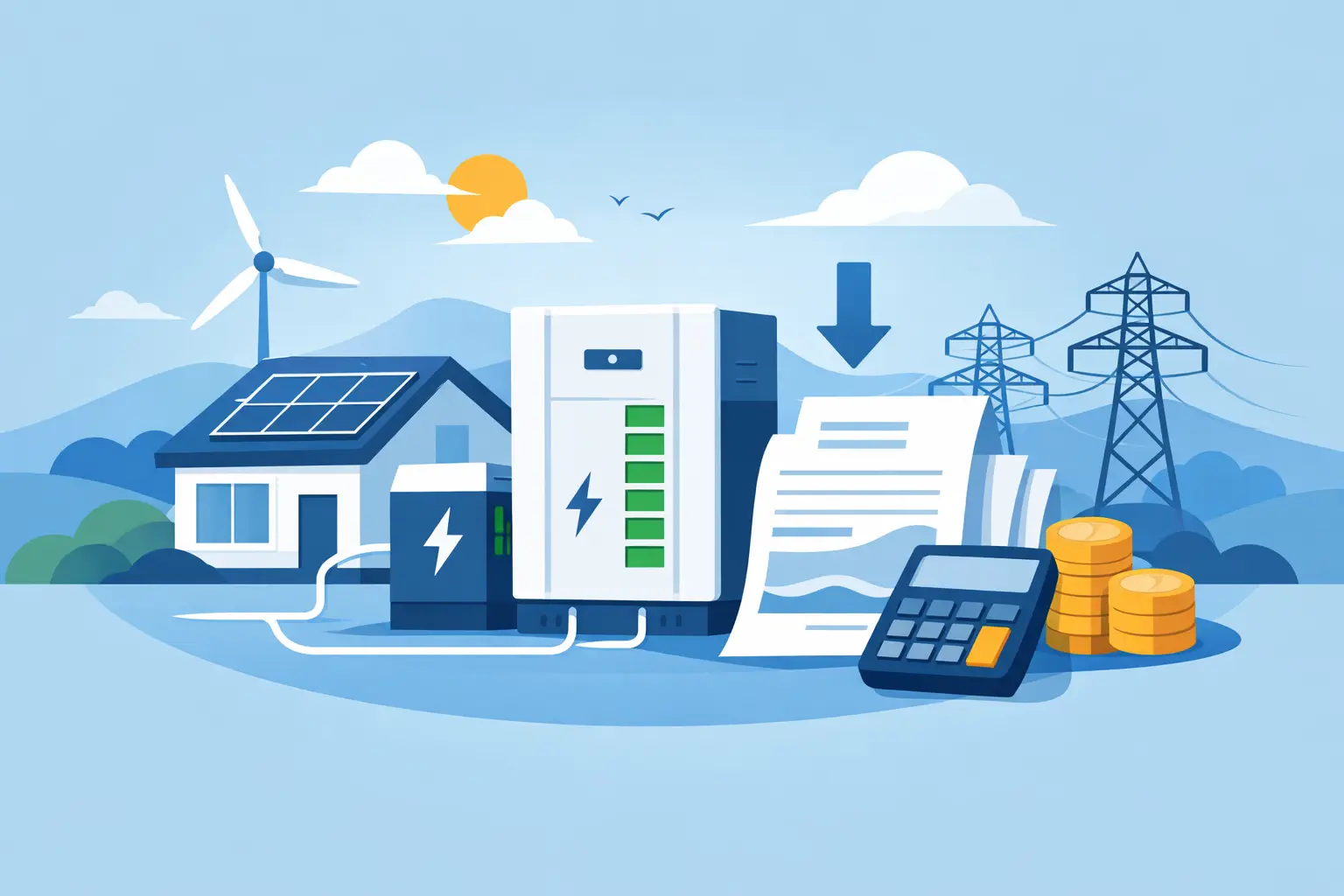
When your electricity costs more at 5pm than it did at 2am, the obvious question is: can batteries reduce electricity bills in a normal UK home? In many cases, yes. Not by creating free electricity, and not by changing how much energy your home uses overall, but by changing when you buy it. That distinction matters, because for households on time-of-use tariffs, timing can be the difference between expensive power and much cheaper power.
A domestic battery charged from the grid works in a simple way. It stores lower-cost electricity during off-peak hours, usually overnight, and then supplies that stored energy back to your home during the day when import rates are higher. Instead of buying all your electricity at peak prices, you shift a portion of it to the cheapest window available on your tariff. For many households, that is where the savings come from.
How batteries reduce electricity bills
The best way to think about battery storage is as a timing tool rather than a generation tool. Your home still needs electricity for the usual things: the kettle, cooking, washing, lighting, and perhaps an electric vehicle. What changes is the source of that electricity at different times of day.
If your tariff offers a lower overnight rate and a higher daytime rate, a battery can be charged overnight when prices are lower. During the day, instead of importing as much electricity from the grid at the higher rate, the home draws from the battery first. That can reduce the average price you pay per unit across the day.
This works best when there is a meaningful gap between cheap and expensive periods. A small tariff difference may produce only modest savings. A larger gap creates more room for battery storage to make a real impact.
There is also a practical point that often gets overlooked. A battery is not trying to power your entire property for days on end. In most homes, the goal is to offset the most expensive part of your daily usage. That is a far more realistic and cost-focused use case.
Can batteries reduce electricity bills without solar?
Yes, and this is where a lot of homeowners are pleasantly surprised. You do not need roof panels for battery storage to make financial sense. A battery can be installed as a standalone system and charged directly from the UK grid.
For households that want lower bills without the added cost, planning or disruption of panel installation, this can be a much simpler route. You are not relying on the weather or the orientation of your roof. You are making use of the tariff structure that already exists.
That said, savings are not automatic. They depend on your tariff, your daily pattern of electricity use, the battery size, and how well the system is set up. A well-matched system can help a household buy more electricity at low rates and less at high rates. A poorly matched system may still work, but the savings could be underwhelming.
What makes the biggest difference to savings?
The first factor is your tariff. If you are on a flat-rate tariff with little difference between day and night pricing, there is less opportunity to shift costs in your favour. If your tariff has a clear off-peak window and noticeably higher daytime rates, battery storage becomes more attractive.
The second factor is how much electricity you use during expensive periods. Homes with higher evening demand often see stronger results, because that is usually when rates are at their least forgiving. Cooking, entertainment, washing, and heating water can all add up.
The third factor is battery capacity. Too small, and it may run out before the expensive period is over. Too large, and you may pay for storage you do not regularly use. The right system is usually the one that fits your routine rather than the one with the biggest headline number.
Round-trip efficiency also matters. No battery returns every unit exactly as stored, so there are normal system losses to consider. That does not cancel out the benefit, but it is one reason why honest projections matter more than exaggerated promises.
EV charging changes the picture
If you charge an electric car at home, battery storage can become even more relevant. An EV adds substantial electricity demand, but it also gives you more flexibility if you can charge at the right times. The cheapest approach is often to align battery charging and EV charging with the lowest tariff periods available.
In some homes, the battery is used mainly to reduce daytime household import, while the EV charges directly during the off-peak window. In others, the battery and tariff strategy are planned together so the home avoids costly daytime electricity while the car takes advantage of cheaper overnight rates.
The key point is that EV ownership increases the value of smart energy timing. If your car is regularly charged at home, tariff choice becomes more important, and a battery can support a broader bill-reduction strategy.
EV tariff comparison example
Here is a simplified illustration of how tariff timing can affect bills when charging an EV at home. These figures are examples only, but they show the principle clearly.
“`text Example household with EV home charging EV charging needed: 180 kWh per month General household use: 300 kWh per month
Tariff A – flat rate All electricity: 27p/kWh Monthly cost: EV charging 180 x 27p = £48.60 Household use 300 x 27p = £81.00 Total = £129.60
Tariff B – EV off-peak tariff with battery support Off-peak rate: 8p/kWh Day rate: 30p/kWh
EV charged overnight: 180 x 8p = £14.40 Battery charged overnight for part of daytime house use 150 kWh shifted to battery: 150 x 8p = £12.00 Remaining daytime household import: 150 x 30p = £45.00 Total = £71.40 “`
This is not a universal result, and real tariffs vary, but it shows why households with EVs often pay close attention to when they charge and when the home imports power.
Simple energy flow diagram
“`text Overnight cheap rate: Grid -> Battery Grid -> EV Grid -> Home if needed
Daytime higher rate: Battery -> Home Grid -> Home only when battery is empty or demand is high “`
That basic shift is what creates the opportunity to cut costs.
Where batteries make the most sense
Battery storage tends to suit homeowners who are already on, or are willing to move to, a time-of-use tariff. It is especially relevant for people who use a fair amount of electricity in the morning and evening, and for households with an EV on the drive.
It can also suit people who want more control over bills without changing their home dramatically. There is no need to rely on roof suitability. The focus is practical: buy more electricity when it is cheaper, use less from the grid when it is expensive.
For many UK households, that is easier to understand than more ambitious energy upgrades. It is also easier to measure. You can compare tariff rates, daily usage patterns and expected battery performance in pounds and pence rather than vague environmental claims.
Where expectations need to stay realistic
A battery is not a magic fix for every high bill. If your electricity use is already concentrated in cheap periods, the extra savings may be limited. If your usage is low overall, payback may take longer. And if your tariff structure changes over time, the value of shifting energy may also change.
Installation quality matters as well. A system should be specified properly, installed safely and configured to match how the household actually uses power. That is why advice and transparency matter so much. The right setup is not about selling the largest battery possible. It is about matching the technology to the tariff and the home.
This is where a specialist, education-led approach helps. Volt Wiser Energy focuses on straightforward guidance, qualified installation and UK-engineered battery technology, so homeowners can make decisions based on realistic savings rather than guesswork.
So, can batteries reduce electricity bills long term?
They can, provided the numbers stack up for your home. The strongest cases usually involve a clear off-peak tariff, meaningful daytime electricity use, and a battery sized sensibly for the property. Add an EV into the mix, and the benefit can become more compelling because there is more energy demand to schedule intelligently.
The real value is not that a battery makes electricity cheap all the time. It is that it gives you more control over when you pay for it. In a market where timing increasingly affects cost, that control can turn an ordinary household bill into something far more manageable.
If you are weighing up whether a battery is worth it, start with your tariff and your habits. The answer is rarely about technology alone. It is about whether your home has enough expensive electricity use that shifting it to cheaper hours will genuinely pay off.