
If your electricity is cheaper at night but most of your household use happens in the day, the gap is costing you money. That is exactly why more homeowners are asking how to store cheap overnight electricity and use it later, when unit rates are higher.
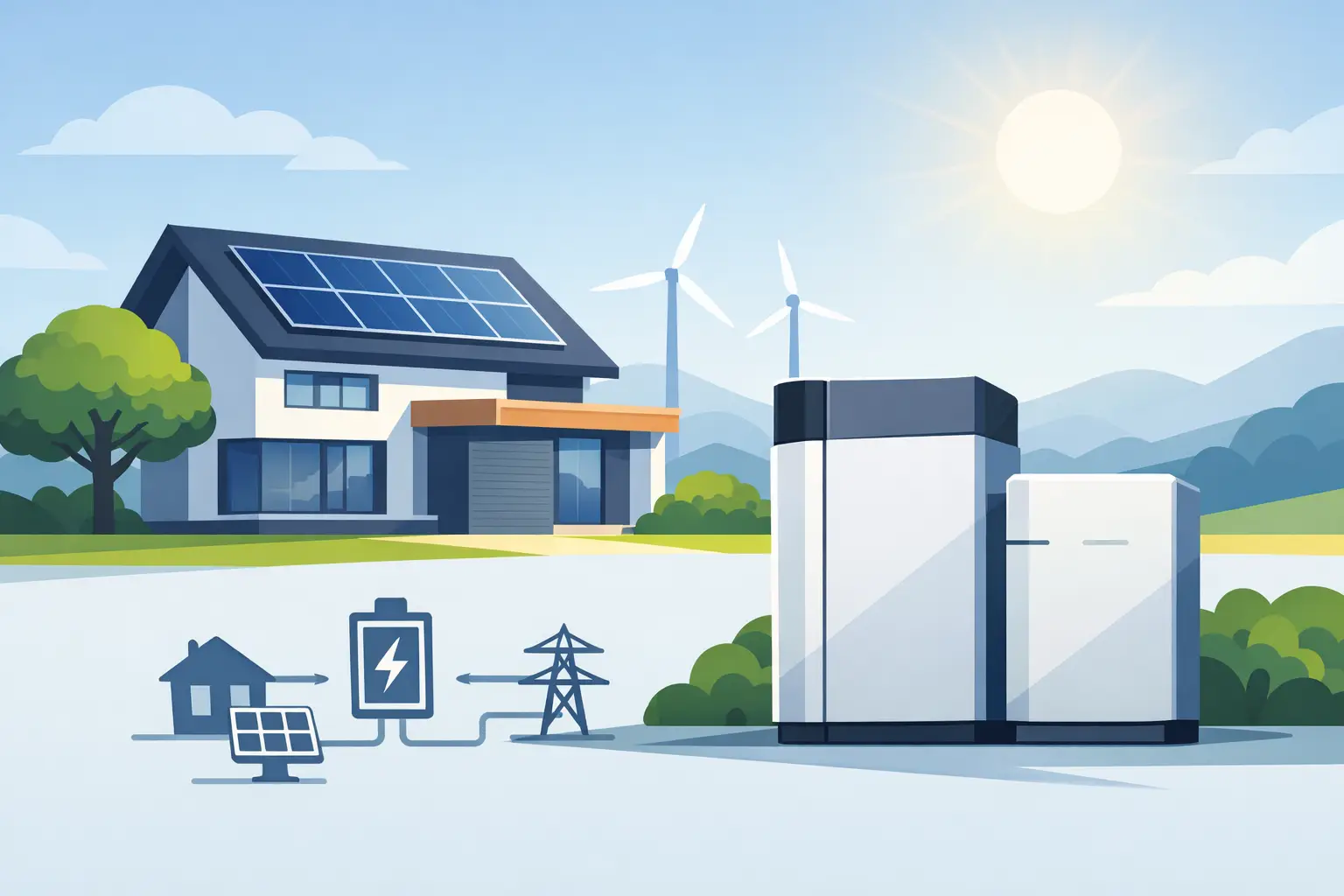
The practical answer is a home battery charged from the grid during low-cost hours. It stores electricity overnight, then supplies that stored power back to your home during the morning, afternoon and evening. You are not generating power. You are shifting when you buy it.
For many UK households, that simple change matters. Tariffs increasingly reward people who can move their usage into cheaper time windows. A battery gives you a way to do that without changing every part of your routine.
How to store cheap overnight electricity at home
A domestic battery system is the main way to store cheap overnight electricity in a standard grid-connected home. The battery charges when your tariff drops to its lower overnight rate, then discharges when prices rise again. Instead of buying expensive daytime electricity from the grid, your home uses the energy you stored earlier.
This approach suits homes that use a steady amount of electricity across the day, especially where people are out in the evening, cooking after work, using appliances in the morning, or charging an electric vehicle at home. It can also help households that want more predictable bills without the complication of adding panels to the roof.
The key point is timing. A battery works best when the difference between your cheap and expensive rates is large enough to create worthwhile savings after charging losses. No battery is 100 per cent efficient, so a small amount of electricity is lost in the process. Even so, where overnight rates are significantly lower, the maths can still be very strong.
What makes battery storage worthwhile
Not every home saves the same amount. The result depends on your tariff, your daytime usage, the battery size and whether you also charge an EV overnight.
If your off-peak rate is only slightly cheaper than your daytime rate, savings may be modest. If the gap is wider, the battery has more room to reduce costs. A home that uses most of its power in the evening may benefit more than one that is empty all day. A larger property with heavier electricity use can often make better use of stored energy than a very low-use household.
Battery size matters too. Too small, and it may run out before the expensive period ends. Too large, and you may pay for storage capacity you do not regularly fill or use. The best system is not the biggest one. It is the one matched properly to your actual consumption pattern.
That is why advice and sizing matter. A sensible recommendation should look at when you use electricity, not just how much you use in total.
No panels required
One of the biggest misconceptions is that battery storage only makes sense alongside rooftop generation. In reality, plenty of UK homes can use a battery purely to buy electricity at the right time.
That matters for households that cannot install panels, do not want the extra project, or simply want a lower-friction way to cut bills. A grid-charged battery is a more straightforward route. It uses the tariff structure already available to you and turns that into a saving opportunity.
For many homeowners, that simplicity is the appeal. There is no need to rely on the weather, no need to change the roof, and no need to wait for daytime generation. You charge at night and use the stored electricity when it is more valuable.
How EV charging fits into the picture
An electric vehicle changes the numbers because it increases your overnight electricity use. That can be a good thing if your tariff rewards overnight charging, but it also means your household now has two competing demands during the cheap window – filling the car and filling the battery.
In some homes, both can be done comfortably during the low-rate period. In others, charger speed, battery size and the length of the off-peak window need more careful planning. The aim is to avoid buying too much electricity at peak rates while still making sure the car is ready when you need it.
A good setup treats the house battery and the EV charger as part of the same bill-saving strategy. The battery can cover household daytime demand, while the EV takes advantage of the overnight tariff directly. If coordinated properly, that can reduce reliance on expensive daytime electricity across the whole property.
EV tariff comparisons for home charging
The exact rates change over time, so comparisons should focus on the structure as much as the price. Here is a simple diagram showing how common EV-style tariffs can affect the cost of charging at home and running the house.
Diagram 1: Typical tariff structure comparison
| Tariff type | Cheap window | Overnight EV charging | Daytime household cost | Best fit | |—|—|—|—|—| | Standard single-rate tariff | None | Higher cost | Higher cost | Homes with no flexibility | | EV tariff with cheap night rate | 4 to 6 hours | Very good | Can be expensive | EV owners charging overnight | | EV tariff plus home battery | 4 to 6 hours | Very good | Lower if battery covers peak hours | EV owners wanting lower whole-home bills |
The difference is important. An EV tariff on its own can make charging the car cheaper, but the house may still buy costly electricity through the day. Add battery storage, and you are not only cutting vehicle charging costs. You are also shifting part of your household demand away from peak prices.
Diagram 2: How the overnight window can be used
| Overnight cheap period | Priority 1 | Priority 2 | Daytime effect | |—|—|—|—| | Short cheap window | EV charging | Partial battery charge | Some peak-rate household use remains | | Medium cheap window | EV charging | Full battery charge for average home | Better daytime bill reduction | | Longer cheap window | EV charging | Full battery charge with more flexibility | Stronger whole-home savings |
This is where system design matters. If your EV regularly needs a large recharge, a battery and charger should be configured around your real driving pattern, not an idealised one.
What the installation actually does
A professionally installed battery system connects into your home’s electrical setup and is programmed to charge and discharge at the right times. In plain terms, it buys low and uses high.
Most homeowners do not need to manage this manually each day. Once the tariff and charging schedule are set, the system should operate automatically. That is part of the appeal. It is not about standing by the consumer unit every evening. It is about giving the home a more intelligent way to use grid electricity.
Safety and quality are not side issues here. A battery is a long-term electrical asset, so qualified installation, correct configuration and dependable equipment matter just as much as the savings calculation. The cheapest option on paper is not always the best value if performance, warranty support or installer competence are weak.
When storing cheap overnight electricity makes less sense
There are cases where the savings may be smaller than expected. If you use very little electricity during the day, you may not have enough demand to make full use of stored energy. If your tariff does not offer a meaningful low-rate window, the financial case becomes harder. If your EV charging already uses nearly all of the available overnight capacity, the battery may contribute less unless the setup is carefully balanced.
This does not mean battery storage is unsuitable. It means the recommendation should be based on actual figures rather than assumptions. Good advice should be honest about where the strongest savings are and where they are more limited.
A smarter way to think about your electricity bill
The usual way to look at an electricity bill is to focus on how much energy you use. Battery storage changes that slightly. It asks a different question – when are you buying that energy?
That shift in thinking is why this approach is proving useful for ordinary homes, not just energy enthusiasts. If your tariff offers cheaper electricity overnight, storing it for later use can turn pricing into an advantage instead of a frustration.
For households with an EV, the benefit can be even clearer. The car already makes overnight charging relevant. A battery extends that value beyond the driveway and into the rest of the home.
If you want lower bills without changing your roof or overcomplicating daily life, storing cheaper night-rate electricity is one of the more practical upgrades available. The best starting point is not the battery itself, but a clear look at your tariff, your daily usage and how much of your expensive daytime electricity could realistically be replaced.