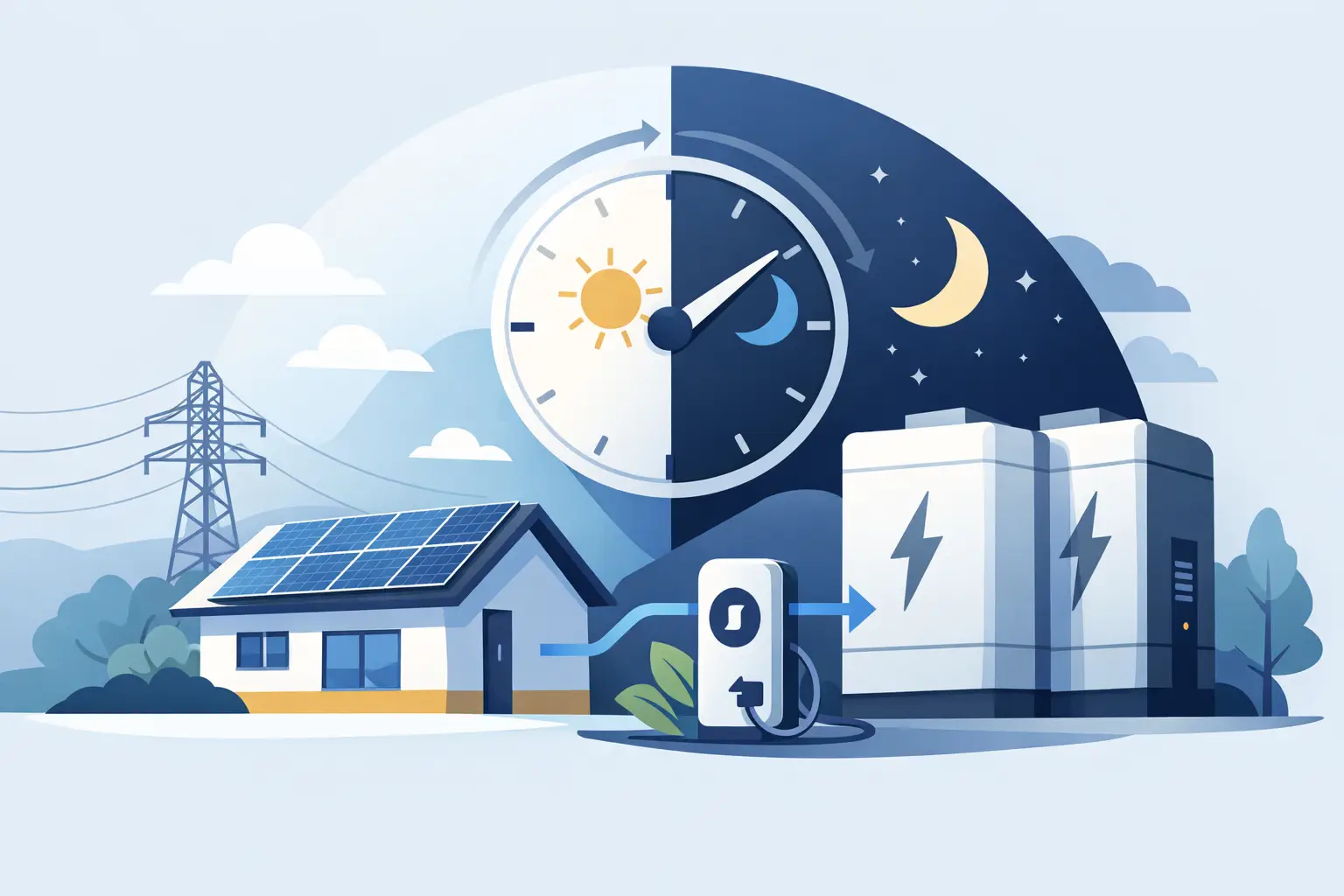
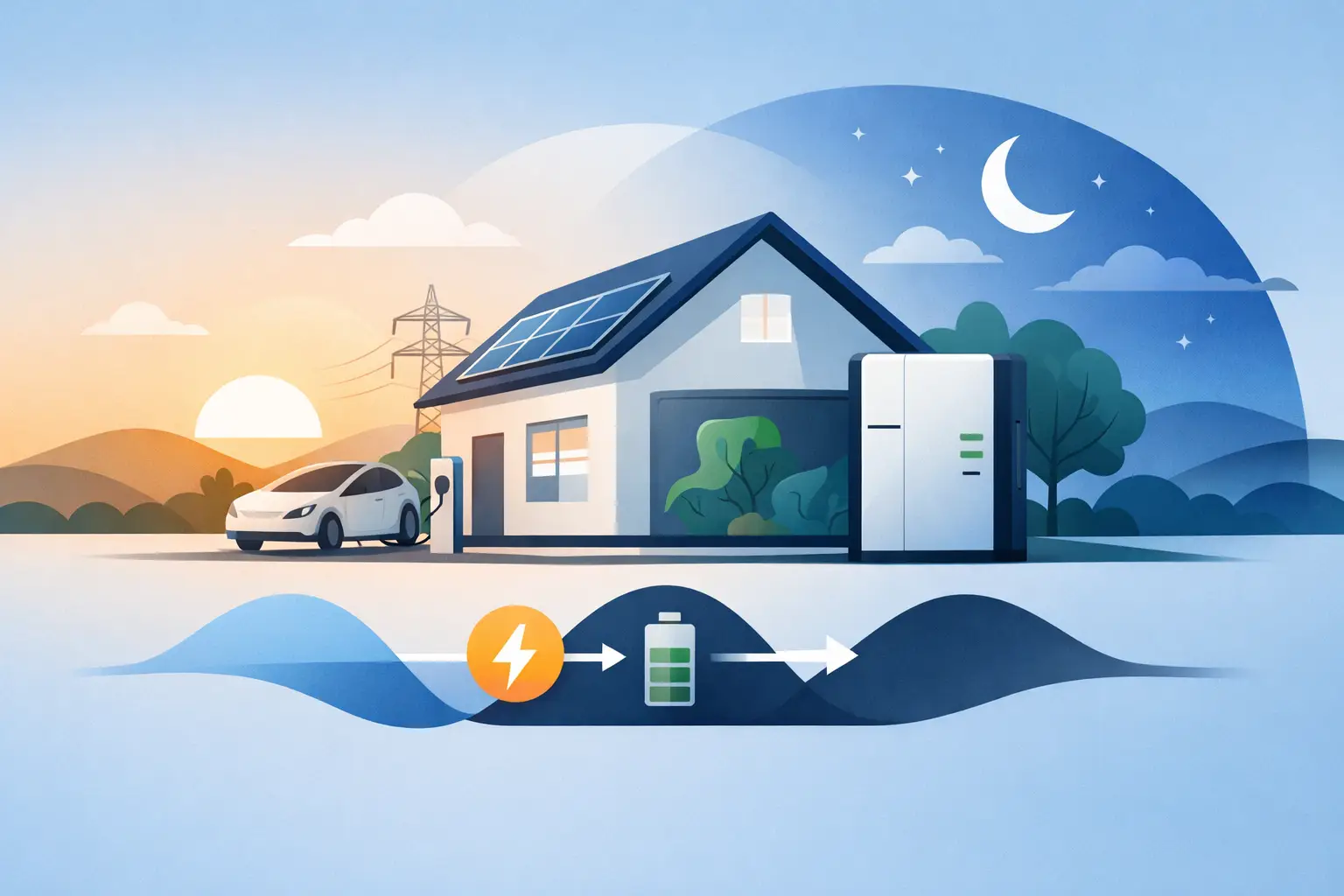
If your cheapest electricity is available while you are asleep, the best home battery for off peak electricity is the one that can quietly do the night shift for you. Charge it when rates are low, use that stored power when daytime prices rise, and the tariff starts working in your favour instead of against you.
That sounds simple because, in many homes, it is. But not every battery suits this job equally well. A system built around tariff savings needs different strengths from one designed around panels on the roof. For most UK households, the question is less about chasing the biggest battery on the market and more about choosing the right battery for your usage, tariff and property.
What makes the best home battery for off peak electricity?
A good off-peak battery should help you buy electricity at the right time and use it at the expensive time. That means the headline features are not always the ones that matter most in practice.
Capacity matters because it determines how much cheaper electricity you can store overnight. If your home uses a modest amount of power through the day, an oversized battery may leave part of that cheap overnight charge unused. If the battery is too small, you may still need to buy a fair amount of electricity during peak-rate periods. The best fit sits somewhere in the middle – large enough to cover meaningful daytime use, but not so large that you pay for storage you rarely fill or use.
Charge and discharge rate also matters. Some homes have a short off-peak window, particularly on certain time-of-use tariffs. In that case, the battery needs to charge quickly enough to take full advantage of the lower rate. Likewise, when you are cooking, running appliances and using lighting at the same time, the battery needs to discharge at a rate that supports real household demand.
Then there is control. A battery designed for tariff optimisation should be able to charge on schedule and discharge when needed without constant manual input. The aim is not to give you another gadget to manage. The aim is to reduce bills with as little friction as possible.
The features worth comparing
When people start researching batteries, it is easy to get pulled into technical detail that tells you very little about day-to-day value. The more useful approach is to compare a few practical factors.
Usable capacity
Manufacturers often quote total capacity, but usable capacity is the figure that affects your bills. This is the amount of energy the battery can actually deliver. For a household using off-peak electricity to cover daytime consumption, usable capacity is what tells you how much cheap-rate power you can shift forward.
Battery chemistry and lifespan
Most modern domestic systems use lithium iron phosphate or similar chemistries designed for safety and long service life. For UK homeowners, the key point is not becoming a battery specialist overnight. It is understanding whether the system is built for repeated daily cycling. If you plan to charge and discharge the battery every day, cycle life matters a great deal because tariff savings rely on regular use, not occasional backup.
Warranty and expected performance
A long warranty is reassuring, but it should be read alongside the performance terms. Some batteries guarantee a certain number of cycles or a minimum retained capacity over time. That gives you a better picture of likely value than a simple year count on its own.
Safety and installation quality
The battery itself is only part of the decision. Proper design, correct positioning and qualified installation all matter. A dependable system should be installed by professionals who understand domestic electrics, load profiles and the practical requirements of UK homes. That matters for safety, but also for performance. A badly matched system will not deliver the savings people expect.
Best home battery for off peak electricity in real UK homes
In a typical grid-connected UK home without panels, the best battery is usually one that is designed around predictable overnight charging and daytime discharge. That points to a straightforward rule: buy for your tariff pattern and your usual consumption, not for a future scenario that may never happen.
A smaller household say on Octopus Go may only need enough stored power to cover core daytime demand such as refrigeration, standby loads, lighting, broadband and some appliance use. A larger family home with heavier evening use may need a bigger home battery system to create worthwhile savings. Homes with electric heating, heat pumps or high daytime demand need a more careful assessment because battery savings can still be attractive, but the battery may only cover part of the load.
This is why there is rarely a single best model for everyone. There is, however, a clear definition of the best type of system. It should be sized sensibly, built for daily cycling, easy to control and installed to a high standard. In other words, it should be designed to earn its keep.
How to judge savings, not just specifications
A battery can look impressive on paper and still be the wrong financial choice. The real test is whether the difference between your off-peak and peak electricity rate is large enough, and your usage pattern consistent enough, to justify the installation cost over time.
If your tariff gives you a strong overnight discount and you use a fair amount of electricity during the day and evening, the case becomes much stronger. If your day and night rates are quite close together, savings may be more modest. That does not mean a battery is a bad idea. It means expectations should be grounded in how your tariff actually works.
The best home battery for off peak electricity should therefore be judged against a household’s likely daily charge and discharge pattern. A system that cycles fully and regularly can produce clearer savings than a larger one that spends much of the week only partly used.
Common mistakes when choosing a battery
One common mistake is assuming bigger is automatically better. In reality, oversizing can stretch payback because you are paying for capacity that may not be used often enough.
Another is focusing only on battery price and ignoring installation quality, controls and aftercare. Domestic battery storage should be reliable and straightforward. If the setup is poorly planned, the savings can disappoint even if the battery itself is sound.
It is also easy to overlook the importance of tariff compatibility. A good battery paired with the wrong tariff may never perform as well as an average battery paired with the right one. The tariff and the battery should be considered together.
Is a home battery worth it without solar panels?
Yes, for many households it can be. This is still one of the most misunderstood parts of the market. A home battery does not need roof panels to reduce bills. If you can buy electricity cheaply overnight and use it later when grid prices are higher, the battery can create value purely through tariff optimisation.
That approach suits plenty of mainstream homes because it avoids the added cost and complexity of roof works while still giving you more control over when you buy your electricity. For some households, that simplicity is the whole point.
A well-matched grid-charged system can be particularly appealing if you want a practical route to lower bills without changing the look of your property or taking on a bigger installation project. That is why businesses such as Volt Wiser Energy focus on helping homeowners understand battery storage as a standalone savings tool, rather than treating it as an add-on to something else.
Questions to ask before you choose
Before deciding which battery is best, ask how much electricity you normally use during higher-rate hours, how long your cheap-rate window lasts, and whether the system can charge fully within that time. Ask what usable capacity you are actually getting, how the controls manage tariff charging, what warranty support looks like, and who is carrying out the installation.
Those questions are more useful than chasing marketing language. They bring the decision back to the essentials: safety, performance and household savings.
The right battery is the one that fits your routine
The best home battery for off peak electricity is not necessarily the newest, largest or most talked-about system. It is the one that fits the way your home uses energy, works properly with your tariff and delivers savings you can understand.
For most people, that means keeping the decision practical. Look for sensible capacity, dependable daily cycling, clear controls and professional installation. If the system is designed around how your home actually runs, cheaper overnight electricity stops being a missed opportunity and starts becoming part of a more predictable energy routine.
A good battery should make your bills feel less like guesswork and more like something you can manage.